Friday, March 20, 2009

Rourke is astounding in 'The Wrestler'

Mickey Rourke may not have won the Oscar for Best Actor for his astounding performance in “The Wrestler” but he won nearly every other major film award including the BAFTA, the Golden Globe and the Independent Spirit Award and deservedly so. Don’t miss this performance.

Rourke was a promising young actor in the 1980s who became a star with performances in such films as “Diner” and “The Pope of Greenwich Village,” but several bad career moves and a detour into professional boxing left him on the outs in the film industry.

In recent years he has slowly been making a comeback with strong supporting roles in films such as “Sin City” and “Domino.” “The Wrestler” marks his return as a great actor.

In “The Wrestler,” Rourke plays a washed up professional wrestler named Randy “The Ram” Robinson, who is barely staying afloat and desperately trying to make a comeback. It is easy to see why Rourke was drawn to this material and he taps into raw emotions that few actors do. There’s a speech toward the end of the film where he could easily be talking about himself.

Randy has a strained relationship with the daughter (Evan Rachel Wood, “Across the Universe”) he walked out on years ago. This is familiar material, but rarely are scenes like this written with such honesty and performed with so much intense, seemly real emotion. Wood and Rourke share scenes that could make even the toughest tough guy shed a tear.

The other relationship in Randy’s life is with Cassidy, a striper (Marisa Tomei, “My Cousin Vinnie”) at a club he frequents. They have a rapport that could be more than simply her being nice to him because he’s a costumer and he would like to create a real relationship. She’s guarded about this, but slowly let’s herself become involved.

Tomei does strip in the film, and not just typical “movie striping” this is the real, nasty deal. The amazing thing about her performance is that she makes Cassidy a full character. She’s a tender, compassionate person with a daughter. She stripes as a means to an end. Again, this may sound familiar, but the script by Robert Siegel instills all these scenes with authenticity.

The film is a departure for director Darren Aronofsky whose previous films “Pi,”
“Requiem for a Dream” and “The Fountain” were full of visual trickery. The filmmaking here is more simplistic, restrained and less showy. Aronofsky simply trusts the story and character instead of the visual gimmicks that while effective in his other films would’ve been distracting here.

This is not a wrestling movie although there are scenes in the ring and for those who are wrestling fans there are scenes that show some of the tricks of the trade and post-show clean up that are fascinating. Those who aren’t wrestling fans should not dismiss the film because of the occupation of its title character.

"The Wrestler" is a study of someone who is broken by life and just struggling to make it through each day. Rourke’s Randy is a man who is desperately reaching out for some sort of emotional connection whether it is with his daughter or a striper turned potential girlfriend. It is a movie about how much a person can take before they just give up.

Thursday, March 19, 2009

Spread the word

Arts in Motion Youth Players and the Kennett Drama Club present 'Grease'


There is a great debate over what the word is. The Beatles said it was love. The Trashmen claimed it was bird. For the next two weeks at Kennett High School’s Loynd Auditorium in North Conway there is no question that the word is “Grease.”

“Grease,” a collaboration between the Arts in Motion Youth Players and the Kennett Drama Club, opened Thursday and will be performed March 19-21 as well as March 26-28.

The 1950s-set musical first appeared on Broadway in 1971, and, thanks to the 1978 film adaptation starring John Travolta and Olivia Newton John, has had staying power. “Grease" has slipped into our greater cultural consciousness and, whether they like it or not, most people are at least familiar with some of the songs.

For those who have managed to avoid “Grease,” it tells the story of Danny (senior Ged Owen) and Sandy (senior Molly Paven) who meet over the summer and fall in love only to find that when school starts they run in different social circles. Danny is a greaser with a reputation to protect, and Sandy is a goody-two-shoes who doesn’t fit in with the tough, fun-loving Pink Ladies.

Three new songs were written for the film including the popular “You’re the One That I Want.” In Broadway revivals of the show, these songs are often included — and that’s also the case with the production at Kennett.

In the film as well as on stage, the roles have almost always been played by adults, so one plus that a high school production of “Grease” has is that all the actors are age appropriate for their roles.

This production directed by Glenn Noble is bright and lively with some spectacular choreography by junior Rebecca Sciola.

“Born to Hand Jive” features some nicely incorporated swing dance moves that are well performed by the cast. “Greased Lightning,” featuring choreography by junior Shannon Reville, is a show highlight with many of the guys doing some impressive flips.

All the show’s most popular songs are presented and performed here well. “Summer Nights,” with Danny and Sandy telling contradictory version of their summer romance to their gossip-hungry cliques, starts the show off with high energy and the right tone of humor.

Senior Casper Van Coesant is a standout as Teen Angel serenading the ditsy Frenchie (freshman Shelby Noble) on the cheeky “Beauty School Dropout.”

The two leads, Owen and Paven, carry the show nicely, with Owen effective as a greaser with a softer side and Paven playing uptight and love sick just right. Owen and Paven are particularly strong in their big final number, “You’re the One That I Want.” Paven, who was forced to play prude for most of the show, has fun unleashing Sandy’s repressed bad girl and helps to end the show on a high note.

Part of the fun of a high school production is for students and parents to see their classmates and children on stage. The environment in the audience is less reserved than the traditional theater experience as parents and friends hoot, holler and cheer when the person they’ve come to see graces the stage.

“Grease” is successful on that level and should leave students plenty to talk about in the school halls.

For more information visit www.artsinmotiontheater.com.

Thursday, March 12, 2009

You should be watching the 'Watchmen'

After years of claims of being un-filmable, director Zack Synder (“300”) has found a way to bring Alan Moore’s acclaimed graphic novel “Watchmen” to the screen and retain most of the scope, humor and message.

“Watchmen” is perhaps the most highly regarded graphic novel ever written, so much so it is respected as a piece of literature. It won the Hugo Award and was named one of Time Magazine’s 100 best English language novels since 1923 and has had such heavyweight directors at Terry Gilliam, Darren Aronofsky and Peter Greengrass attached to it.

The film, like the source material, is set in an alternative 1985 in which the
United States won the Vietnam War and Richard Nixon is still president. A group of masked heroes known as the Watchmen were outlawed in 1977, but when one of these retired heroes is brutally murdered the team is reunited and a complex plot involving possible nuclear war is unraveled.

A team of superheroes is hardly an original concept, but those expecting the Fantastic Four or the X-Men are in for a rude awakening. The heroes in “Watchmen” have some serious issues. Moore structured “Watchmen” not only as an indictment of the political environment of the 1980s, but as a satire of comic book heroes.

If you thought Peter Parker and Bruce Wayne had their demons, just wait until you meet Walter Kovacs (Jackie Earle Haley, “Little Children”) and Edward Blake (Jeffrey Dean Morgan, “Grey’s Anatomy”) and their alter-egos Rorschach and The Comedian.

Rorschach and The Comedian are borderline sociopaths that sometimes cross the line. In this world the heroes are a very fine thread away from being villains. “The Dark Knight” played in this playground last year too, but “Watchmen” takes the question of how far do you go to protect humanity from itself much further than "The Dark Knight" did.

The film is often brutally violent. Synder doesn’t shy away from the book's more unsavory visuals, but the violence isn’t without purpose. The disturbing images on display force the audience to ask serious questions about human nature and morality.

The characters are well cast. Patrick Wilson (“Hard Candy”) brings a nice weariness and reluctant heroism to Nite Owl II, perhaps the most normal of the bunch, but even he has his problems that bring a whole new twist to role playing in bed. Matthew Goode (“Match Point”) plays Adrian Veidt, the world’s smartest man, with an appropriate level of arrogance.

The cast’s standouts though are Haley and Billy Crudup (“Almost Famous,” “Big Fish”) as Dr. Manhattan, who after a freak accident becomes a demigod with the power to manipulate matter, space and time. Crudup spends most of the film as a computer-enhanced creation, but he brings a lot of depth to Dr. Manhattan’s struggle with a humanity he is becoming further disconnected from.

Haley is nothing short of fantastic. He delivers the majority of the movie’s film noir-esque narration to sheer perfection. Although his face covered in an ever-shifting inkblot mask for the majority of his screen time, his presence is undeniable.

The only weak link in the cast is Malin Akerman (“The Heartbreak Kid”) as Silk Spectre II. Michael Philips of the Chicago Tribune called her “possibly the worst actress in Hollywood.” I wouldn’t go that far, but there are certainly more talented actresses that could have filled the role. She does look great in a skin-tight outfit as well as her birthday suit. My more cynical side thinks that’s where her audition ended.

Synder has done a good job of distilling the book into a cohesive film. It clocks in at nearly three hours, but Synder keeps the film moving briskly with compelling visuals that effectively recreate the graphic novel. There’s a lot going on here, and the film is just as much several character studies as an action film.

Some of the harsher reviews of the film have claimed the film is incoherent and confusing. Even some fans of the film are claiming those unfamiliar with the graphic novel will get lost. At the time I saw the film I hadn’t read the book and I had no problem following it.

While the film is told in a non-linear fashion with a lot of flashback, I would question the ability of someone to follow any story if they are unable to keep up with “Watchmen” as this is pretty clear storytelling. Yes, it is at times puzzling, but that is to be expected. After all, the film is structured as a mystery. In the end when things are explained, everything clicks in a way that doesn’t feel like a cheat.

High marks for 'Henry V'

Advice to the Players brings Shakespeare to Conway, N.H.


Advice to the Players brings history to life in William Shakespeare’s “Henry V.” The play opened Thursday at the Interlakes High School Community Auditorium in Meredith, N.H. and will be performed there again Friday before moving to the Salyards Center for the Arts in Conway, N.H. for performances Saturday at 7 p.m. and Sunday at 1 p.m.

“Henry V” focuses on the titular king’s invasion of France and the climatic battle of Agincourt in which the underdog English miraculously defeated the French. Shakespeare gives the audiences scenes of both sides in the trenches as well as unexpected scenes such as Princess Katherine of France learning English.

In the last decade or so the trend has been to do contemporary updates of Shakespeare or to put some sort of twist on the material. I’ve seen “Othello” on a military base, “Two Gentleman of Verona” and “A Midsummer’s Night Dream” set in the 1960s and “Richard II” in the corporate world. At this point, it is almost braver to do a traditional interpretation of the material.

“We started doing them traditionally from the very start because we were dealing with a population up here who had never really seen these plays at all and it just struck me that really a lot of the fun is to have costumes,” said Caroline Nesbitt, the artistic director of “Henry V.” “It also means we can use broad swords, which in all our productions is a very large drawing point.”

The broad swords, and more specifically how they are used, certainly are a drawing point for this “Henry V.” The fight scenes choreographed by Kevin Coleman, the director of education at Shakespeare and Company in Lenox, Mass., are thrilling and elaborate, but not confusing. They are worth the price of admission alone.

Thankfully, though, this is production is more than just battle scenes. Mark Woollett as Henry is a dynamic lead. He was appeared in other Advice to the Players Shakespearean productions including “Taming of the Shrew” and “Macbeth,” and his ease with the language is evident.

Woollett delivers the play’s most famous passages in which he rallies his troops into battle with great bravado, but also shows an assured knack for light comedy when he awkwardly attempts to woo Katherine (Mimi Gindoff).

Gindoff gives a fine low-key comedic performance. The previously mentioned scene in which she is attempting to learn English is a highlight of the show. She plays her frustration with the ugliness of the English language just right.

The performance I saw was a dress rehearsal and some of the performances were still in a formative state, so it wouldn’t be fair to nitpick too much. The cast includes actors as young as 13, and, although some of these younger performers don’t quite have the gravitas for some of the more dramatic scenes, their ability to handle the language is impressive.

Even though Nesbitt refers to the costumes as being “motley,” they are actually quite successful at hinting at the Elizabethan era. The production features a moody original score by Patrick Hornig that is sparingly but effectively used throughout the production.

Those accustomed to Shakespeare being a lengthy night out at the theater will be relieved to know that this performance is under two hours with a 10-minute intermission. It is a fast-moving, well-mounted production that makes for a good night (or afternoon) of theater.

Tickets are available in Tamworth at The Other Store, in Sandwich at Mocha Rizing, at the door, or by calling managing director Rebecca Boyden at 986-6253.

Thursday, March 05, 2009

'Frost/Nixon' a rich character study

“Frost/Nixon” is a fascinating look at the infamous multi-day televised interview between British talk show host David Frost and former President Richard Nixon, but the film is more about the lead up to the interview than the event itself.

The film is closest in spirit to George Clooney’s “Good Night and Good Luck” which also recreated a famous television event. As with Clooney’s film, “Frost/Nixon” is more then mere recreation. While we do get reenactments of the interview toward the end of the film they don’t take up the majority of the running time.

Director Ron Howard’s film and Peter Morgan’s (“The Queen”) screenplay adapted from his play is a behind-the-scenes look at the research process of Frost’s writing team as well as a character study of the title figures. By the time the film gets to the interview there’s a clear understanding of what is at stake.

Frank Langella and Michael Sheen (“The Queen”) both reprise their roles from the play. It is clear that both actors, having played the characters nightly on stage, are quite comfortable playing these men. Langella won a Tony award for his stage portrayal of Nixon and it's easy to see why.

Nixon has been portrayed by many great actors from Anthony Hopkins to Rip Torn to Dan Hedaya. What makes Langella’s Nixon stand out is that there’s a sense that he’s captured the essence of the man. This is more than just impersonation.

Some may be upset that the portrayal of Nixon here is a sympathetic one. Morgan and Howard are hardly condoning his actions, but merely reminding that he was a human, perhaps a tragically flawed one, but a human none the less.

As portrayed by Langella, Nixon is even sort of likable. As a viewer you certainly don’t agree with the illegal actions he took as president, but the film does a good job of painting a portrait of the man that made them.

The film is just as much about Frost as it is Nixon and Sheen does an excellent job at playing Frost as a man who has ambitions beyond his station in life. His public persona was that of a shallow playboy and he wasn’t taken serious when he under took the Nixon interviews endeavor. Sheen adds subtle layers to his characterization and makes Frost’s struggle to be taken seriously worth watching.

The two leads have an excellent supporting cast behind them. Oliver Platt (“Pieces of April”), Sam Rockwell (“Confessions of Dangerous Mind”) and Matthew Macfadyen (“Pride and Prejudice”) are wonderful as Frost’s writing team. The three actors have a great chemistry together and their scenes with Sheen are some of the most interesting in the film as you see the process behind the interviews.

Kevin Bacon plays Nixon right hand man who can’t stand the way “liberals” are so disrespectful to the former president. It is the kind of solid, non-flashy performance we’ve come to expect from Bacon.

Rebecca Hall (“Vicky Cristina Barcelona”) has the thankless role of Frost’s girlfriend, but even she gets to shine in a couple scenes. She doesn’t have much screen time, but she makes it count and offers further evidence that she is an actress to watch. Her flirtatious first encounter with Frost is well written and played.

The film takes some dramatic license for the sake of making the film more entertaining. Each day of the interview had a specific subject matter and the order of these was altered for the film to have Nixon's apology during the Watergate interview be the climatic final interview. It certainly is more dramatically satisfying that way and this is ultimately an entertainment not a documentary.

A scene of complete fiction features a drunken Nixon calling Frost in the middle of the night before the night of the Watergate interview. The scene is perhaps the most compelling in the film as Langella’s Nixon discusses how he and Frost aren’t really that different. More so than in any other scene, Langella is completely riveting.

For a generation of people who actually lived through this and might be thinking “I was there I don’t need to see this” you’d be wrong. This is rich and enthralling look at two men and the historic moment that brought them together.

Loosen up with 'Footloose'

M&D Productions’ lively production of the musical version of the 1984 film “Footloose” opened Thursday at the Loynd Auditorium at Kennett High School in North Conway, N.H.

The large cast features actors from both Kennett and Fryeburg Academy as well as performers from the community, under direction from Christy Hikel and musical direction by Tracy Gardner.

Confession: I haven’t seen the “Footloose” film in its entirety. The 1980s dance movies such as “Footloose,” “Flashdance,” “Fame” and “Dirty Dancing” never really appealed to me. So, being upfront with this bias, I can still say I had a decent time with this largely student-based production.

With its premise of a city kid moving to a rural town where dancing is banned, “Footloose” seemed to be a throwback to 1950s rock 'n' roll rebellion films — albeit with contemporary music. The musical is written with nostalgia for the 1980s songs at its center, so essentially the show is a throwback to a throwback.

It has been a popular trend for Broadway to do musical adaptations of films. For every “Lion King,” "The Producers” or “Spamalot” there are head-scratchers like “The Wedding Singer” or “High Fidelity.” “Footloose” makes sense as a film to stage transfer. The film was essentially a musical, except the songs were not sung but used in montages or as background music.

The screenwriter, Dean Pitchford, also wrote or co-wrote nearly every song on the soundtrack including the title track, “Let’s Hear It for the Boy,” “I’m Free,” “Almost Paradise,” “Holding Out for a Hero” and “Somebody’s Eyes.”

All those familiar songs appear in the musical version, as well as new songs that were added to fill out the show. These new songs, also by Pitchford, range from fair to great in at least one case. Of the songs written for the musical “Learning to Be Silent” and “Mama Says” are highlights.

“Learning to Be Silent” is a powerful ballad featuring the two mother characters (Kelly Karuzis and Caryn Robinson) and the female lead, Ariel (Courtney Phelps) singing about how their marriages and relationships have become repressed as things are left unsaid to avoid confrontation. The song is well performed and emotionally resonates.

“Mama Says” is a comedic number about all the things Willard (the Chris Penn character in the film, here played by Jake Dunham) learned from his mother. There are some very funny lyrics here, including: “Mama says don't use a toaster while standing in the shower.” Dunham delivers the song well and gets some of the show's best laughs.

Rafe Matregrano as Ren, the role originated by Kevin Bacon, gets to show vocal range on “I Can’t Stand Still,” which features him doing Michael Jackson-esque falsettos and hitting bluesy lower ranges. He also shines during his duet with Phelps on “Almost Paradise.” Their voices complement each other nicely.

Taylor Hill as Ariel’s best friend and Willard’s maybe girlfriend, Rusty, is a stand out on “Let’s Hear It for the Boy.” She has a strong voice that is also showcased nicely on “Somebody’s Eyes” where some of the town girls warn Ren of the town’s watchful eyes.

Dan Phelps in the John Lithgow role of Reverend Moore gives a strong performance as a man who genuinely thinks he is doing right by his town. Phelps and Matregrano share an affecting scene where they discuss loss and moving on.

Katie Gustafson is worth noting as well. She plays three small roles in the show but as the roller-skating owner of a burger joint she secures the show's biggest laughs and reminds that it isn’t the size of the role, but what you do with it.

“Footloose” is not a perfect show or production, but it is an entertaining one. The actors are good throughout. A lot of the performers are still learning and are rough around the edges, but there is some real talent here and that is always nice to see.

For more information visit www.yourtheatre.com.

Sunday, March 01, 2009

Broadway National Tour of 'Sweeney Todd' bloody good fun

Blood was running freely in Portland as a vengeful barber took his wrath out on his patrons, at least on stage that is. Merrill Auditorium presented the Broadway National Tour of Stephen Sondheim’s musical “Sweeney Todd: The Demon Barber of Fleet Street” Feb. 27 and 28.

“Just from an aesthetic stand point this is one of the better Broadway productions I’ve seen at Merrill,” said Tom Ayres of PCA Great Performances, the exclusive presenters of Broadway through Merrill.

“Sweeney Todd” is the third of a four-show Broadway series at Merrill and was preceded by “Stomp” and “Chicago” in the fall. The last show in the series, “Spelling Bee,” is coming to Merrill for three performance March 27 and 28 and will feature celebrity guest spellers including recent “Survivor” winner Bob Crowley.

“Sweeney Todd,” as with Sondheim’s other musicals, is astounding to just listen to. The complexity of the lyrics, music and overlapping harmonies make it one of the bigger challenges an actor will encounter. The songs are operatic in scale and seeing them performed live is quite literally spine-tingling and hair-raising.

The sheer talent on display in this staging of the show is extraordinary. In addition to acting and singing, all the performers also accompany themselves with instruments on stage in place of the traditional orchestral accompaniment. Actors step forward from out of the band to take their leads. It takes a moment to adjust to, but it is a daring and original staging.

The show’s two leads, Merritt David Janes as Sweeney Todd, who seeks vengeance on all of humanity for having his wife and child taken away from him, and Carrie Cimma as Mrs. Lovett, Todd’s accomplice who bakes his victims into meat pies, are excellent.

This is tricky material that flips from dark satire to ironic tragedy and Janes and Cimma make it look easy. Janes is fabulous on songs such as “Epiphany” and “A Little Priest,” his cheeky duet with Cimma.

Saturday’s performance brought in a broad cross section of patrons from pre-teens to senior citizens something Ayres also noticed as he walked around Merrill’s lobby.

“It was a very diverse audience across the age spectrum,” said Ayres. “Part of my speculation about that, particularly with the younger audience that was there, is that I think it is some residual effect of the Johnny Depp movie, which really introduced ‘Sweeney Todd’ to a whole new audience and whole new generation.”

Those who were familiar with only the film didn’t simply get a retread as the film version removed several songs including “The Ballad of Sweeney Todd,” which bookends the show and several love songs. Some of Sondheim’s satire on consumerism was removed for the film and the stage version has a few more twisted laughs than the film.
Ticket sales for “Sweeney Todd” were a couple hundred below expectations Ayres said, but overall he hasn’t seen a significant drop in ticket sales due to the economy.

“In tickets sales for other genres, we also present popular music, classically music, theater and dance, tickets sales have actually been holding fairly steady,” said Ayres. “Where I do know arts organizations, ours as well, are having some issues right now is in fund-raising and development.”

Even with this challenge Ayres is hopeful that there will be a place for the arts.

“I think in times like these the arts become a refuge or a haven,” said Ayres.

For more information about upcoming shows at Merrill Auditorium, including “Spelling Bee,” visit www.porttix.com.

Friday, February 27, 2009

Katy Wright-Mead 'graduates' to bigger things

A lot of people move to New York City to pursue their dreams only to return broke and defeated or stay and settle from something they never aspired to be. This is not the case for Katy Wright-Mead, a 2001 graduate of Fryeburg Academy.

Wright-Mead, formerly of Fryeburg, Maine, moved to New York City October 2001 and studied for two years at an acting conservatory. Although she thought her career would start in theater, things have played out a bit differently.

“I’ve mostly found myself doing film because I’ve gotten more responses from films,” said Wright-Mead. “I honestly thought that I’d be starting off in theater but I found myself doing film and that’s where I wanted to end up so I am happy where I am right now.”

Wright-Mead has appeared in short films and was the lead in a feature that was never completed. “The Graduates,” Wright-Mead’s first role in a feature length film, will be available online in its entirety this weekend for a free sneak preview (ending 11:59 p.m. March 1) at www.thegraduatesmovie.com.

“The Graduates” is an indie comedy, and, without the backing of the Hollywood system or a distributor, it can be difficult to get support behind a film, but director Ryan Gielen and his team are giving it a go.

“It was in a handful of festivals and it won awards too, so it did well. It is hard to get comedy into festivals,” said Wright-Mead. “But people really received it well once it got there. It sold out every screening.”

The film has been having sneak preview screenings, but is going to be released nationwide in May.

“It is going to be in cities like Portland, New York, L.A., Chicago, major cities and a lot of the cities the actors are from because you’ve got that built in audience there,” said Wright-Mead.

The film is a teen comedy that follows the formula of so many others before it: a group of friends head down to the beach for one last week of fun before going to college. There’s the typical desperate pursuit to lose virginity.

Ben (Rob Bradford), the lead character, is futilely chasing after the hot girl (Stephanie Lynn) when the best friend (Laurel Reese) is the obvious right choice that he continually turns a blind eye to.

Too often teen movies, especially ones centered on the pursuit of sex, have a glib, smarmy feel and a fixation on gross-out humor. “The Graduates” has a couple low-brow gags, but for the most part it is trying to achieve something more sincere than the average multiplex teen movie.

Gielen is aware of the formulas he is using, but merely uses them as a template in which to slide in some moments of insight. Despite it’s similarity in plot to “American Pie” or “Superbad” the film is closer in spirit to “American Graffiti” or “Dazed and Confused.”

On a story level things are fairly predictable, but there are several moments and lines of dialogue that float up from the party clichés and take you off guard. A scene in which the subject matter of divorce comes up is nicely handled. The scene starts out comedic, but smoothly shifts in tone and nicely balances that line between comedy and drama.

Wright-Mead, who is meeting with HBO for workshopping a play and is producing an industry showcase for actors, has only one scene in “The Graduates,” but it is memorable one and one that shouldn’t be given away. She definitely leaves an impression in her few minutes of screen time.

Like Wright-Mead, this was the first feature for much of cast. The film is populated with solid performances throughout from the small roles, like Wright-Mead’s, to the leads. There’s a realistic chemistry between the five main characters and an unforced quality to the performances.

Watching a film like “The Graduates” reminds you of how much great “undiscovered” talent is truly out there. Unfortunately, sometimes the actors that make it the furthest are the one’s least deserving. On the plus side, “The Graduates” is an excellent calling card for everyone involved.

“It was awesome from beginning to end from the first audition to now trying to promote it," said Wright-Mead. “I am just really excited about the whole thing.”

Oscars 2009: Changing, but still the same

During his interview with Barbara Walters before the Academy Awards, this year’s host Hugh Jackman promised “a little more show and a little less biz.” As the 81st annual Academy Awards began last Sunday it looked like he’d make good on his word. Unfortunately, it turned out to be largely business as usual.

This year was meant to be a reinvention year for the Academy Awards, but the changes seem mostly cosmetic. The orchestra was moved out of the pit and onto the stage in a swinging big-band style. This was nice, but didn’t greatly alter the feel of the evening.

The other big change was having five previous winners in the Best Actor, Best Actress and Best Supporting categories present the awards this year. Each presenter would spend a couple minutes talking about why each nominee’s performance was so great. The speeches ranged from overly ingratiating to sincere praise to gentle ribbing. This was a fine addition that at times grew tiresome and added to the running time.

The choice of Jackman as host was a surprise. Instead of going with the traditional comedian to host, the academy went for an actor more known for dramatic work. But Jackman is also a song and dance man, who found great success on Broadway in “The Boy from Oz.”

Jackman opened the show with a fantastic song and dance reenacting the five best picture nominees (plus “The Dark Knight” perhaps as an unofficial sixth nominee). Billy Crystal had done something similar in the past, but Jackman’s routine had more of a Broadway edge.

The set piece featured cheeky lyrics like “I ironed all my men, and I frosted my Nixon” and a great bit with Best Actress nominee Anne Hathaway being pulled out of the audience to play Richard Nixon to Jackman’s David Frost. There was a romantic tense between the two that probably didn’t exist between the real Frost and Nixon, but, hey, you never know.

About halfway into the ceremony there was a medley of songs from movie musicals compiled by director Baz Luhrmann. Jackman got an assist from Beyonce Knowles and a couple of the actors from “High School Musical” and, as with the opening, the number was an absolute show-stopper. Both routines were well choreographed and presented with energy to spare.

Outside of these two numbers, though, this was a fairly standard Oscar’s presentation, which is a shame because the producers of the ceremony were onto something. If you’re going to have filler between awards, it should be spectacle.

Sadly, as usual the running time was padded out with the inexplicable inclusion of clip shows. There were fewer than usual, but the montages of the best action and romance movies of 2008 were gratuitous and added nothing.

These montages were cleverly parodied in a short film by Judd Apatow featuring Seth Rogan and James Franco in their stoner “Pineapple Express” personas watching and giggling through clips.

One clip shows did work: the always affecting In memoriam montage of those in the film industry who passed away in the previous year. This year it was given extra emotional weight by a live performance from Queen Latifah.

As for the awards themselves, the evening was mostly predictable with nearly all the favorites winning. As expected the late Heath Ledger won Best Supporting Actor for “The Dark Knight.” There was hardly a dry in the house as his family accepted on
his behalf, which wasn’t surprising, but still quite moving to see.

My personal favorite acceptance speech was when “Slumdog Millionaire” director Danny Boyle started jumping up and down at the podium and then explained that years ago he told his kids if he ever won an Oscar he’d do it in the spirit of Tigger.

The night’s one big upset was Sean Penn’s win over Mickey Rourke for Best Actor. Penn, who won for his performance as gay activist turned politician Harvey Milk, started his acceptance speech with a great line: “You commie, homo-loving sons-of-guns.” He proceeded with a surprisingly humble speech and then switched to activist mode.

In recent years, the academy has been nominating and awarding a more diverse pool of actors and filmmakers and spotlighting films that take on challenging subject matter. The academy knew exactly what they’d get if they gave the award to Penn, and it is probably safe to say they were making a statement by doing so.

Of the presenters, Ben Stiller stole the show with his impression of Joaquin Phoenix’s bizarre recent behavior on “The Late Show with David Letterman.” Jack Black also scored a big laugh with how he makes more money doing voice work than acting: “Every year I make a DreamWorks picture, come here and bet everything on Pixar.”

Overall there was plenty of stuff to see, but you had to sit through a lot of slow patches to get to the goods. For all the changes, you’re still dealing with an award show that clocks in at nearly four hours if you include the red carpet. The average American may stay up until midnight for a sporting event, but for an award show? I think not.

Saturday, February 21, 2009

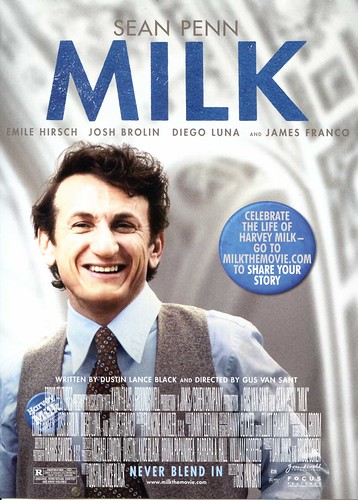
Important, powerful portrait of Harvey Milk

“Milk,” Gus Van Sant’s chronicling of Harvey Milk’s (Sean Penn) political career as California’s first openly gay elected official is an important and relevant movie that addresses the still prickly issue of gay rights.

In 1978, Milk fought against Prop 6, a law that would have made firing gay teachers and any public school employees who supported gay rights mandatory. Thirty years later it was Prop 8, a rewrite to California’s state constitution defining marriage as between members of the opposite sex, that gay right’s activists had to contend with. Milk won his vote; the same can’t be said of the Prop 8 vote last November.

The re-creations of Milk’s speeches and debates bring the issue down to its most base level: human rights. Milk’s message, the man and film, was simply that gays be given the same rights as everyone else.

This is a bio-pic, but one that focuses in on Milk’s rise as a politician and leading up to his assassination. We learn little about Milk’s life before he moved from New York to San Francisco. Too often bio-pics become overly muddled with childhood flashbacks, “Milk” side steps this entirely. It is implied that his pre-California life was a repressed one full of tragedy, and we are told enough to understand his drive to fight for gay rights.

Van Sant, working from a screenplay by Dustin Lance Black (HBO’s “Big Love”), delivers a film that seamlessly blends archival footage with re-creations and traditional narrative filmmaking.

Black’s script captures Milk’s humor and compassion in a way that never feels condescending or contrived. Black addresses the film’s issues in a way that is not heavy hand. This is commendably not an exploitive or manipulative piece of propaganda, although I’m sure some will accuse it of that.

As a director, Van Sant has balanced more mainstream work like “Good Will Hunting” and “Finding Forrester” with indie films such as “Elephant” and “Last Days.” “Milk” is his most accessible, broadly appealing film in nearly a decade. It is like he has taken everything has learned from his experimental films and applied it here.

Although Penn, per usual, gives a strong, layered performance, this is not entirely his show. He is surrounded by one of the stronger ensemble casts of 2008,and there are several standout performances.

James Franco gives a nuanced performance (“Pineapple Express”) as Milk’s boyfriend who struggles with sharing him with his political career following several failed attempts to be elected supervisor. Franco, after being stuck playing second fiddle to Tobey Maguire in the “Spider-Man” movies, really came into his own as an actor in 2008.

Emile Hirsh (“Into the Wild”) has a memorably flamboyant energy as Cleve Jones, a member of Milk’s campaign staff. Alison Pill (“Dan in Real Life”) as the one lesbian of the staff brings a hard edge and biting wit. The key to all these performances is that actors aren’t simply “acting gay,” but creating full performances that never slip into broad stereotypes.

Josh Brolin (“W.”) as Dan White, one of Milk’s fellow supervisors, with whom he often comes into conflict, has one of the less showy roles in the film, but he gives a compelling, conflicted performance. Milk and White’s relationship is an uneasy one that takes a tragic turn.

The film’s final scenes are deeply powerful and moving, and would be standing on their own, but they are all the more so because the film has done such a beautiful job creating a portrait of Milk and of his movement.

Friday, February 20, 2009

12 favorite films of 2008

With the Academy Awards Sunday the time seems right to count off my 12 favorite movies from last year. Why 12? Because 10 was not enough. I choose the word favorite over best because I haven’t seen every film of 2008 and I don’t presume to have seen only the best.

“The Bank Job”
This taut little thriller based on London’s Walkie Talkie Robbery in 1971 is a straightforward genre film told extremely well. This isn’t a breezy romp like the “Ocean” movies; instead “The Bank Job” is a throwback to the gritty British crime films of the era in which it is set. The film proves that its star, Jason Statham, can act when given the right material, unfortunately he usually wastes his talents in schlocky action films.

“The Dark Knight”
Writer/director Christopher Nolan’s follow up to “Batman Begins” expands the film from its comic book origins into a fully realized crime epic and deepens and enriches previously presented themes. The film is fueled by the late Heath Ledger’s extraordinary performance as the Joker but is populated by strong performances by Christian Bale in the title role, Michael Caine, Gary Oldman, Morgan Freeman, Aaron Eckhart and Maggie Gyllenhaal.

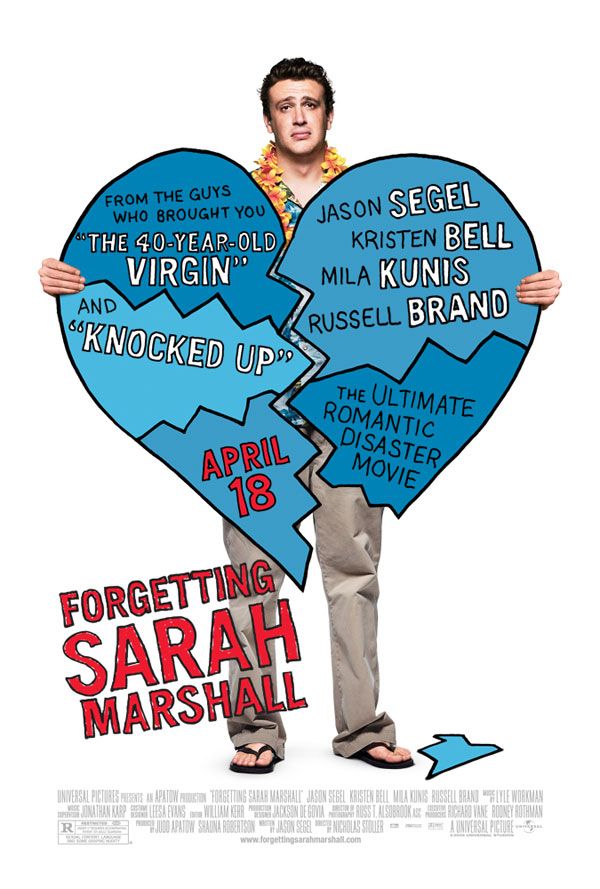
“Forgetting Sarah Marshall”
The latest raunchy romantic comedy from the Judd Apatow-factory stays true to the template of blending crass humor with surprising tenderness. When Jason Segal (“How I Met Your Mother”) is dumped by the title character (Kristen Bell) he heads to Hawaii to try to escape only to run into her with her new rock star lover (Russell Brand). A familiar plot is enlivened by an assortment of funny supporting performances and sharp writing by Segal.

“Frost/Nixon”
This compelling behind-the-scenes account of the lead up to the historic David Frost (Michael Sheen) interview with Richard Nixon (Frank Langella), in which Frost was able to get Nixon to admit to his involvement in Watergate captures the significance of a major television event, but also satisfies as a piece of drama. Ron Howard's direction is clean and elegant and Langella’s Nixon is so much more than mere impersonation. He manages to capture something deeper.

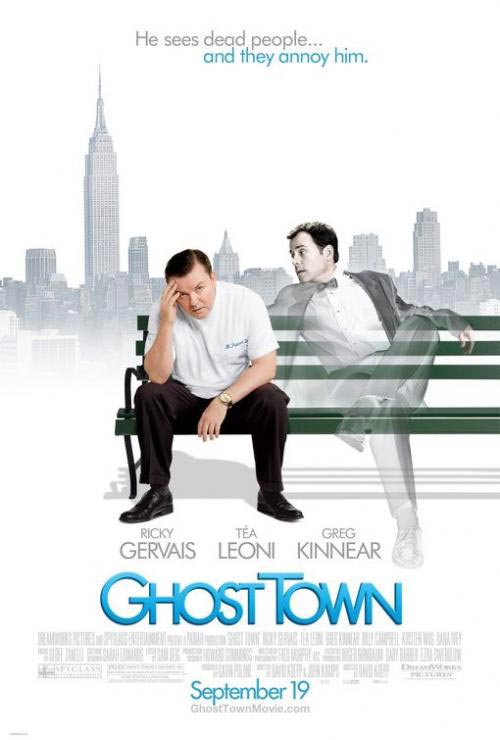
“Ghost Town”
A misanthropic dentist (Ricky Gervais) is given the ability to see dead people in this charmingly low-key romantic comedy. One persistent spirit (Greg Kinnear) wants Gervais to break up the pending marriage of his widow (Téa Leoni). Gervais, the star of the original “Office,” is known for his snarky humor, but here he reveals a sweet side. Writer/director David Koepp, who is known for thrillers, shows a deft hand for light comedy and the cast is in top form.

“In Bruges”
Two hit men (Colin Farrell and Brendan Gleeson) are sent to Belgium after a botched hit in this unique reworking of tired clichés. This isn’t your typical buddy film or action packed assassin film. There is quiet, poetic beauty throughout the film, which blends a dark, off-beat sense of humor with more serious philosophical questions. The two leads are excellent and a late movie appearance by Ralph Fiennes is fantastic.

“Iron Man”
2008 was a good year for the superhero movie. While “The Dark Knight” took the genre to new levels of sophistication, “Iron Man” is simply a well-crafted film that takes the time to create well-drawn characters and a basis in reality, however tenuous it may be. Robert Downey Jr. is pitch perfect as a playboy billionaire turned hero and he is ably supported by Gwyneth Paltrow, Jeff Bridges and Terrence Howard.

“Milk”
Gus Van Sant’s chronicling of Harvey Milk’s (Sean Penn) political career as California’s first openly gay elected official is an important and relevant film as the issue of one’s sexuality is still a hot topic. The film addresses the issue in a way that is not heavy handed nor manipulative and does so with humor and heart. Penn gives a nuanced performance and he is surrounded by a wonderful supporting cast including Emile Hirsh, James Franco and Josh Brolin.

“Slumdog Millionaire”
Danny Boyle’s “Slumdog Millionaire” centers on how a teen (Dev Patel) from the slums of Mumbai wins India’s “Who Wants to Be a Millionaire.” The film blends hard to watch scenes with a feel-good story that emotionally resonates. Boyle keeps things moving along at the pace of a thriller, but stays focused on the humanity of the story. Cleverly structured, imaginatively directed and well acted.

“The Visitor”
Richard Jenkins stars as a quiet, withdrawn college professor that discovers illegal immigrants are living in an apartment he keeps in New York. Through music he bonds with the immigrants. This is an important film for putting a face on the immigration issue, but it is also one of the most human stories of 2008. Writer/director Thomas McCarthy doesn’t offer easier answers; rather he presents a film filled with warmth, compassion and a sense of joy.

“WALL-E”
The most strikingly original animated film since, well, Pixar’s last release, “WALL-E” doesn’t pander to children and instead respects their intelligence. Much of the first half of the film is essentially a silent film. In the future, Earth has been left trashed by humanity which now resides in a giant spaceship. The titular robot is left to clean up the mess. The film morphs into a rather sweet robot love story that is more involving than some human love stores.

“The Wrestler”
Given his falling out with Hollywood, it isn’t surprising that Mickey Rourke would be drawn to the story of a former professional wrestler who is just barely living above the bottom of the barrel. What is shocking is how dramatically involving the film is given the wrestling subject matter. You don’t need to be a fan to appreciate this film. This is an emotionally raw film powered by Rourke’s born-to-play performance.

Saturday, February 14, 2009

On the scene

T.J. Herlihy lives a double life as police officer and actor


The phrase "don’'t quit your day job" gets tossed around a lot when an amateur tries an artistic endeavor. But if T.J. Herlihy didn't love his day job so, he could probably quit and become an actor.

Herlihy has performed in three community theater productions. By "day," he is a police officer for Conway (New Hampshire) Police Department.

"I think that it's great he does both,”" said Chris Wong, a teacher at Kennett High School, who worked with Herlihy while he was the school resources officer. "“It makes him and the policemen more approachable, because it makes them more human.”"

Wong knew Herlihy before he entered into both police work and acting and believes that both are a perfect fit for him.

"I think that being a police officer and an actor have been natural extensions for him,"” said Wong. “"He has always been charismatic, good natured, and fair.”"

Herlihy is supported in his acting pursuits by the police department, which, according to Lt. Chris Perley, encourages its officers to participate in recreational pursuits and activities that benefit the community.

"It would appear that he has been able to combine a passion for the theater with something that will also be enjoyed by many, many community members and we encourage that because police work can be a stressful and dangerous line of work and we want officers to be well-rounded in all aspects of their life,”" said Perley.

Herlihy got into police work because it has always been part of his nature to want to help others, and becoming a police officer seemed the natural progression of that impulse.

"At the time I applied I was in a place where I wasn’'t going anywhere, so I saw the ad in the paper and thought, '‘Huh,'’”" said Herlihy. "“I had thought about becoming a police officer, people around me had talked about me becoming one, and I just went for it. I thought it would be interesting, definitely another way to help people."

At first glance, acting and police work may seem like an odd combination, but a closer look reveals parallels.

"Presence might be a good portion of it because when you arrive on the scene you need to present a confident, knowledgeable, you know what you'’re doing [attitude],”" said Herlihy. "“Sometimes you really have to take control of the scene. That’s the only way to make sure the scene is safe. So having the presence, busting out the confidence on stage comes from the police work.”"

Herlihy also possesses an extroverted personality that always him to be able to transfer what he learned on the scene into a scene on stage.

“"He is a goofy guy,”" said Rae McCarey, who has acted with Herlihy twice. "“I don'’t know if I a lot of people know that because his job means a lot to him. He takes it very seriously and you only get this glimpse through the rabbit hole, so to speak, of T.J. being funny.”"

Herlihy will freely admit to his sillier side.

"Throughout my life I’'ve always joked around, impersonated whoever was around me, just for fun,”" said Herlihy. “"It was somewhat easy for me to pretend to be someone else, but there are a lot of things you have to learn in theater, how to project your voice and be bigger and louder than life so that everyone can hear you, you know that’s different because you feel awkward."

Previous to his first show, Herlihy had no acting or singing experience outside of the shower or the car, but it had been something he wanted to try. Fittingly enough, his path to acting also started with an ad in a newspaper.

"It was something I always wanted to do, but I just never had the courage to do it,”" said Herlihy. "“One day I was in my office at Kennett and my wife came in and flipping through the pages she shows me an audition for '‘L'i’l Abner"’ and she said ‘I think you should go."’”

Herlihy did go to the audition and to his surprise got one of the lead roles in Arts in Motions’ production of "L'i’l Abner.”"

"I wound up singing a Christmas song because I don’t have that many songs in my head that I can bust out,"” said Herlihy. "“So I sang a Christmas song, they thanked me, had me read a couple lines and I left. I got a call couple days later at the school. Gino Funicella was the director and he said ‘We’d like to offer you one of the leads, Earthquake McGoon’ and I was like, ‘'Oh, OK’' and that’'s how it started.”

That was last May and that could'’ve been the end of the story. But in December, he graced the stage again as the love interest in the Resort Players’ “"Carol’'s Christmas,"” a gender reversed reworking of "“A Christmas Carol."” He followed that up with his first lead role in a musical in M&D Productions'’ “"Company,"” which finished its run in January.

Herlihy didn'’t go to the walk-in auditions for “Company” because he heard it was a difficult show to sing and he didn’'t think he had a chance. The day before rehearsals, director Ken Martin was still looking for his lead and on a tip called up Herlihy.

"He did a great audition for the part,"” said Mark DeLancey, tech director on “"Company.”" "“It was certainly fun to watch him grow and progress into the role. You could see by closing night how comfortable he really was with adding his own little unique things into the role. It was fun to watch him have a good time."”

As an untrained singer, Herlihy, even with natural abilities, had a lot or work to put in for “"Company"” — and he was up to the challenge.

"He has a very beautiful, natural voice," said Mary Bastoni-Rebmann, who as the music director for “Company” did voice training with several of the actors. "“With T.J. he had his voice in his throat so I worked with him to get his voice forward and it just made all the difference in the world. As a matter of fact Ken was in the room when that happened and it was like day and night.”"

Bastoni-Rebmann was pleased with Herlihy as an actor and a singer and said he was a great success and a pleasure to work with.

"T.J. was a great actor to work with because he came in with a willingness to do the work and a willingness to grow, which isn’t always the case,”" said Bastoni-Rebmann. “"A lot of times you have blocks with actors, but he was terrific.”"

In addition to being a full-time police officer and part-time actor, Herlihy is a husband and a father — something that McCarey, who acted with Herlihy in “"Carol'’s Christmas"” and "“Company,"” can'’t quite wrap her mind around.

"He is a full-time police officer, he was the go-to guy at Kennett, and he has children, he'’s a husband, that’s full-time, right? And he did the acting and it was like ‘How do you this? How exactly are you doing all of this,"’” said McCarey, an admitted big fan of Herlihy.

McCarey, who studied acting, was surprised and excited to encountered Herlihy’s natural talents.

“"It was exciting to meet somebody new that hasn’'t acted that is up here and low and behold can hold his own and then some,"” said McCarey. “"There were moments where the hair stood up like, 'Wow he sounds really, really beautiful.' If he had more time and right brain shutdown, left brain allowed to flow through, can you imagine?”"

Not only does Herlihy juggle his career, acting and personal life, he manages to do it all in good cheer.

"T.J's ebullient personality was a fresh breath of air at Kennett High School,"” said Mark Ross, a teacher at Kennett. “"It is this same ebullience and charisma that would translate beautifully to the stage."”

McCarey agrees that his sweet, good-natured approach to life makes it hard for anyone to have a complaint about him.

"Nobody has anything bad to say about T.J. ever,”" said McCarey. "“No one has ever had anything negative to say about T.J., and he never says anything negative about anyone.”"

Unfortunately, Herlihy will have to take a hiatus from acting for a while. For the last three school years, he was the school resource officer at Kennett, a shift that gave him nights and weekends off, but he has recently been reassigned.

"I am going to be rotating to 3 to 11, so that is a nine-week rotation for everyone,"” said Herlihy. “"I don’t see that I’ll be able to do anything during that shift. The only two days off I’ll be with my kids, so that’ll be tough. But once I rotate to midnights then I could have my evenings free and then go to work that night. I might be able to do something then.”"

But rest assured, Herlihy will be back because he has “definitely developed a passion for it." But for now he’s just pleased with the opportunities he has had, especially "“Company.”"

I am very happy that Ken and Mary let me do it,” said Herlihy. “I am very thankful that they thought that I was worthy of it and I appreciate what they did. Mary was very helpful with voice lessons and she is an amazing performer herself, so I’m just a pretty thankful, happy guy.”

Friday, February 06, 2009

'Millionaire' is anything but a 'dog'

“Slumdog Millionaire” is up for 10 Academy Awards and has already won a slew of high profile awards, including best movie of 2008 from the National Broad of Review and the Golden Globes.

Is the film worthy of all the accolades? It is hard to say, but if it isn’t the best film of the year, it is worthy of the attention simply because it will get people to see a very good film that they might not see otherwise.

The film tells the story of how a contestant was able to win India’s version of “Who Wants to be a Millionaire?” Jamal (Dev Patel) is suspected of cheating because he grew up on streets of Mumbai and somehow managed to get further on the show than doctors and lawyers.

Jamal is interrogated in by Mumbai authorities, which gives the film its structure. As Jamal and the police inspector (Irrfan Khan) go through each question from the show, Jamal tells how he knew the answers through life experiences, which the audience is shown in flashbacks.

It is an interesting premise, and the rags-to-riches premise is universally appealing. There is also a love story. The real reason Jamal went on the show was to find Latika (Freida Pinto), a girl he has loved since childhood but who life keeps tearing away from him.

The film is directed by Danny Boyle (“Trainspotting,” “28 Days Later”) and written by Simon Beaufoy (“The Full Monty,” "Miss Pettigrew Lives For a Day”) from a novel by Vikas Swarup. Both the director and writer are English, but this is still very much an Indian production.

“Slumdog” doesn’t feel like foreigners coming in to tell a story about a country they don’t understand. Boyle was surrounded by a largely Indian crew and had an Indian co-director, Loveleen Tandan, who also helped with the script’s Hindi dialogue. This is crucial to the film’s feeling of authenticity.

Boyle is an extraordinary visual stylist who has always been able to find beauty in the mundane. There are shots that are brief, like a dog lying in the street during a chase through the slums of Mumbai, which add detail and richness to the film. Boyle is also a master of pacing and editing, and he keeps his film moving along like an action film yet keeps a focus on the humanity of his story.

The audience is told Jamal wins the game at the beginning of the film, but Boyle is such an assured filmmaker that the film’s final scenes of the show are still engrossing. The final question is absolutely perfect.

Visually and in tone, the film’s flashbacks recall the brilliant “City of God” that portrayed the escalating violence in a neighborhood of Rio de Janeiro. This is a softer representation of that sort of life, although there are some scenes that are hard to watch. Jamal’s parentless childhood with his brother Salim (Madhur Mittal) includes being taken in by a Fagan-esque thug, run-ins with gangsters and scamming tourists at the Taj Mahal.

The film has a nice sense of humor about it. The lengths in which young Jamal (Ayush Mahesh Khedekar) goes to get an autograph from his favorite actor will make you cringe and laugh at the same time. The story Jamal concocts about why the Taj Mahal was built is also quite amusing.

The acting in the film is excellent. Jamal, Salim and Latika are all portrayed by three different actors at different stages of their lives and everyone delivers solid work.

Patel as the adult Jamal is a dynamic, likable lead and it is easy to root for him. Hopefully this is the beginning of big career for him. Patel’s back-and-forth scenes with Khan’s inspector are particularly good. Khan slowly drops his guard when he gets pulled into Jamel’s story.

This is a genuinely uplifting, feel-good movie largely because it earns its happy ending. The film goes to dark places and its characters rise above it, and it is hard not to smile when Jamal and Latika finally get to be together.

Thursday, January 29, 2009

A 'Road' worth taking, but with caution

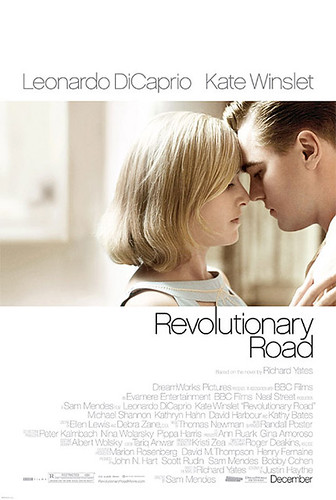
Over a decade after starring in “Titanic,” Leonard DiCaprio and Kate Winslet are reuniting in “Revolutionary Road.” But those expecting another sweeping tragic love story are in for a rude awakening. This time the sinking ship is the relationship itself and, to reference another disaster, it is as explosive as the Hindenburg.

“Revolutionary Road” has more in common with director Sam Mendes’ “American Beauty” than with “Titanic.” For the many, myself included, that found the romance in “Titanic” shallow at best and nauseating at worst, this will be a relief. But be forewarned: This is a devastating film that is not easy to watch.

As in “American Beauty,” Mendes has created a scathing critique of suburbia and the American dream. Mendes seems fascinated with pulling away the veneer of suburbia to reveal the truth behind the idyllic façade.

“American Beauty” had a sardonic wit and sense of hope that dulled some of the film’s more stinging moments, but Mendes offers no such relief in “Revolutionary Road.” At one point my mouth hung slack as my lower lip quivered. By the film’s concluding scenes, I had pulled my legs up into my seat and I was hugging them.

The film centers on the Wheelers, a seemingly perfect 1950s suburban married couple. Frank Wheeler (DiCaprio) commutes into the city to work at an ad agency like so many other shapeless drones while his wife April (Winslet) tends to their two kids.

There is a brief prologue of the couple’s first encounter, but the film immediately follows this with the couple, years later, having an argument, the likes of which are usually the climax of most dramas rather than the beginning. The details of the dispute, like so many that will appear in the film, don't really matter because the fight represents a deeper mutual dissatisfaction.

April is tired of the fighting and she offers a solution: move the family to Paris, the one place Frank said he felt free and would one day want to return to. April would get a job as a secretary for an American agency and support Frank while he discovered his true calling. Frank goes for the plan and for a time there is hope.

The screenplay by Justin Haythe from a Richard Yates novel features confrontations between the Wheelers that are often painful to watch. The film does have a point, though. Mendes and Haythe aren’t simply sadists taking pleasure in torturing an audience. The film addresses the tremendous pressure to try to fit into society’s image of the perfect life and the danger of buying into a hollow dream in place of your own aspirations.

Winslet’s April is struggling with being a strong, independent woman living a repressed life. Her plan to work in France is scoffed at by everyone who hears it. Frank questions her very womanhood when she suggests a possible solution to a domestic problem.

DiCaprio and Winslet, who are good friends in real life, clearly trust each other a great deal as actors, as both let loose on a level of intensity few actors achieve on screen. As you watch you feel as if you are eavesdropping on private moments that shouldn’t be seen.

The leads are strongly supported by the rest of the cast. Kathryn Hahn and Gregg Barbour play the Wheelers’ neighbors and act as a counterpoint to them. Hahn and Barbour are good at seeming cheerily content but reveal little cracks in the surface.

Kathy Bates (another “Titanic” veteran) is as solid as ever as a perky but superficial real estate agent. Michael Shannon is particularly memorable as Bates' so-called crazy son, who has no problem saying the things others only think and often speaks more truth than the supposedly sane people.

This is an exceptionally well made film. It is beautiful to simply look at, and the acting is astoundingly good. It is a difficult, but rewarding film.

Friday, January 23, 2009

Take a 'chance' on this screen couple

“Last Chance Harvey” is a rare romantic comedy starring an older pairing, and it is an awfully sweet movie.
Dustin Hoffman and Emma Thompson star as a pair of lonely people, who meet in London, start talking and discover an instant chemistry.

Hoffman is Harvey, a failed jazz pianist working as a jingle writer who is going to his estranged daughter’s (Liane Balaban) wedding in London. Thompson is Kate, an airport interviewer with no self-esteem, an overbearing mother (Eileen Atkins) and who has recently went on a bad blind date.

In London, things just keep getting worse for Harvey. His daughter tells him that she wants her stepfather (James Brolin) to give her away and he is informed that he has lost his job. It is at this point, having missed his flight home, that Harvey meets Kate in the airport bar.

Kate tells Harvey he must go to his daughter’s wedding reception. He agrees to go under the condition that Kate joins him as his “bodyguard.” This sets up a scene where Harvey gives a redemptive toast to his daughter. The toast is well written by writer/director Joel Hopkins and delivered with sincerity and warmth by Hoffman.

This is a low-key film that is full of chuckles, and maybe some tears, rather than belly laughs. You smile a lot while watching because you feel happy for these characters getting together and finding comfort in each other. It is ultimately a feel-good film with a lot heart.

The film is good at taking its time at establishing each character separately before bringing them together. Those who like their romantic comedies cheery from beginning to end may grow tired of the melancholy of these early scenes, but they are crucial to the film’s success. Harvey and Kate are both sad people, and that is what draws them together.

Hoffman and Thompson make a lovely screen couple with an easygoing chemistry. At 71, Hoffman is 22 years Thompson’s senior, not that you’d really notice. Hoffman doesn’t look his age and the age gap seems around a decade on screen. Maybe it all goes back to the fact that he was 30 when starred as a 22 year old in “The Graduate” back in 1967.

When the couple is just allowed to talk and be together, the film is a delight. Hopkins has written smart, sparkling dialogue, and these two very fine actors make it absolutely sing. Unfortunately, Hopkins didn’t seem to have enough faith in his dialogue or his characters.

Too often, just as a conversation is getting interesting, Hopkins brings up the score and drowns out the dialogue. Instead of getting to hear the rest of the discussion we are forced to watch montages of the couple walking along The Thames. These are likable characters, and watching their mouths move, but not hear what they have to say is frustrating.

There’s also a third-act plot development that is needlessly formulaic. A subplot involving Kate’s mother’s paranoia about her new neighbor’s seemingly sinister activities distracts from the main plot. It is a cute, funny bit of business, but unnecessary.

Hopkins should’ve had the courage to just let his characters talk like writer/director Richard Linklater did in his pair of films “Before Sunrise” and “Before Sunset.” As with “Harvey,” these films centered on strangers meeting and wandering a city together. In Linklater’s films the conversation continued to flow uninterrupted, and it was wonderful to simply listen to two intelligent, engaging people talk.

If Hopkins had followed a similar path his film would’ve been much stronger. Even with its flaws it is still more charming than the average romantic comedies and it can’t be stressed enough how good Hoffman and Thompson are together. “Harvey” is definitely worth seeing; it is just a shame it is simply good when it could’ve been great.

Thursday, January 22, 2009

Worthy of your 'Company'

M&D presents Stephen Sondheim's musical comedy on relationships


Stephen Sondheim’s “Company,” which opens today at M&D Production’s Your Theatre in Willow Common in North Conway, N.H. is a musical about relationships in modern day New York. A musical about love sounds like nothing special, but it is the author who is special, not the subject.

“Company” first appeared on Broadway in 1970 with music and lyrics by Sondheim and a book by George Furth. Originally conceived by Furth as 11 one-act plays, Sondheim transformed the material into a musical.

Sondheim has composed and/or written the lyrics for such musical standards as “A Funny Thing Happen on the Way to the Forum,” “Into the Woods,” “West Side Story,” “Gypsy” and “Sweeney Todd.”

“Company,” like much of Sondheim’s work, has an irreverent, even dark sense of humor. The humor in this piece is very much a reflection of the 1970s era in which it was written. Think Woody Allen or Neil Simon. This is a mix of situational with observational humor that is often cutting in what it has to say about relationships.

The show centers on the single Robert (T.J. Herlihy) who, as the show open, is thrown a surprise party on his 35th birthday by his friends, five sets of married couples. What follows is a series of scenes with Robert interacting with each couple as he contemplates the prospect of marriage and juggles three possible candidates (Janette Kondrat, Amy Smullen and Nikki Martinez).

Even someone with no musical training will notice that Sondheim does something a bit different than most composers and lyricists. He crams more words and syllables into a lyric than seems lyrically possible. Often his songs move at such a fast pace it is a wonder the singers even keep up.

Sondheim is also fond of utilizing complex harmonies and overlapping lyrics. All of this makes performing a Sondheim show a difficult task. The cast of M&D’s production, under music director Mary Bastoni-Rebmann and director Ken Martin, prove to be up to it.

Watching the cast take on this challenging material is like watching a tightrope walker perform without a net. There may be a couple wobbles here and there, but, commendably, no one falls.

There is a large cast of characters in “Company,” but each actor gets at least one scene to shine. I direct this next sentence specifically to the actors: You were all wonderful, and I’m not just blowing smoke up your you-know-what, so don’t take it personally if I don’t name check you in the list of highlights below.

Herlihy is the show’s focal point, and he makes for a strong lead. Although he is in every scene, he doesn’t have the flashiest role. He often has to play straight man to the antics around him. He also carries the show's more emotional scenes as he weighs the positives and negatives of being single.

Much of the musical’s humor is earned by placing songs in juxtaposition to the scenes' content. When Robert discusses the three girls he is pursuing they pop out girl group style and sing “You Could Drive a Person Crazy.”

Amy Smullen as Marta, one of Robert’s more free-spirited love interests, gets one of the show's biggest laughs by describing how you can learn a lot about a New Yorker based upon the size of a certain part of a person’s anatomy. Janette Kondrat has a hilarious scene as April, a dim flight attendant who Robert sweet talks into bed.

Kevin O’Neil and Pat McCabe shine as Harry and Sarah, a bickering couple who needle each other about the respective vices they’ve supposedly given up. When Robert requests Sarah demonstrate a move she learned at karate lessons, this leads to an amusing sparring match between Harry and Sarah that is made all the more ironically funny by Joanne (Shana Myers) singing “The Little Things You Do Together.”

Rae McCarey, in full on neurotic mode, steals the show late in the first act as Amy, who is having a really bad case of cold feet on her wedding day. “Getting Married Today” is one of the show’s funniest songs, and McCarey nails it.

For more information about “Company” call 662-7591.

Friday, January 16, 2009

'Gran Torino' is more than just a vigilante film

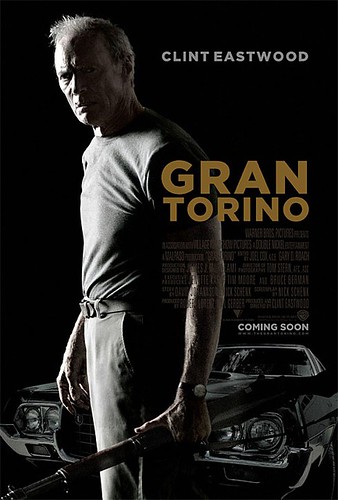
“Gran Torino,” Clint Eastwood’s latest film as director and star is being advertised as a vigilante story of one man taking on an Asian gang, but that is only one small aspect of the story that is more human than audiences might expect.

Eastwood stars as Walt Kowalski, a bitter, caustic, grumpy and outwardly racist Korean War vet, who has stayed in a Detroit suburb that now largely has an Asian population. The film opens at the funeral for Walt’s wife and we are introduced to Walt’s obnoxious children and grandchildren. They represent the worst kind of Americans and Walt can’t stand them.

Walt uses every ethnic slur in the book that could be directed at an Asian, but when he inadvertently protects his neighbors from an attack by gang members he finds himself becoming emotionally attached to the people he pretends to hate. As his relationship grows with his neighbors he realizes he has more in common with them than his actual family, so much so when they are threatened he feels he must protect them.

Eastwood hasn’t been on screen since 2004’s “Million Dollar Baby,” but he’s certainly been busy behind the camera. As a director he’s had a remarkable late career surge that has him working on a level of skill he had only previously hinted at.

He has been averaging a movie a year since 2002, including two large scale war movies. Eastwood is 78 years old. It is rare to see this amount of quality output for someone a third of Eastwood’s age, but Eastwood has shown no sign of slowing down.

It is easy to see why the screenplay by Nick Schenk would compel Eastwood to get in front of the camera again. Eastwood is allowed to riff on his tough guy persona. He glares, growls and grimaces as only he can. It gets close to self-parody until suddenly the performance turns into something subtler and richer.

He intentionally recalls his most famous characters, Dirty Harry Callahan and The Man With No Name from the trilogy of Sergio Leone spaghetti westerns. He knows his screen persona is bigger than him and the way he plays towards and against the audience's expectations creates moments both humorous and moving.

Eastwood cast primarily all amateur actors to play the Hmong community. The Hmong, we are told, are hill people from Southeast Asia that fled after the Vietnam War.

Many have been critical of the Hmong actors, but the performances are largely effective. These aren’t great thespians, but they do what they are asked to do well.
The film’s central relationship is between Walt and Thao (Bee Vang) who attempts to steal Walt’s prized 1972 Gran Torino when pressured by his cousin’s gang. Walt, with great reluctance, takes the teen under his wing and tries to “man him up.”

There is also a strong relationship between Walt and Thao’s sister Sue (Ahney Her), who is both sweet and sassy. She doesn’t take any of Walt’s gruff attitude and instead dishes it back. Walt appreciates this. Of the amateur actors, Her is the real find. She’s likable and has a genuine screen presence. It would be nice to see her get more work.

There are other connections in Walt’s life. He has an amusing reoccurring back and forth with his barber (John Carroll Lynch, “Zodiac”), who like Sue goes toe-to-toe with the old man. There’s an especially funny scene where Walt and his barber try to teach Thao how to talk like a man.

There is also a young priest (Christopher Carley) who promised Walt’s wife that he would look after her husband. Walt wants nothing of it, but the persistent priest eventually breaks down Walt’s defenses. The dynamic that develops here is an interesting one and Carley, who has an assortment of bit roles on his resume, is another actor to watch.

This isn’t deeply profound storytelling, but it is a tried and true formula executed with care. The relationships that develop between Walt and Thao, Sue and the priest follow a familiar arc, but there are surprises in the details as well as a lot of warmth and humor.

It isn’t until the film’s conclusion that the retribution hinted at in the trailer is delivered. Some may be hungry for more old school Eastwood action, but because the film took the time to develop Walt and his relationships completely the final scenes are all the more powerful.

This is a redemptive story, but Walt doesn’t go through cloying, hollow metamorphosis from a mean old man into a really nice guy. That’s the key to film’s success. In the end, he still clings to his racial slurs, although now he says them with fondness.

Thursday, January 15, 2009

5 cool songs for winter

With temperatures dropping below zero and wind wiping snow around (at least throughout the Northeast of the United States) it seems appropriate to provide a list of five songs for winter.

A Google search of the words winter and song will yield a list of several songs, usually ballads, about the chilly season from such bastions of rock as The Rolling Stones, Steve Miller Band and Wings. I wanted songs with a bit more kick, but if you are so inclined feel free to look into these songs.

“Don’t Eat the Yellow Snow” – Frank Zappa (1974)
Perhaps quirky guitar maestro extraordinaire Frank Zappa’s most well-known song. The title is self-explanatory and the song is exactly what you expect with Zappa warning to “Watch out where those huskies go, and don’t you eat that yellow snow.” Things go into unexpected territory if you continue the funky chronicles of the yellow snow in “Nanook Rubs It.”

“Snowball” – Devo (1980)
The off-beat new wave band is best known for the song “Whip It” for those silly flower pot-esque hats, but it would be wrong to dismiss them as a novelty act. The band's lyrics, though buried under danceable beats, were often surprisingly poignant: “My baby took our love/And then she rolled it up/Rolled it up a hill/Like a ball of snow/Like a snowball grows/Until it gets too big/Until she lost control/And it rolled back down.”

Hazy Shade of Winter” – The Bangles (1987)
The 80s girl group The Bangles did a cranked up version of Simon & Garfunkel’s classic from 1967 that kept the harmonies, but striped away the simple acoustic guitar work and replaced it with a forceful electric guitar lead and driving drums. The more rocked out approach paired with Simon & Garfunkel’s contemplatives lyrics proved an ideal match.

“Snowball” – Jimmy Fallon (2001)
This no relation to the Devo song above. Comedian Jimmy Fallon’s first album “The Bathroom Wall” featured fair stand-up and good impressions, but the most pleasant surprise was five impressively well produced songs that impeccably recreated the genres they were mocking. Among those songs was this punk tribute to snowball fights featuring lyrics like “Sneak attack in a field/use your toboggan as a shield.”

“Baby, It’s Cold Outside” – Zooey Deschanel and Leon Redbone (2003)
This standard has been branded as a Christmas song, but really has nothing to do with the holiday. The song is about a man trying to convince a woman to stay in from a snow storm with pleas like “gee your lips look delicious.” Originally recorded in 1949, the song has been covered numerous times. This particular version was recorded by actress Zooey Deschanel and the mysterious jazz/blues singer Leon Redbone for “The Elf” soundtrack.

Saturday, January 10, 2009

Rock's presidential comedy just became a bit more interesting

In 2003, comedian Chris Rock wrote, directed and starred in a movie called “Head of State.” It was a minor hit that faded from memory, but history has caught up with the movie and made it relevant or, at the very least, a curiosity.

The film centered on a black man not only running for president, but being elected. When it was released, the film almost played like a fantasy with a maybe some day aura. That some day is now here and on Jan. 20 Barack Obama will have his inauguration.

As a satire “Head of State” never reaches the levels of something like “Dr. Strangelove,” but it does have moments of incisive humor. Any satire where a Republican candidate’s slogan is “God bless America and no place else” is at least doing something right.

The set up for the film is that Rock’s Mays Gilliam is chosen as a last minute replacement candidate after a freak accident kills the Democratic Party’s ticket. The democrats know they are going to lose the election, but choose a black man to appeal to the minority vote that will then come out to support the party’s nomination in the next election.

Rock has said the inspiration for the film came from the 1984 Walter Mondale/Geraldine Ferraro ticket. As Rock sees it the Democratic Party knew they couldn’t beat Reagan/Bush and ran a woman for vice president to get the female vote in later elections.

The premise isn’t bad satirically, but loses some sting given that Obama has been elected, but no one saw Obama coming. The idea of a black president being elected still seemed miles away in 2003 and even last year many didn’t think it was possible, so it isn’t fair to hold that against the film.

It is Rock’s execution that steals a lot of the thunder from the set up. Rock admitted during his appearance on “In the Actor’s Studio” that the film was shot like a Mel Brooks comedy. The humor is very much in the same broad vein, which could have worked if Rock’s screenplay kept the jokes coming fast and didn’t try to force an obligatory love subplot.

After playing ball for a while, Rock’s Gilliam adopts a hip hop style and attitude that galvanizes his campaign. This allows for some quick laughs, but doesn’t ring true. That being said, when Rock let’s loose with the razor sharp observations that make his stand-up comedy so strong the film finds a voice.

In a debate scene that will seem familiar to anyone who followed this last election, even with only cursory interest, Rock’s Gilliam is accused of being an amateur. Rock retorts back:

“I am an amateur. When it comes to creating so many enemies that we need to spend billions of dollars to protect ourselves, yes, I am an amateur. When it comes to paying farmers not to grow food while people starve in this country everyday, yes, I am an amateur. When it comes to creating a drug policy that makes crack and heroin cheaper than asthma and AIDS medicine, yes, I am an amateur.”

That speech has some truth to it and helps give the conclusion of the film a necessary jolt. The film never offers any ways to fix the problems it address, but then it is only a comedy after all.

There are quick gags in the film that also work quite well. Gilliam refuses to take money from a bottling company because they sell a product called Crib Malt Liquor complete with a baby bottle top. A smear ad has the White House exploding if Mays Gilliam is elected.

“Head of State” is by no means a great movie, but it is worth a look. Obama’s win was said to have changed everything. Is Obama an isolated occurrence, or will others be able to follow in his foot steps?

Hopefully decades from now new generations will be able to look at “Head of State” and be confused by the fact that the film was even made. “Head of State” could very well be a time capsule to a less progressive time for our nation.

Saturday, January 03, 2009

Streep and Hoffman deliver, did you 'doubt' they would?

"Doubt," based on a Pultizer Prize winning play by John Patrick Shanley, takes on issues of religion and morality in its story of a nun who accuses a priest of indecent behavior with a black student in 1964.

Shanley has adapted and directed his play for the screen and he has some of the best working actors at his disposal. Meryl Streep stars as Sister Aloysius, who is cold and intolerant and put in stark contrast with Philip Seymour Hoffman ("Capote") as Father Flynn, who is warm and open.

Flynn has a protective relationship with Donald (Joseph Foster), the first and only black student at the Catholic school. When Sister James (Amy Adams) sees some things that could be construed as suspicious behavior it sets Aloysius on a mission to remove Flynn. She is absolutely certain of his guilt.

Flynn's guilt or innocence is part of a larger ideological struggle. Aloysius is a firm believer in strict authority and emotional distance from the students and the parish. Flynn believes in compassion and love and that the church should he seen as part of people's families. There's an implication that this difference in opinion is Aloysius' true motive.

The acting is exceptional. Streep and Hoffman go toe-to-toe in several scenes, and the verbal back and forth is enthralling. Streep is not a likable figure in this film and she makes it difficult to be on her side, even if she is right. Hoffman seems so kind it is hard to see him doing anything wrong.

Viola Davis as Donald's mother has only one scene with Streep, but it is a powerful performance that raises even more questions regarding the situation. Streep is a formidable acting presence, particularly in this role, and Davis holds her own and leaves a last impression.

Adams, who has been such a warm and sunny presence in moves like "Enchanted" and "Miss Pettigrew Lives For A Day," brings that same brightness to Sister James, but in a more dramatic way than her previous work. Sister James gets caught in the middle of Aloysius and Flynn's struggle as Aloysius takes her under her wing and attempts to alter her sweet nature.

Critics are not suppose to review audience reaction. It is the quality of the film itself that matters, but the crowd I saw "Doubt" with had a interesting and revealing reaction. "Doubt" is being advertised and reviewed as a hard-hitting drama, but when I saw the film the theater was often filled with boisterous laughter.

The film is well-made, so these are not unintentional laughs. There are moments that are genuinely funny, especially involving Aloysius' rigid behavior. Is the film meant to be a comedy dealing with serious issues or a drama with some humor? That likely depends on your perspective or mood when you see it. Either way, the laughs are there to ease the tension attached to such a prickly subject matter. People laugh when they are uncomfortable and nervous, and Shanley's script plays on that impulse.

As a director, Shanley's only slip-up is his occasional use of tilted angles, which are most likely supposed to represent that nothing is as it appears or that the motives of characters are skewed. Whatever the underlining meaning was, the effect is more distracting than anything else.

For the most part, Shanley keeps the visuals simple and puts a focus on the dialogue. The film poses hard questions and doesn't offer easy answers. If Flynn does have a dark secret, does that mean he isn't still a good man? It is never clear what, if anything, happened between Flynn and Donald.

Material like this could easily slip into melodrama or become sensationalistic and shamelessly manipulative. Shanley's dialogue is smart and cutting without being trite or condescending. This is a thought-provoking film full of ambiguity that is sure to stir much post-film discussion.