Friday, October 24, 2008

Top 50 Halloween movies: Part 4

Welcome to the fourth installment of the top 50 Halloween movies. The list is a mix of classic and contemporary films that includes any horror sub-genre as well horror themed comedies.

20. "Freaks" (1932)
After directing "Dracula," Todd Browning was asked to top both that film and "Frankenstein." His answer was to use real sideshow circus "freaks," including midgets, Siamese twins and limbless people. The story centers on a gold-digger, who marries one of the so-called freaks. The freaks get their revenge when she tries to kill their fellow oddity for his money. It is a truly unique film experience that is funny, heartbreaking and scary, but what makes the film so successful is that the scares and laughs never feel cruel or exploitive.
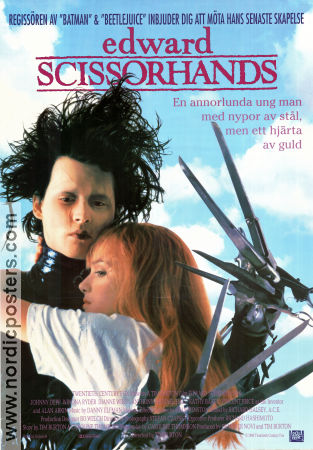
19. “Edward Scissorhands” (1990)
Obviously not a horror movie, although a solid case can be made that there is nothing more frightening than suburbia. Tim Burton’s expressionistic fantasy is a heartbreaker full of Burton’s trademark dark, oddball sensibilities. Johnny Depp is exceptional in the title role of the boy who was never finished by his creator (Vincent Price, in his final role). The rest of the cast, including Winona Ryder, Alan Arkin, Dianne Wiest and Anthony Michael Hall, are all also top-notch.

18. "Rosemary's Baby" (1968)
Roman Polanski's stylistic film starts out like cheery romance and then slowly builds into taut, nerve-racking thriller. Mia Farrow's Rosemary is pregnant, but her husband, neighbors and doctor are all acting a little odd and it becomes clear that this is no ordinary baby. Polanski gets in the viewer's head, by not showing anything and leaving the viewer to imagine the worst.

17. "Beetlejuice" (1988)
A recently deceased couple (Alec Baldwin and Geena Davis) has to deal with an obnoxious new family in their former home, and, after a series of unsuccessful hauntings, they hire Michael Keaton’s Beetlejuice to get the job done. Director Burton's wildly inventive set design and stop-motion animation in combination with Keaton's show-stopping, madcap performance and strong support from Winona Ryder and Catherine O'Hara make this a wild ride.
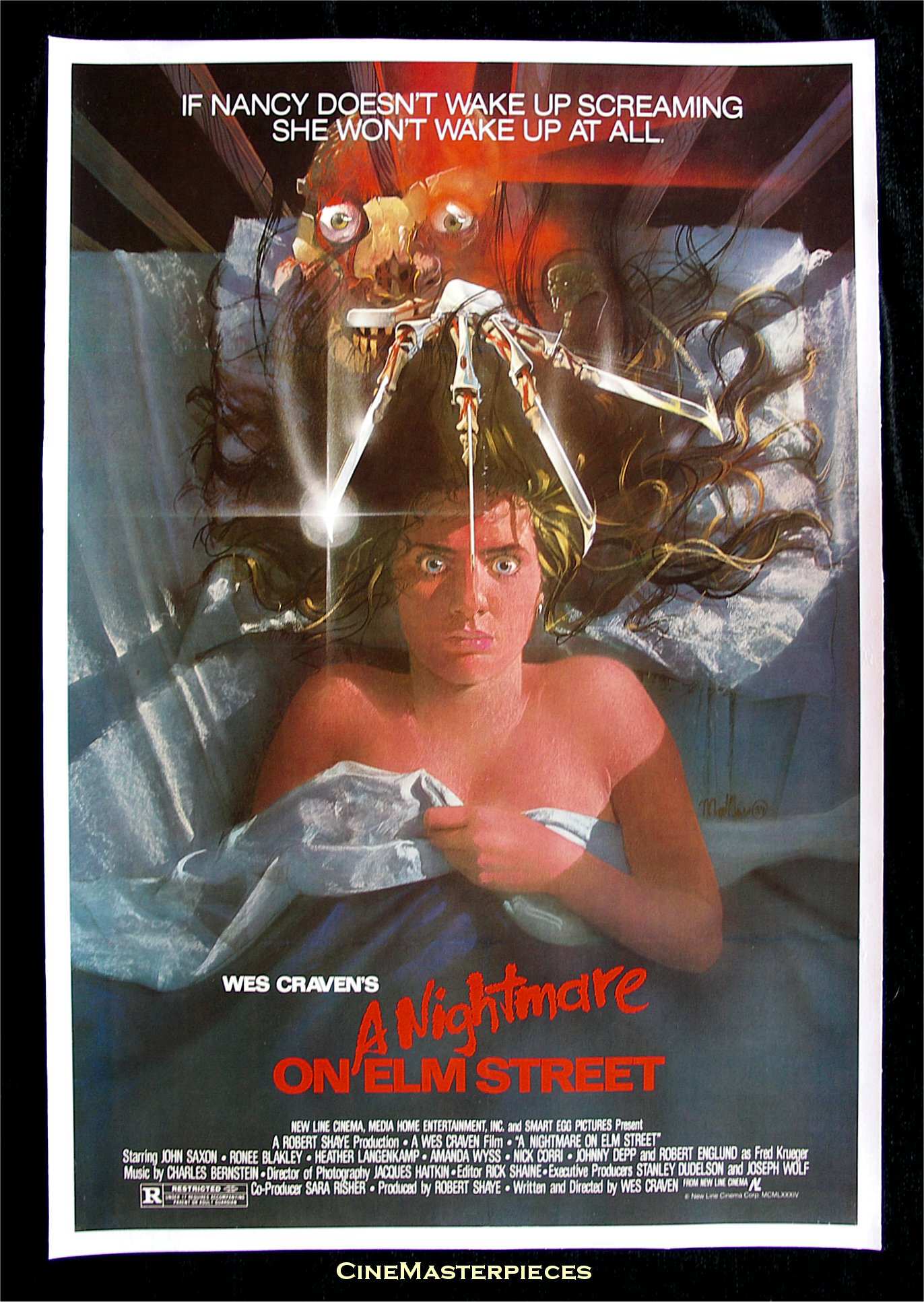
16. "A Nightmare on Elm Street" (1984)
How do you stop a serial killer who stalks you in your dreams? Writer/director Wes Craven created one of the most iconic boogeymen of film history with Freddy Kruger (Robert Englund.) More imaginative than most slasher franchises because the dream world allows anything to go, and for those who like unique and varied deaths it is hard to beat Freddy.

15. “Alien” (1979)
It is easy to forget that before morphing into an action franchise, the first of the series was a white-knuckle sci-fi horror film. Sigourney Weaver established the female heroine who is now a staple of Hollywood in a star-making performance. The infamous alien “chest buster” scene is still as shocking as ever, and director Ridley Scott creates maximum suspense by not fully revealing the alien to the very end of the film.

14. “Jaws” (1975)
Spielberg’s rousing combination of suspense, drama, comedy and adventure films turned people off going to the ocean for years. The film grabs attention and scares from the start with one of the best openings of all time, but Spielberg is more interested in character development than body count. The shark isn’t revealed until more than half way in, and the wait makes it all the more potent when we finally see it.

13. "The Evil Dead" (1981)
The first installment of Sam Riami's immensely popular trilogy centers on a group of college buddies at an isolated cabin in the woods who accidentally unleash evil spirits. Riami's stylish direction full of unique camera angles and excellent lighting makes his low budget go far. Bruce Campbell's Ash wouldn't turn into the one-liner-spouting, slapstick action hero until the worthy comedy/horror sequels, but for pure horror, the first is still tops.

12. "The Shining" (1980)
The combination of Jack Nicholson's astoundingly over-the-top performance and Stanley Kubrick's quietly grandiose direction make this version of Stephen King's novel an amazing film experience. Nicholson and family become caretakers at a large, isolated and haunted hotel for the winter. It isn't long before "all work and no play" and the sinister goings-on at the hotel drive Nicholson nuts. Kubrick creates perhaps the most surreal and disturbing haunted house ever, and Nicholson is equal parts shocking and comic.

11. "The Wolf Man" (1941)
One of the best of the Universal monster movies set the standard for all werewolf films to follow. After being bitten by a wolf, a man (Lon Chaney Jr.) has to deal with the horrible curse of turning into a werewolf every full moon. The film's transformation effects hold up remarkably well, and Chaney's desperate, tragic performance adds dimensions to the monster. There is also wonderful support from Bela Lugosi and Claude Rains.

'Rabbit Hole' looks at grief with heart, wit and honesty

M&D's first production in its new location continues its run


“Rabbit Hole,” M&D Productions' first show at its new Your Theatre location in Willow Common in North Conway, N.H. has no connection to Lewis Carroll, Alice, a wonderland or a looking glass. Rather it is a story of a couple dealing with the loss of their 4-year-old son following a tragic accident.

“Rabbit Hole,” which will be running Oct. 24, Oct. 25, Oct. 30, Nov. 1, Nov. 6. Nov. 7 and Nov. 8 at 7:30 p.m., won the Pulitzer Prize for drama in 2007. Tickets range from $15 to $20 and can be purchased by calling 662-7591. Discounts are available for students, patrons under 18 and seniors. For more information visit www.yourtheatre.com.

The script by David Lindsay-Abraire is not nearly as depressing as the subject matter would have you believe. Oh, there are scenes with the potential to yield tears, but there is also a surprising amount of humor. The way the script addresses themes of finding comfort and how to grieve doesn’t feel cloying or manipulative. There is truth and honesty to the show that is never preachy or heavy-handed.

As the play opens, it is eight months after the death of Becca and Howie Corbett’s (Jane Duggan and Kevin O’Neil) son, Danny. Becca’s rebellious sister Izzy (Carrie Engfer) has just become pregnant, which stirs up mixed emotions. Nat (Jill Davis), Becca’s well-intentioned mother, desperately tries to help her daughter find solace, but her efforts are often rebuked with frustrated anger.

In the production notes, director Richard Russo described the experience of first reading the play as if he were “hiding in the Corbett’s house, eavesdropping on their most intimate conversations.” Russo brings that quality to his production by having an intimate set that audience members could walk right into if they had the nerve. Clearly this is not advised.

The set, designed by M&D executive director Mark Delancey, is a realistic depiction of a house with what appears to be a fully functional kitchen, a quaint living room and Danny’s bedroom left unchanged and always behind the characters.

Realistic is the keyword in describing the play. Often theater dialogue sounds scripted or stylized, which is fine, but it can create a certain distance between the show and audience. Lindsay-Abraire’s dialogue has an unforced, natural flow that includes all the ums, yeahs and ya knows and awkward pauses that fill average everyday speech. It is easy to be drawn into these characters’ lives.

The cast delivers this dialogue with a just-right naturalistic rhythm and handles the complex emotional shifts with a light touch. Duggan’s Becca is not dealing with her grief well, which is manifesting itself in a bitterness that slowly subsides as the show proceeds.

O’Neil’s Howie at first seems to have it together. He hides behind a dry, sarcastic wit that masks the tumultuous grief that he is still dealing with. This façade begins to crack when an accident destroys one of Howie’s favorite reminders of Danny. It is shattered when Jason (Ged Owen), the teen that killed Danny in a car accident, comes by the house in an attempt to make amends and deal with his own anguish.

These are not easy emotions to deal with, and Duggan and O’Neil, who both break down and cry at points in the show, address them with a lot of humanity. Their performances and emotions feel genuine.

Their supporting cast is equal to them. Engfer brings an appropriate level of blunt but not-unsympathetic attitude to Izzy, and Davis makes Nat kooky and sweet. Davis has a powerful monologue about how the pain of a lost child never goes away, but changes and in an odd way becomes reassuring.

Owen shares a great scene with Duggan that gives the play its name and its sense of closure. Lindsay-Abraire doesn’t tie everything together neatly; after all, there are no easy answers when it comes to grief. Instead, he ends the show with a quietly uplifting hope that life will be able to go on.

Friday, October 17, 2008

Top 50 Halloween movies: Part 3

You are about to enter the third installment of the top 50 Halloween movies list. The rules are simple: Any horror sub-genre or horror based comedies are fair game. Contemporary and classic films are all in the mix.

30. "The Omen" (1976)
Little Damien (Harvey Stephens) is literally the anti-Christ in this film that effectively follows in the footsteps of its similarly themed predecessors, "The Exorcist" and "Rosemary's Baby.” Gregory Peck is the father who slowly comes to believe that his son is evil incarnate and ultimately comes to the horrifying realization that he will have to kill him. Little Stephens is one creepy kid, and director Richard Donner keeps the film tense throughout.

29. “Pan’s Labyrinth” (2006)
A little girl escapes into a dark, dangerous fantasy world that still remains safer than the real world: war torn Spain in the 1940s. Writer/director Guillermo Del Toro uses his boundless imagination to craft a fairy tale in the tradition of such writers as the Brothers Grimm. After years of sanitizing such stories, we have forgotten how twisted and tormented fairy tales could be. This is fantasy that is very much for adults.

28. “The Birds” (1963)
Alfred Hitchcock’s suspense classic is sure to make anyone do a double take whenever they see birds en masse. It is a credit to Hitchcock’s talent that he was able to squeeze every ounce of tension out of a silly premise of birds of the world uniting and attacking humanity. While some of the effects are dated, the film still manages to scare in a big way.

27. “Topper” (1937)
Not all ghosts are scary. Some are out for a good time. A high-spirited couple (Cary Grant and Constance Bennett) become genuine spirits after a car accident and decide that, to get to heaven, they must do a good deed. They set out to liven up the marriage of uptight banker Cosmo Topper (Roland Young). Screwball mischief ensues with nice ghostly effects and well-timed physical comedy. This sweet, good-natured fun inspired two sequels and a TV series.

26. “Interview With The Vampire” (1994)
This compelling adaptation of Annie Rice’s novel centers on the family dynamic that develops between a seemingly sophisticated, but callous vampire (Tom Cruise) and his two unwilling vampire converts (Brad Pitt and Kirsten Dunst). Rice’s allegory of vampirism as homosexuality is dulled slightly around the edges, but this elegant and sensuous gothic tale is still an engrossing showcase for all of its stars, particularly the villainous Cruise.

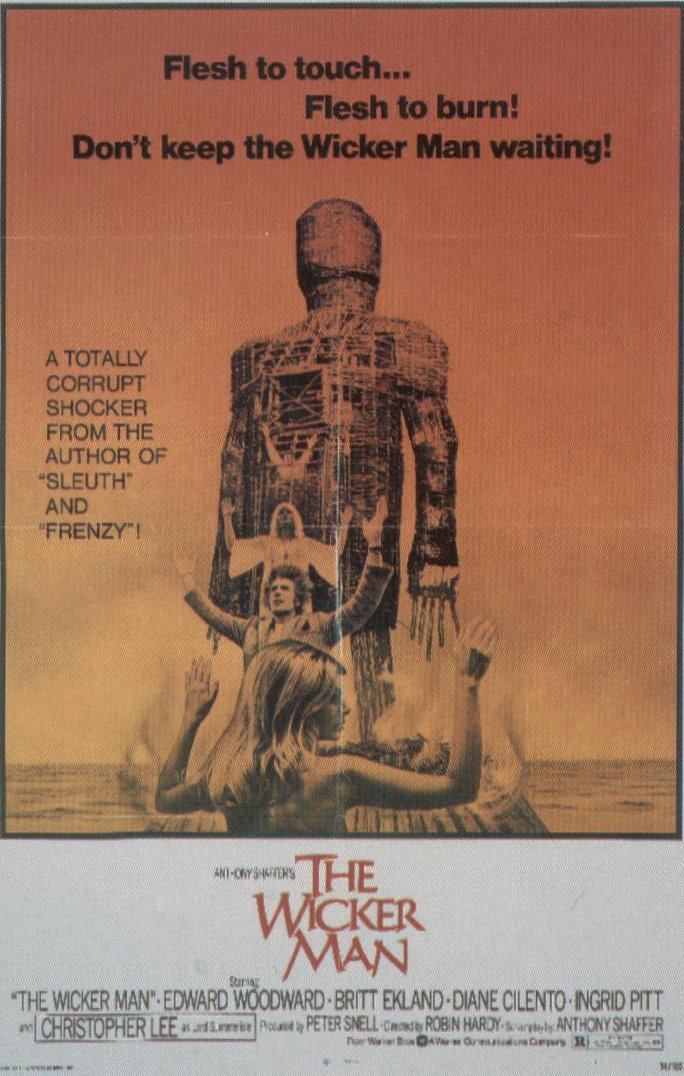
25. “The Wicker Man” (1973)
A police investigator (Edward Woodward) is sent to a remote island off the coast of Scotland to investigate a missing-girl claim. His Catholic faith comes in stark contrast with the pagan beliefs of the island’s inhabitants. An eerie, erotic and an oddly tuneful atmosphere creates a quiet tension that builds to a horrifying conclusion. The film also features a fantastic turn by Christopher Lee as the outwardly benevolent leader of the island.

24. "28 Days Later" (2003)
Following the tradition of George Romero’s zombie films, director Danny Boyle and writer Alex Garland, balance social commentary with scares. They also add humanity and beauty to the mix. The living dead are replaced with people infected with a virus that leaves them overcome by uncontrollable rage. Shot on digital video, the film has a gritty, realistic feel — especially in the opening scenes in which a character walks through a completely deserted London.

23. “Sweeney Todd” (2007)
Stephen Sondheim’s audacious musical is given the big screen treatment by Tim Burton in this gloriously moody and bloody take on the story of a vengeful, murderous barber (the exceptional Johnny Depp), whose victims get made into meat pies by his landlord (Helena Bonheim Carter). This is a truly unique experience that blends song, horror, black comedy, satire and tragedy into a gothic tapestry that at times attains brilliance.

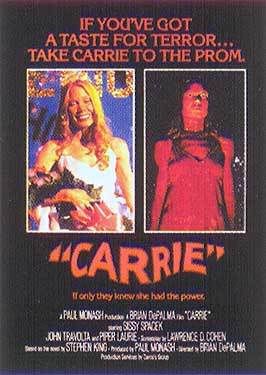
22. "Carrie" (1976)
The first film based on a Stephen King novel is still one of the best. The put-upon title character (Sissy Spacek) uses her telekinetic powers to get revenge after a cruel prank. Director Brian DePalma keeps the film at the level of a teen drama for the majority of the film, but that is just setup for the now legendary prom scene, which is still just as effective today as when it first came out.

21. "Texas Chainsaw Massacre" (1974)
Starting out like a documentary before shifting to a narrative film, this influential horror film introduced the world to the chainsaw-wielding Leatherface and his truly peculiar family. With extreme close-ups, an effective use of shadows and light, and a chaotic style, the film still has genuine scares. The viewer is kept off guard by the quick and brutal deaths. Forget the sequels and remake; they don’t touch the creepiness on display here.

Woody takes a Spanish holiday

Woody Allen has increasingly become an acquired taste, but his latest film “Vicky Cristina Barcelona” — his first film set in Spain — may prove to hit the spot for those who never appreciated his work in the past.

This is Allen’s fourth film in a row — following three set in London — that was made outside of his beloved New York, the location for all of his previous films. Allen doesn’t break any new ground or try anything drastically different with his material, but as was true with "Match Point," his first London film, the writer/director seems invigorated by the Spanish locales and language. This helps the film feel fresh.

The film focuses on two American friends, the impetuous, free-spirit Cristina (Scarlett Johansson) and the logical, soon-to-wed Vicky (Rebecca Hall), who are spending the summer in Barcelona. Shortly upon arriving they meet Juan Antonio (Javier Bardem), a painter who makes them an interesting offer: join him for a weekend of good food, good wine and love-making.

Cristina is taken by the proposition and the two women do join Juan Antonio, but make no promises in the love-making category. Soon Cristina is living with Juan Antonio and Vicky is left confused by guilt of growing feelings for the mysterious Spaniard.

Just as the film begins to drag, it is enlivened by Penelope Cruz in a hilariously high-strung and overwrought performance as Juan Antonio’s ex-wife Maria Elena. Cruz, who is an extraordinary actress in her native tongue, but has struggled in English language roles, is great here and if there were any one reason to see the film, it is for her.

That isn’t to say that everyone else isn’t also working on a level of acting excellence. Those who are only familiar with Bardem for his Oscar-winning performance in “No Country For Old Men” will be surprised how charismatic and handsome he is in this film. His smooth Spanish accent gives something extra to Allen’s dialogue.

If Allen had been in the Bardem role during the pick-up scene, which he likely would’ve been 30 years ago, it would’ve played for laughs. With Bardem, the proposal, though amusing, is somewhat believable and you can hardly blame the two ladies for going along with it.

Johansson, in her third Allen film, is becoming progressively more comfortable with Allen’s brand of fast talking, sophisticated dialogue. She doesn’t seem in control of her smoldering sexuality, which is just right for Cristina, a woman who doesn’t know what she wants in life or love.

Hall, who was charming in the little-seen British comedy “Starter for 10,” has the least flashy of the four lead roles, but her quiet performance is just as compelling as Cruz’ explosive one.

Vicky, who is insecure, a bit neurotic and has a razor tongue, is the most overtly Allen-esque character of the cast. Hall gets the tone just right in delivering the tricky Allen dialogue and makes Vicky the film's most human character.

For those who care about this sort of thing, yes, Cruz and Johansson do make out. For that matter so do Bardem and Johansson and Bardem and Cruz and then all three together. There is sex, but it remains off-camera. Although the moments of passion that are shown are sensual, the film is less about the physicality of the acts than the emotional and intellectual states that they create.

The film isn’t perfect. It relies too heavily on a voice-over narration that tells the audience exactly what Vicky and Cristina are thinking. This is effective at establishing the characters quickly and allows the film to get right into the action, but becomes tiresome when it glosses over potentially compelling scenes and tells the audience things they can figure out on their own.

Allen has always had a fondness for European directors and throughout his career has attempted to emulate them. Perhaps it is the Spanish setting, but for the first time he has made a film that genuinely feels like a European art house film. It isn't "Annie Hall" or "Manhattan," but for non-fans that may be a good thing.

Friday, October 10, 2008

Top 50 Halloween movies: Part 2

You are about to enter the second installment of the top 50 Halloween movies list. The rules are simple: Any horror sub-genre or horror based comedies are fair game. Contemporary and classic films are all in the mix.

40. “An American Werewolf in London” (1981)
Director John Landis puts a droll spin on the werewolf legend, when an American backpacker (David Naughton) is bit by a wolf in the remote hills of England. The film features a spectacular transformation scene created by effects master Rick Baker that in spite of digital advances has yet to be matched. Macabre comic relief is provided by the slowly decaying ghost (Griffin Dunne) of the title character.

39. “Audition” (2000)
This Japanese horror film is one of the most deeply disturbing films on this list. For the first 45 minutes it seems like a sweet, funny romantic comedy of a widower who uses his friend’s film industry connection to meet women at a phony movie audition. Then the tone shifts, building to a surreal, twisted and horrifying ending. The reality-based opening makes the actions later in the film all the more shocking.

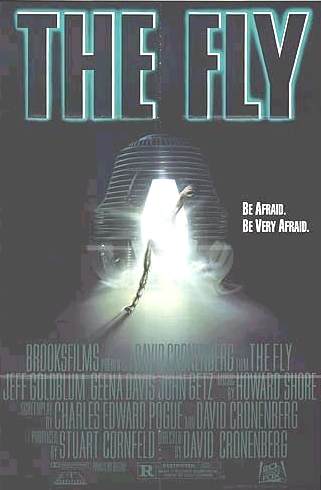
38. "The Fly" (1986)
In this remake of the 1958 camp classic, a scientist accidentally combines his DNA with a housefly causing him to slow turn into a human fly. This is a rare remake that manages to one-up its predecessor. In spite of all the effects — which are quite graphic — there is a genuine emotional resonance. Jeff Goldblum's dynamic, heartfelt performance is what makes the film so successful, keeping his man-fly human even as he becomes more monstrous in appearance.

37. “The Sixth Sense” (1999)
It is easy to dismiss M. Night Shyamalan now that he’s become a one-trick pony, but his first trick still packs a punch. The movie has some undeniable jolts, superb atmosphere and one heck of a twist. Bruce Willis’ understated performance proved he could effectively play against his action hero persona. Haley Joel Osment's performance as the quintessential creepy kid that can “see dead people” is a classic for the ages.

36. “Rebecca” (1940)
Alfred Hitchcock makes his first appearance on the list with a very different kind of ghost story. Widower Laurence Olivier marries Joan Fontaine in a whirlwind romance, but when they arrive at his expansive estate the memory of his first wife lingers in every corner. Although there are no ghoulish apparitions, the film is dabbed in dread and the cold housekeeper (Judith Anderson) is far creepier than any spirit.

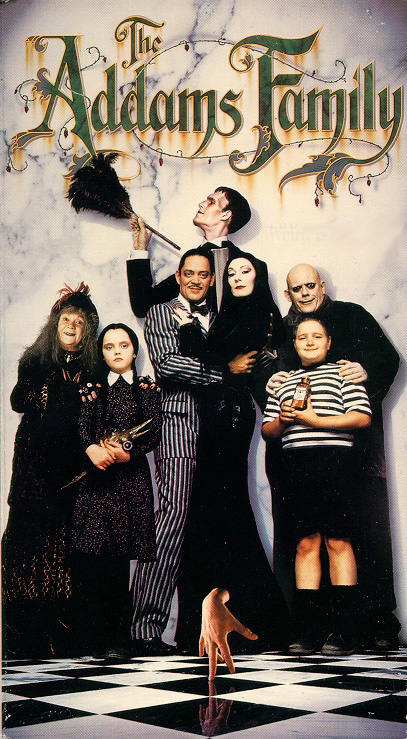
35. “The Addams Family” (1991)
Based on the 1950s TV show, the film is closer in spirit to the macabre humor of the Charles Addams New Yorker comic strip that inspired the show. This is dark yet family-friendly humor at its absolute best, delivered to perfection by the ideal cast of Anjelica Huston, Raul Julia, Christopher Lloyd and Christina Ricci, in the role that made her a star.

34. “Scream” (1996)
More than a decade after creating “Nightmare on Elm Street,” director Wes Craven, working from a self-referential script by Kevin Williamson, brought back the slasher film by making a movie that was both horror and a satire of itself. The film’s characters have seen all the same movies the audience has and know the rules. A must-see for fans of the slasher sub-genre.

33. “Invasion of the Body Snatchers” (1956)
The population of a small town is slowly being replaced by “pod-people,” alien replicas that look like and have all the memories of the original, but none of emotions. Great film noir lighting, a tight pace and a great performance from Kevin McCarthy raise the film beyond the limitations of the genre. Also check out the excellent 1978 remake starring Donald Sutherland, Jeff Goldblum and Leonard Nimoy.

32. “Poltergeist” (1982)
The haunted house movie gets kicked up several notches in this film written and produced by Steven Spielberg. The daughter of a family is kidnapped via a television by evil spirits — and thus begins a battle to save her before she is lost forever. None of the quiet psychological moments of “The Haunting” or “The Others” here. They have been replaced by highly effective, hair-raising, edge-of-your-seat special effects. Well-paced and genuinely disturbing.

31. “Shaun of the Dead” (2004)
Imagine a British romantic comedy with a slacker (Simon Pegg) trying to win his ex-girlfriend back. Nothing special, right? Now add zombies into the mix. Pegg and his best mate on and off camera, Nick Frost, are a dynamic comedic duo as they use everything from cricket bats, records and pool cues to battle the undead. This is a genre parody that doesn’t forget to create characters that we actually care about.

Theater and dance join forces in the 'House of Usher'

The Resort Players of Mount Washington Valley has teamed with Axis Dance Company for a well mounted but flawed production of “The Fall of the House of Usher,” which continues its run at the Eastern Slope Playhouse in North Conway, N.H. Oct. 10 and 11 at 8 p.m. and Oct. 12 at 2 p.m.

“The Fall of the House of Usher” is among Edgar Allen Poe’s most famous works and could be a fertile source for drama, but the adaptation by playwright Steven Berkoff stretches the material of the story far too thin. At 90 minutes, including an intermission, the production still feels too long. The show would’ve made a great 30- or 40-minute one-act, but at this length it feels needlessly padded.

Poe’s story was about the sickly Usher siblings, Roderick (Tom O’Reilly) and Madeline (Rae McCarey), who are visited by a friend (Dan Phelps), who attempts to put Roderick’s unstable mind at ease. Berkoff’s adaptation does little to expand upon this simple premise, and what additions he does make are more confusing than compelling.

There is an allusion to vampirism that is made early on and never referenced again. At times the actors will switch from being a third-person narrator back into their characters. Berkoff’s script becomes particularly desperate when one character actually pulls a copy of Poe’s “The Fall of the House of Usher” from a bookshelf and begins reading from it. It is as if this was the only way Berkoff could work these lines into his adaptation.

The play’s shortcomings fall squarely on Berkoff’s script. Undoubtedly this material can be extended successfully, but Berkoff doesn’t do Poe’s work justice. It is a shame the script wasn’t stronger, as all the elements of the Resort Players' production are top notch.

The lighting design by Christopher S. Chamber generates a moody atmosphere. The music comprised of disjointed string and piano arrangements paired with black and white video footage reflect the unstable minds of the characters. Tom Rebmann’s sparse set design, with chairs hanging from the ceiling and a slanted floor, creates the feeling of a decaying house.

There are several modern dances inserted into the show choreographed by Jeanne Limmer and performed by Miriah Mosher, Eliza Dubie and Erica Perry. These dances, particularly one set during a rainstorm in the second act, are effective at enhancing the sense of madness and horror of the material.

The actors can’t be faulted either. O’Reilly, speaking in a hushed, mousy voice, seems like the quintessential slightly-mad Poe character. McCarey doesn’t have much in the way of dialogue, but gives a physically expressive performance. She has some priceless facial expressions during a dinner scene that provide the production with its few moments of levity. Phelps is required to play straightman to the peculiar Ushers, and he fills the role well.

When the show allows for Poe’s language to stand on its own, it is spectacular to hear it spoken. The juiciest parts of the production don’t come until the second act, which is genuinely frightening and, if you make it through the meandering first act, worth the price of admission.

Friday, October 03, 2008

Top 50 Halloween movies: Part 1

Halloween is the time of year to get together with friends and family and scare yourselves silly. In the spirit of that idea, I give you part one of my top 50 Halloween movies. The list includes not only scary movies, but ghoulishly-themed comedies.

50. "Friday the 13th" (1980)
The original 1980s slasher film is basically a poor man’s version of the far superior "Halloween," but it still managed to spawn one of the longest running horror franchises. The counselors of Camp Crystal Lake are getting set for the reopening of the camp 23 years after a horrible tragedy. It is no surprise what happens next. Gratuitous sex and nudity, grisly deaths, high body count, it is all here.

49. “Saw” (2004)
The 1980s had Jason, Freddy and Michael. The 21st century has Jigsaw, a killer who challenges social deviants to change or die through terrible torture. In this first installment, two men are trapped in a bathroom with one told he must kill the other or his family will die. The rest of the series has become increasingly more gory, but this one is more based in the mind and all the better for it.

48. "Dead Alive" (1992)
If you thought Norman Bates had mother problems just wait until you meet Vera. Poor Lionel not only does he have an oppressive mother, but after a bite for a mysterious monkey she turns into a bloodthirsty zombie. Before director Peter Jackson made the Academy Award winning "Lord of the Rings" he was the man behind some of the most creative horror movies ever, including this hilarious, but gruesome comedy. An iron stomach and a twisted sense of humor are pre-requisites for viewing.

47. "The Ring" (2002)
Based on the Japanese film "Ringu," this remake in some ways out-does the original. The film quickly made its way into our cultural lexicon with the premise of a tape that promises death seven days after viewing it. What sounds like nothing more than a gimmick transcends its somewhat silly premise thanks to atmospheric direction by Gore Verbinski and strong performances from Naomi Watts, Martin Henderson and Brian Cox.

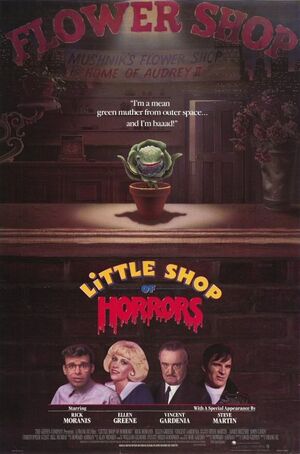
46. “Little Shop of Horrors” (1986)
The first, but not the last, musical to appear on this list tells the story of the nebbish Seymour (Rick Moranis) and Audrey II, his man-eating plant from outer space. Director Frank Oz successfully captures the zaniness of the Motown-flavored off-Broadway show and peppers the film with hilarious guest appearances by the likes of John Candy and Bill Murray. Steve Martin steals the movie, though, as the sadistic dentist Orin Scrivello, DDS.

45. "Gremlins" (1984)
When a boy is given a cute fuzzy little pet, he is told three rules: Sunlight kills him, don't get him wet and don't feed him after midnight. But you can't give kids anything. Before long the nice Gizmo has spawned the gross, mischievous gremlins. Director Joe Dante makes a scary and funny homage to monster movies. If your tastes lean more toward comedy than scares, check out the more slapstick, but worthy sequel.

44. "The Others" (2001)
The first of many haunted-house films to appear on the list, this is the best of the most recent entries to this horror sub-category. A mother (Nicole Kidman) and her light allergic children live in a house that is poorly lit by oil lamps and candles, leaving all kinds of creepy shadows for ghosts to hide in. The film gets scares the best way — by not showing things and leaving the mind to assume the worst.

43. "Abbott and Costello Meet Frankenstein" (1948)
The comic duo behind "Who's on First?" not only meets Frankenstein's monster, but Dracula and the Wolfman. This was the last hooray for the original Universal Studio monsters including Bela Lugosi as Dracula and Lon Chaney Jr. as the Wolfman. Bud and Lou made a series of creature feature comedies and this one is best, if not their best movie period. The monsters are in great form as is the comedy duo.

42. "House on Haunted Hill" (1959)
When it comes to campy horror films, this is hard to beat and is probably Vincent Price's most entertaining film. Price asks five strangers to spend an evening in a haunted house for $10,000 each. Naturally all sorts of sinister things start to happen. Is it the eccentric Price the whole time or is the house really haunted? It really doesn't matter, it is all just cheesy fun in the best kind of way.

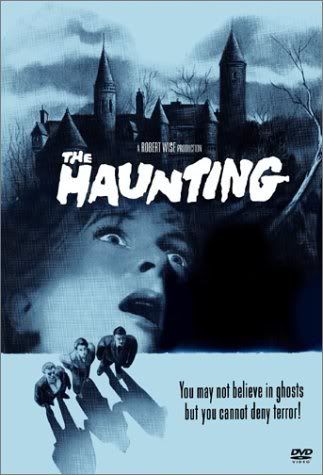
41. "The Haunting" (1963)
Somewhat similar in premise to "House on Haunted Hill" this time around a doctor doing research in the paranormal invites a group of researchers to the supposedly haunted Hill House. Through voice-over, we hear the thoughts of Eleanor (Julie Harris) as the house slowly drives her mad making the film's bumps-in-the-night all the more psychological. Sets the standard for haunted house films.

Thursday, September 25, 2008

'Lakeview ' is a failure as both commentary and thriller

“Lakeview Terrace” is the worst kind of bad movie. It is the sort of bad that makes you angry because it dangles the possibility of a truly engaging movie-going experience and then pulls it away at the last second.

There’s something far more frustrating about watching a movie with a potential for greatness, however buried it may be, than watching a movie that is straight-up awful. If a movie has terrible acting, writing, directing and no chance of ever approximating something of quality, it is easier to shrug off.

“Lakeview Terrace” was directed by Neil LaBute, a talented filmmaker and playwright who has lost his way, at least in the world of cinema. Following the laughable remake of “The Wicker Man,” this is LaBute’s second Hollywood film, and the edge he showed in earlier films such as “In the Company of Men,” “Your Friends and Neighbors” and “The Shape of the Things” is nowhere to be seen.

It is easy to see why LaBute, an incendiary voice that pushes audiences’ views on society, was drawn to “Lakeview Terrace.” The film focuses on an interracial couple (Patrick Wilson, “Hard Candy” and Kerry Washington, “I Think I Love My Wife”) that moves into a Los Angeles suburban community much to the dismay of their neighbor (Samuel L. Jackson), a widowed black cop attempting to raise two children.

LaBute could’ve made provocative and challenging statements about racism with this premise, but the problem is he didn’t write it. The script is by David Loughery and Howard Korder. Glancing at their resumes, Loughery is the heavy hitter with such shining credits as the 1993 remake of “The Three Musketeers” and “Star Trek V: The Final Frontier.”

Loughery and Korder’s script thinks it is mature and serious because it is dealing with racism, but they don’t really have anything to say on the subject. The depth of their social critique is that being in an interracial relationship is difficult and that racism can end in violence. Both of these statements are true, but the screenplay only addresses these issues as devices for the plot with Jackson going to increasingly elaborate and dangerous extremes to force the couple out.

The movie is heavy-handed and obvious where it should by nuanced and complex. There’s a scene in which a drug dealer calls Jackson out for his racism that is insulting to the audience. A little subtleness would’ve gone a long way.

As if being cliché and familiar wasn’t bad enough, the film also throws pretentious into the mix. Throughout the film, the fires in California are referenced and wouldn’t you know that when things finally come to blows between Wilson and Jackson that the fires are right on top of Lakeview Terrace? You can almost hear the writers saying: “The fire represents the racial tensions, get it, aren’t we clever?” This attempt at a metaphor is more eye-rolling than profound.

On a base level it may sound as if there could be some cheap thrills in the battle of wills between the couple and Jackson, but the film feels like a wait for the inevitable final confrontation than a real tension-filled thriller. There is no suspense. It is clear exactly where this is going.

Jackson, who, granted, is good at being menacing, spends too much of the film glaring and glowering. Wilson and Washington are fine, but their performances are undermined by what the script forces them to say and do.

The film does have one great scene, in which Jackson delivers a monologue about how his wife died that reveals the root of his racism. It is the first time the film is truly compelling, but unfortunately it is at least an hour into the film before you get it. It is shortly after that the film goes completely off the rails into utter stupidity.

Thursday, September 18, 2008

10 song for your Halloween party

There are plenty of obvious choices for tunes for a Halloween party, but for those looking for something different than mashing monsters, purple people eaters, werewolves in London and dancers stuck in a time warp, here is a list of alternatives.


“Boris the Spider” – The Who (1966)
From The Who’s second album, this odd little song chronicles the life and death of the title arachnid. Its weird mix of menace and whimsy in a way makes it the perfect Halloween song. Is it a trick or a treat?

“Maxwell’s Silver Hammer” – The Beatles (1969)
Join in the exploits of young Maxwell, a serial killer with a penchant for carpentry. Don’t be fooled by the upbeat carousal-like feel of the music or the cheery way in which Paul McCartney delivers the lyrics, this is perhaps The Beatles’ darkest song.

“Psycho Killer” – Talking Heads (1977)
This is another song about a killer, but one that seems to be fed up with society in lyrics like “We are vain and we are blind/I hate people when they're not polite.” The French language has never sounded more menacing than in David Bryne’s singing here.

“Dead Man’s Party” – Oingo Boingo (1985)
Cryptic lyrics combined with a danceable beat describe the coolest party thrown by the dead. Danny Elfman, the front man and songwriter for Oingo Boingo, went on to score many films and to write the songs for Tim Burton’s “Nightmare Before Christmas” and “Corpse Bride.”

“Pet Sematary” – The Ramones (1989
The Ramones scored one of their last big hits with the theme song to the film adaptation of Stephen King’s novel. The song features the creepy and yet completely silly chorus “I don’t want to be buried in a pet sematary/I don’t want to live my life again.”

“I’m Going Slightly Mad” – Queen (1991)
This is a goofy song about a descent into madness full of such lyrics as “I’m knitting with only one needle.” The laughs have a bittersweet under current when you realize that Queen front man Freddie Mercury was quite literally dying while recording what would be his final work.


“Season of the Witch” – Dr. John (1998)
Coming from the unlikely source of the “Blues Brothers 2000” soundtrack this more aggressive reworking of the Donovan original drenches the song in an ominous atmosphere. Dr. John’s gravelly voice just makes the proceeding all the more unsettling.


“Farewell Ride” – Beck (2005)
Beck takes on mortality in this chronicling of the ride to our final destination: our grave. The song, with its disjointed, twanging guitar and clanging, chain-rattling percussion, creates a sinister soundscape in which Beck lays his dark lyrics.

“The Boogie Monster”– Gnarls Barkley (2006)
The soulful pop group creates an eerie piano based story of a monster lingering in closets and under beds. The song seems like straightforward child’s fare, but throws in a lyrical twist: “I used to wonder why he looked so familiar /then I realized it was a mirror.”

“This is Halloween” – Marilyn Manson (2006)
The shock glam rocker’s cover of one of the songs from “Nightmare Before Christmas” works the quirky, murky lyrics for all they are worth. Marilyn Manson takes the song to a higher level of creepiness while keeping it all in good fun.

Coens leave the 'country' for big city espionage spoof

Leave it to the Coen Brothers, filmmakers who refuse to be pigeonholed, to follow up their Academy Award winning thriller “No Country for Old Men” with “Burn After Reading,” a goofy espionage farce.

The Coen’s seem to make two sorts of films. There are films like “Blood Simple,” “Fargo” and “No Country,” where their brilliance is immediately evident. Then there are movies like “The Big Lebowski,” “O Brother Where Art Thou” and “The Hudsucker Proxy,” where at the end they seem nothing more than a solid good. It isn’t until later, and with repeat viewings, that their appeal truly starts growing on you. “Burn After Reading” with its scatological, offbeat humor falls into the latter category.

The plot centers on a CD containing the memoirs of a recently fired CIA agent (John Malkovich) that ends up in the hands of two gym employees (Brad Pitt and Frances McDormand) who first attempt to black mail the agent and then to sell the disc.

Also in the mix are Tilda Swinton as Malkovich’s wife, Richard Jenkins (“The Visitor”) as Pitt and McDormand’s boss, and George Clooney as a U.S. Marshal. Clooney’s character seems to spend more time sleeping around than doing any work for the government. Not only is he having an affair with Swinton, but he eventually works his way into McDormand’s bed as well. All these characters get involved in an increasingly tangled web.

In terms of style, the film is a dead ringer for modern political and spy thrillers like “Michael Clayton” and “Syriana.” The big difference here is that all the players involved are more or less idiots — and self-obsessed idiots no less. The escalating plot builds huge in each character’s mind, when in fact nothing of true import has transpired.

The screwball antics of the plot are made all the funnier because the Coens keep the look and tone completely straight. There is a nerve-rattling score drumming up suspense for the most mundane actions, and when there are occasional bursts of violence they aren’t sugar coated.

Everyone in the exceptional cast is in good form. Pitt is outrageously funny as Chad, a sweet-natured exercise nut, who in a cast of dimwits shines dimmest. As an actor, Pitt doesn’t get enough credit. He is a diverse performer who has played a wide assortment of unique characters and you’ve never seen him quite like this.

The always reliable McDormand, who was so charming earlier in the year in “Miss Pettigrew Lives for a Day,” is effortlessly funny and likable. Her desire to get plastic surgery is the driving force of the plot. The CD is her means to an end.

Clooney brings the same wide-eyed bewilderment that he showed in “O Brother Where Art Thou” and scores perhaps the film’s biggest laugh with the unveiling of the secret project he has been building in his basement.

Malkovich basically does what he always does, but he does it so well. A few do eloquently vulgar and violent as well as Malkovich. The scene Pitt and Malkovich share as Pitt attempts to blackmail him is just about perfect, with each actor giving precisely timed and measured performances.

Swinton, alas, is playing a variation of the cold witch that she’s been playing in such films as “The Lion, the Witch and the Wardrobe” and “Michael Clayton.” She does it extremely well, but she has more range and it would be nice to see her break out of this current typecasting.

The film also features brief but hilarious turns by David Rasche and J.K. Simmons (“Juno”) as CIA men trying to figure out the mess “the league of morons” have gotten themselves into.

Coming off of “No Country,” this may be seen as a let down, and it is true this is not of the same caliber, but then it isn’t trying to be. The Coens have an absurdist, dark sense of humor and, like “Raising Arizona” or “The Big Lebowski,” this is film that showcases that sensibility.

Above all else, this is an exceptionally well-crafted film that will have those who possess a quirky sense of humor laughing hard consistently — and that’s an achievement in itself.

Thursday, September 11, 2008

'Dangerous'ly dull

Foreign directors remaking their own film in Hollywood is an exercise in futility. It is a feeble attempt to get a wider audience by playing off the cynical assumption that most Americans are too lazy to watch a subtitled film, even an action based one. They’re probably right.
“Bangkok Dangerous” is the latest foreign film to get made over for American audiences. The Pang Brothers of Hong Kong were brought into retool their 1999 film of the same name. The original centered on a deaf-mute assassin, but in an effort to pander to the masses the new version stars Nicholas Cage hearing just fine and talking up a storm through a cliché laden narration.

The Pangs' first Hollywood film was the uninspired “The Messengers,” which, while not a remake of an Asian horror film, was so derivative it might as well have been. Now the Pangs are dumbing their own work down. What’s the point in coming to Hollywood to simply make conventional junk? Hopefully they’re taking their paychecks and making more interesting films back home.

Cage is a good actor with a terrible eye for scripts. With the right material he is very good as can be evidenced in “Leaving Las Vegas,” “Adaptation,” “Matchstick Men” and “Lord of War.” With bad material he can be just plain dreadful as was the case in 2006’s “The Wicker Man,” one of the most unintentionally hilarious films of recent years.

Sometimes Cage’s quirky way of delivering lines and his oddly dynamic screen presence is just enough to make a bad or mediocre film watchable. Such is the case with “Bangkok Dangerous,” at least for awhile. Cage is just fine as Joe, a lone assassin who grows a conscious when he breaks one of his cardinal rules of not making any human connections.

The film opens promisingly with a prologue in Prague that reveals Joe’s methods. Soon Joe arrives in Bangkok for a series of hits that will take place over the span of a month. He hires an errand boy (Shahkrit Yamnarm), who becomes his student, and falls in love with a mute girl who works at a pharmacy (Charlie Young).

The dynamic between Yamnarm and Cage, though awfully familiar and not presented with any freshness, works in spite of itself, but any of the scenes with Young bring the film to a halt. The love story is boring at best and completely extraneous at worst. Young is meant to help Cage see the error of his ways, but Yamnarm serves the same purpose more effectively.

This is an action movie, so at the very least it should deliver the goods in that regard. The assassinations are well-staged and paced. One set underwater in a pool is particularly interesting. Another leads into an elaborate chase that wears out its welcome but has a jaw-droppingly unexpected outcome.

The film barely gets by for awhile on its stylish direction and muted cinematography that utilizes its Bangkok locations well. Things completely unravel, though, in a laughably bad final sequence in which Cage essentially becomes Rambo. These final scenes are set in the most over-used, unimaginative action setting: the abandoned factory.

In the final moments, the film nearly redeems itself with a surprisingly unconventional end, but even that is undermined by lingering too long on a critical moment. Cage can do better. And so can the Pangs.

Thursday, September 04, 2008

10 fave teen movies

This week students headed back to school. In their honor, let’s look at that hallowed genre: the teen movie. Such films are typically coming-of-age stories centered on first love and/or the pursuit of a good time. Here are 10 teen favorites.

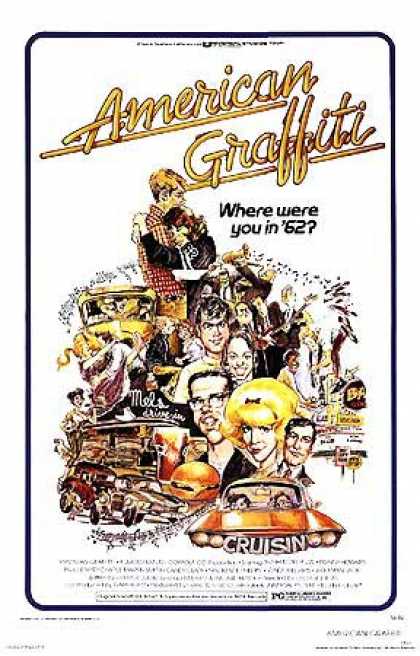
“American Graffiti” (1973)
A group of high school graduates enjoys one last night of cruising before heading off to college in perhaps the first modern teen film. The film was co-written and directed by a pre-“Star Wars” George Lucas and starred such soon-to-big names as Richard Dreyfuss, Harrison Ford and Ron Howard. Set 10 years earlier, the film was already a nostalgic piece when released, but its portrayal of that nebulous time between high school and college remains funny and relevant.

“Rock ‘n’ Roll High School” (1979)
Riff Randell (P.J. Sole) loves The Ramones. Her life will be complete if she can see them in concert and hear them perform the song she’s written for them. Not only does she get her wish, she also convinces the band to take over her school in true punk rock fashion. This rock musical has a loopy, kitsch sense of humor and is actually quite education. Did you know that rock music can make mice explode? You learn something new everyday.

“Fast Times at Ridgemont High” (1982)
Cameron Crowe, at the time a writer for Rolling Stone, went undercover as a high school student to write an expose on teen life. Crowe’s screenplay would provide plenty of crude laughs, but it also addressed serious issues such as abortion in a realistic manner, making it a cut above most of its kind. All that aside, it is Sean Penn as the definitive stoner Jeff Spicoli and the notorious Phoebe Cates pool scene that makes this a classic.

“The Breakfast Club” (1985)
This John Hughes film is the perennial teen movie. It should probably be required viewing for every high school freshman. Five students from different cliques are forced to spend Saturday detention together and in the process learn that they were “brainwashed” into hating each other. The film is hilarious and perceptive with iconic performances from Emilio Estevez, Judd Nelson, Anthony Michael Hall, Molly Ringwald and Ally Sheedy.

“Ferris Buller's Day Off” (1986)
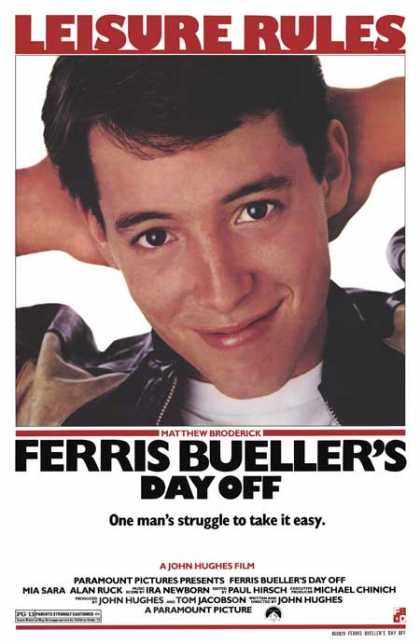
Another Hughes mainstay with a never-more-charming Matthew Broderick skipping school with his best friend (Alan Ruck) and girlfriend (Mia Sara) for a day of adventure in Chicago. Full of classic bits from the keyboard that plays coughs, to Ben Stein’s economic teacher, to the “Twist and Shout” parade scene. And of course there’s that Ferrari. Oh yeah.

“Say Anything…” (1989)
After the success of “Fast Times,” Crowe returned as writer and director to the teen genre and came up with one of the sweetest, most genuine film romances ever. John Cusack stars as the ultimate nice guy, who asks out the valedictorian of his class. The film is remembered most for the infamous “In Your Eyes” boom box serenade, but it has so much more to offer. Crowe’s dialogue is full of knowing laughs and feels honest, natural and smart.

“Clueless” (1995)
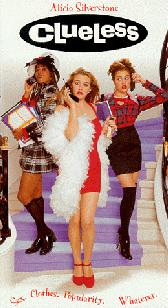
This loose teen updating of Jane Austin’s “Emma,” shifts the setting to Los Angeles and puts the reins of the story in the hands of cheery, fashion savvy rich girl Cher (Alicia Silverstone). Writer/director Amy Heckerling, helmed Crowe’s script for “Fast Times,” but her own writing proves to be just as perceptive about teens. Silverstone, who never matched her work here again, is spot on, as is the rest of the cast which includes Paul Rudd, Brittney Murphy and Donald Faison (“Scrubs”).

“American Pie” (1999)
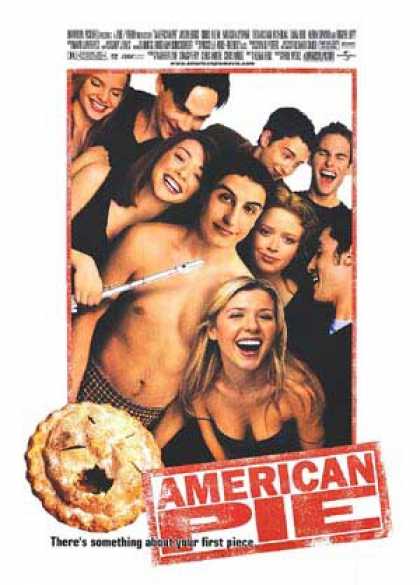
The premise of a group of high school guys making a pledge to lose their virginity by prom is hardly original and has spawned too many bad so called comedies to count. But This wasn’t just another “Porky’s,” in spite of the very crude humor — you’ll have a hard time thinking of apple pie and band camp the same way — there was a lot of surprising heart. Plus Eugene Levy is fantastically awkward as Jason Bigg’s well-intentioned father.

“Mean Girls” (2004)
In many respects this a PG-13 version of 1989’s similarly themed “Heathers,” but that doesn’t make this film any less sharp with its satire of high school cliques. Tina Fey’s script is full of pointed observations that add an extra sting to the laughs. Lindsey Lohan is sent into the vapid “Plastics” clique as a mole only to become one herself. Everyone in the cast is excellent, especially Lohan, Rachel McAdams as the head Plastic, Fey as a math teacher and Tim Meadows as the principal.

“Superbad” (2007)
A couple of friends (Jonah Hill and Michael Cera) spend one of their last nights together before going off to college desperately trying to score alcohol in hopes of maybe getting lucky. Like “American Pie,” the film avoids having its material turn sour, because the raunchy script by Seth Rogan and Evan Goldberg allows for an unexpected sweetness to seep in. You genuinely care about these characters by the film’s end. Of course there’s also Christopher Mintz-Plasse's instant classic portrayal of Fogell AKA McLovin.

'Clone Wars' fails to replicate the 'Star Wars' magic

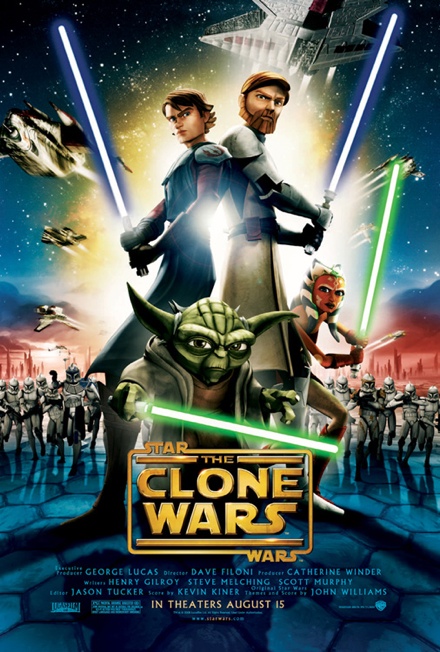
When the original “Star Wars” came out in 1977, people lined up around the block to see it again and again. Oh, how things have changed. A theatrical release of a “Star Wars” film use to be an event, but the cheapy computer animated feature “Star Wars: The Clone Wars” is nothing more than a shameless cash in.

The original “Star Wars” trilogy had a sense of wonder and excitement, and yet, in addition to their visual splendor, the films were character-driven. The new trilogy lost most of that magic. The snappy dialogue that marked the earlier series was replaced with seemingly endless exposition of some of the most boring political intrigue put to celluloid.

Now we have “Clone Wars,” which is set between “Attack of the Clones” and “Revenge of the Sith.” The release is basically an extended episode of the Cartoon Network’s forthcoming series of the same name. Based on what’s on display here, it is not something to look forward to. This is a sub-par Saturday morning cartoon at best.

The Cartoon Network already covered this material in an award-winning hand-drawn animated series also entitled “The Clone Wars.” That series, while not perfect, had imagination and style to spare and in many respects was more entertaining than the new trilogy. So why does this new film and series exist? Because there’s more money to be made even if the “Star Wars” soil is not nearly as fertile as it once was.

There’s no point in getting into the details of the plot which centers on Jedi Knight Anakin Skywalker and his new pupil trying to rescue Jabba the Hutt’s kidnapped baby son. The movie is just an excuse for a series of monotonous battles that are never exciting. The movie’s 98-minute run time feels much longer.

“Star Wars” appeals to both kids and adults because George Lucas reworked the motifs of legends and fairy tales to create a fresh story of princesses and knights in a timeless struggle between light and dark. So it is rather odd that “Clone Wars” is targeted squarely at very young children. It is safe to say no one over the age of 10 — and I am being generous with that number — will get anything out of this. Not even “Stars Wars" fans.

Here’s the quality of writing that managed to get by: Anakin and his student give each other nicknames. He’s Sky Guy and she’s Snips because she’s snippy. They give a nickname to Jabba’s kid too: Stinky.

You know things are amiss from the start when the iconic words that scroll up the screen setting up each “Star Wars” film are replaced with a laughably bad voiceover. They are clearly removed because really little kids can’t read — further evidence of who the true audience of this is.

The sweeping, majestic John Williams score is also largely missing accept for briefly at the beginning and near the end. In its place is a generic action score that adds nothing to the lifeless proceedings.

And then there is the animation. Computer animation has come along way in the last decade, so the only excuse for the inconsistent and second-rate animation on display here is money. This was done on the cheap, which might get by on the small screen, but doesn’t cut it theatrically.

Spaceships and foregrounds look fine and have the same clarity as in the films, but the characters look blocky and as if sculpted out of Play-Doh. The character designs are often ugly with lines too sharp and angular.

In a summer with the beautifully animated “WALL-E” and the excitingly rendered “Kung-Fu Panda,” “Clone Wars” looks embarrassingly bad. Both “WALL-E” and “Kung-Fu Panda” played well to kids and adults alike, but “The Clone Wars” ignores adults and condescends to children viewers.

The voice work is unremarkable with only Samuel L. Jackson, Christopher Lee and Anthony Daniels as C3PO returning from the live action movies. I’m still deeply confused by the fact that Jabba’s cousin Zero the Hutt was given an effeminate Southern accent.

On all fronts “Clone Wars” is drenched in mediocrity as Lucas continues to tarnish his legacy. Whatever magic Lucas had is gone. In other words: By George, I think he’s not got it.

Thursday, August 21, 2008

'Thunder'ous laughter

“Tropic Thunder” is a raunchy, outrageous comedy, but that’s nothing new in today’s market. After all, this summer we’ve already had “You Don’t Mess with the Zohan,” “Step Brothers” and “Pineapple Express.” Is there room for any more over-the-top ridiculousness?

When a film is as sharp as “Tropic Thunder,” the answer is unequivocally yes.

Ben Stiller co-wrote, directed and stars in “Thunder,” a piercing satire on the movie industry centered on a group of actors who don’t realize the Vietnam War movie they are starring in has become real, or at least real enough with a drug ring standing in for the Vietcong. The motley crew of actors are so self-involved that after being told the jungles have been rigged with hidden cameras to capture a raw, guerilla-style look, they assume everything they encounter is part of the movie.

The movie opens with hilarious fake commercials and trailers introducing the stars of the movie within the movie. Stiller is
Tugg Speedman, a fading action star whose one attempt at serious acting, “Simple Jack,” was a disaster. Jack Black is Jeff Portney, the heroin addicted star of a series of films called “The Fatties.” Robert Downey Jr. is Kirk Lazarus as Australian method actor who has a special treatment so he can play the black lieutenant in the film — much to the chagrin of Alpa Chino (Brandon T. Jackson), a rapper who is forced to take a second fiddle role.

A few weeks ago I complained about “Step Brothers” being vulgar for the sake of being vulgar, and now I am praising “Tropic Thunder,” which features dialogue that would make the rude characters in “Step Brothers” blush. The difference is that here the crude humor actually has a point and is given a context. The film’s satirical edge makes the more shocking humor more palatable.

Stiller and Black are good here — Black gets a particularly huge laugh for a particularly obscene line of dialogue while he’s tied to a tree going through withdrawals — but they are doing variations on their standard shticks. It is Downey who takes the film into the comedy stratosphere.

Following his knockout performance in “Iron Man,” this is turning out to be a very good year for Downey. That Downey is able to pull off a performance in a black face that is non-offensive just goes to show how a great an actor he truly is.

The performance works because Downey commits completely to the character of a pretentious actor who believes he can play anyone and who becomes so lost in his performances that he doesn’t "break character until the DVD commentary.” It also helps that any accusations of racism are addressed directly in the film in a series of amusing confrontations between Downey and Jackson.

Outside of the leads, there are unexpected supporting performances from big-name stars. Tom Cruise’s presence in the cast was kept low-key until the film’s release, and you’ve never seen him like this. He plays the foul-mouthed, bald, hairy and pudgy studio head, and he is riotously funny. Don’t believe me? I don’t blame you. It has to be seen to believe.

Matthew McConaughey, a talented actor who has been sludging around in lame comedies of late, gets some big laughs as Speedman’s agent whose top priority is getting his client his TiVo. Nick Nolte as the Vietnam veteran who wrote the film brings a gruff intensity that creates a humorous juxtaposition to the actors and crew members around him.

The film also gets strong support from Danny McBride, (“Pineapple Express”) as the explosion effects guy, and Jay Baruchel (“Knocked Up”) as the one non-star cast member who must put up with all the conflicting egos around him.

As a director, this is Stiller’s strongest film, although few realize he directed the underrated Jim Carrey vehicle “The Cable Guy.” Stiller paces the comedy just right, and in the case of a scene involving the fate of the film’s fictional director (Steve Coogan, “A Night at the Museum”), he allows the audience a lengthy amount of time to laugh before moving onto the next joke.

Be warned: Even for an R-rated comedy “Tropic Thunder” features some outlandish dialogue and visuals. The film is consistently funny, as long as you don’t mind your humor a bit raw.

'Pineapple Express': Stoner comedy with an edge

Thirty years after Cheech and Chong gave birth to the stoner comedy, we have “Pineapple Express” — an audacious blend of the stoner buddy comedy with the action buddy comedy that, while hardly perfect, is very funny. And you don’t even need to be under the influence of a certain illegal substance to enjoy it.

It seems like every other comedy released in the last couple years is either directed, co-written, or co-produced by Judd Apatow. The better Apatow films mix crude humor with surprising sweetness. “40-Year Old Virgin,” “Knocked Up,” “Superbad” and “Forgetting Sarah Marshall” remain the best of the Apatow branding because, for all their scatological humor, there are moments that feel genuine and relatable.

“Pineapple Express” is among the stronger Apatow productions, but is more abrasive than some of the above titles. All Apatow films have language that could shock the easily offended, but “Pineapple Express” adds some brutal violence to the mix that at times sits uneasily next to the comedy.

The set-up is pretty simple. A pothead process server named Dale (Seth Rogan, “Knocked Up’) sees a drug lord (Gary Cole, “Office Space”) and crooked cop (Rosie Perez, “White Men Can’t Jump”) murder someone. Dale drops a joint of extremely rare marijuana — the Pineapple Express of the title — at the scene of the crime that links him to his drug dealer Saul (James Franco, the “Spider-Man” movies), and thus the duo must go on the run.

Even though this is a stoner comedy, there is certain level intelligence here that raises it above the bar of other films of the same ilk. A lot of movies featuring potheads automatically make them stupid, but like the recent “Harold and Kumar” movies, Dale and (maybe) Saul are actually pretty smart. They are just unmotivated and perpetually high.

The film’s quality is increased by its director David Gordon Green. This is Green's first mainstream film. His previous works were introspective independent films like “George Washington,” “Undertow” and “Snow Angels” that lyrically searched through the human condition.

Green may seem like an odd match to this material, but he brings an unforced quality to many of the scenes. He stages a car chase that deserves to be in a comedy time capsule. I don’t doubt it was all on the page, but kudos to Green for making it work on the screen. There is also a silent scene of Dale and Saul frolicking in the woods that is absolutely hilarious, but also beautifully shot.

Although the film works, you need to have a taste for the subversive. If the idea of the 25-year-old Dale dating a barely legal high schooler (Amber Heard) makes you cringe, this probably isn’t the movie for you. If a scene of Dale and Saul selling pot to middle school kids on school property makes you red in the face with anger, this is definitely not the movie for you.

For those not bothered by marijuana, then an enjoyable time can be found hanging out with Dale and Saul. They are amicably played by Rogan and Franco who are able to elicit laughs with just facial expressions. Their conversations, though dazed and confused, are more sharply written by Rogan and his writing partner Evan Goldberg than in most stoner comedies.

Franco, who isn’t known for his comedic talents, creates quite possibly the funniest pothead since Sean Penn’s Spicoli in “Fast Times at Ridgemont High.” His line delivery and timing are right on the mark. Franco’s chemistry with Rogan is easy-going and fun. Their relationship, like in any good buddy film, holds the movie together.

The rest of the cast is good too, although at times uneven. The villains, including a pair of bickering hit men played by Kevin Corrigan and Craig Robinson, alternate between being cartoonish and serious.

Danny McBribe, as Saul’s middleman who reluctantly teams up with Dale and Saul, appears on the film’s poster as if he was a third lead, but he is really only a supporting character. McBribe has a funny fight scene with Dale and Saul, and the film’s closing scene with the trio chatting in a diner ends the film on a high note. No pun intended. I swear.

Thursday, August 07, 2008

A 'tomb' best left alone

This summer has had a surprisingly high quota of quality popcorn films from “Iron Man” to “The Dark Knight.” We were given blockbusters with a bit more brains and imagination than usual, “The Mummy: Tomb of the Dragon Emperor” lacks both.

Like its predecessors, the third movie in this modern “Mummy” franchise has more in common with “Indiana Jones” than Boris Karloff. This series was never high-brow entertainment, but the first time Brendan Fraser and crew suited up to battle the undead in 1999’s “The Mummy” there was a sense of fun and energy that carried the day. Few would confuse it with a good film, but it succeeded at being a mindless diversion.

The same could not be said for 2001’s “The Mummy Returns,” which replayed the first film but added more of everything including an annoying kid and proved that more is definitely less. At least this new film benefits from a new villain and a new setting: China.

The film opens promisingly with a prologue showing the rise to power of the Dragon Emperor (Jet Li) and how he and his army were cursed by an immortal witch (Michelle Yeoh, “Crouching Tiger, Hidden Dragon”). Following “The Forbidden Kingdom,” which also featured Li, and “Kung-Fu Panda” this is the third Hollywood film to borrow Eastern mythology and imagery this year. Where “Forbidden Kingdom” and “Kung-Fu Panda” was fun and loose, “Dragon Emperor” is dull and stiff.

After the prologue things jump to 1946 and start getting clunky. Rick and Evelyn O’Connell (Fraser and Maria Bello, replacing Rachel Weisz) have retired in England after a career of espionage during World War II. They are shaken out of their boring new lives by one last call to duty. They are to bring an artifact to China. They agree, because, after all, Evelyn’s brother (John Hannah) has a night club there they can visit.

Unbeknownst to them, their now-grown son (Luke Ford) has followed in the family business and has discovered the tomb of the dragon emperor. A family reunion is just as inevitable as the awakening of the now mummified dragon warrior. Yeoh’s immortal daughter (Isabella Leong) is thrown in as a love interest for Ford.

There are special effects galore, but there’s little excitement because it is all so familiar and there’s no vision or sweep behind the staging of these elaborate action set pieces. “Hellboy II” was equally light on its plot, but made up for it with astonishing and inventive visuals.

A subplot with a group of friendly yeti is the most entertaining aspect of the film simply because it is so completely out of left field. Sure the appearance of abominable snowmen is utterly laughable, but at this point in the movie you’re desperate for anything new.

The acting, let’s just be blunt about it, is bad. Movies like this don’t need Oscar-worthy performances, but there’s a certain tongue-in-cheek acting style that if done right can go a long way. Fraser, who is usually the go to guy for live-action-cartoon heroics, seems bored this time around.

Bello is a talented actress as her work in movies such “The Cooler” and “History of Violence” can prove, but you’d never know it based on her work here. Burdened with a terrible fake British accent, she seems uncomfortable and gives a completely flat performance. Good thing she’s an established talent because this does nothing to further her career. It may even be a step backward.

Ford looks dashing, and that’s about it. His love subplot with Leong is undernourished and completely hollow. There are way too many poorly written lovey-dovey scenes between the two couplings, and none of them have a single genuine moment. All these scenes do is drag the pacing down.

It is only Li and Yeoh who bring any sort of flavor to the proceedings. Li and Yeoh are both legends within the world of martial art films and they provide a touch of grace and class to the proceedings, unfortunately their screen time is limited to the beginning and end. The two share an all too brief sword fight that for martial arts fans may be worth checking, but give it some time and I’m sure it’ll show up on youtube.

A 'rich' night of theater

'Fiddler on the Roof' comes to North Conway, N.H.'s Eastern Slope Playhouse


Following on the heals of the provocative “Cabaret,” the Mount Washington Valley Theatre Company’s production of “Fiddler on the Roof,” which is running nightly at 8 p.m. — except Monday — through Aug. 16 at the Eastern Slope Playhouse in North Conway, may seem like much tamer fare. While this is true, the two shows have more in common than at first glance.

“Fiddler on the Roof” is the Mount Washington Valley Theatre Company’s second show in a row to deal with persecution of Jews. “Cabaret” and “Fiddler” follow a similar structure, with the first act of each show being light, frothy and fun, but with an underlining danger that becomes overt as act one transitions into act two.

“Fiddler’s” ending is not nearly as dark as “Cabaret’s,” but both effectively use the musical-theater tradition to showcase serious themes in a way that still entertains and doesn’t trivialize the issues at hand.

Set in the small Russian town of Anatevka in 1905, the show focuses on the milkman Tevye (George Piehl) and his daughters. Tevye is part of a resilient Jewish community that quietly and happily co-exists with the gentiles in town, at least at the start of the play. That conflict is really secondary to a struggle between tradition and change.

Three of Tevye’s five daughters will marry by the show’s end, and each marriage represents a bigger challenge to the longstanding traditions of the Jewish community. Tevye is willing to bend to see his daughters happy, but even he has a limit. The show presents an intriguing debate over the importance and dangers that come with both tradition and change.

This production, directed and choreographed by Andrew Giant Linden, features strong performances and lively song and dance numbers throughout. In terms of the production’s design, the only disappointment is a rather lackluster set design by Brad Archer, but this is a minor fault that is largely rectified by the lighting design by Sara Houston.

This is Piehl’s show. He ably steps into the role originated by Zero Mostel on Broadway and Topel in the 1971 film version. Piehl makes it all seem so easy in what
appears to be an effortlessly charming performance. His one-sided conversations with God are delivered close to perfection, as are Tevye’s internal monologues. Piehl’s is also effective in the interactions with Tevye’s daughters. There is an especially affecting scene with Tevye saying goodbye to his daughter Hodel (Liz Clark Golson) at a bus stop.

The rest of cast is also solid. Rachel Brown, Clark Golson and Amanda Philips as Tevye’s three daughters with marriage on the mind strike just the right notes. Each actress shows chemistry with their respective matches and possesses charming and sweet stage presences.

Craig Holden as Lazar Wolf, the butcher, Shannon Connelly as Yente, the matchmaker, and Brendon Stimson as the Rabbi and other characters are also standouts. Holden and Connelly in particular provide some good laughs.

The weakest link in the cast is Grant Golson, and that only becomes apparent if you saw his performance in “Cabaret.” Golson, who once again is romantically paired with his real life wife Clark Golson, gives the same performance he did in “Cabaret” and reveals a limited range as an actor. His inflection, tone and delivery are nearly identical. Clark Golson, on the other hand, is just as charming as she was in “Cabaret” and doesn’t repeat herself.

The show is populated with great songs and there are several highlights. The classic “Matchmaker, Matchmaker” is sung and danced with gusto and humor by Brown, Clark Golson and Philips. “If I Were a Rich Man,” another song that has slipped into our cultural lexicon, is sung with vigor by Piehl, although the staging could have been a bit more dynamic.

“The Dream” is both a musical and comedic high point of the show, with Tevye desperately trying to cook up a way out of a tight spot with his wife (Megan Thomas). “Do You Love Me?” features Tevye asking that question to his wife 25 years into their arranged marriage. The song is awfully sweet without giving the audience a toothache.
“To Life,” “Bottle Dance” and “Wedding Dances” feature some astonishing dancing that is truly impressive and full of infectious, joyous energy.

“Fiddler on the Roof” isn’t a flawless production, but, oy vey, what is? A little imperfection never hurt anybody, and at the end of the night this production will leave the audience entertained. What more can you ask for? Tickets are $27 and are available at the box office or by calling 356-5776.