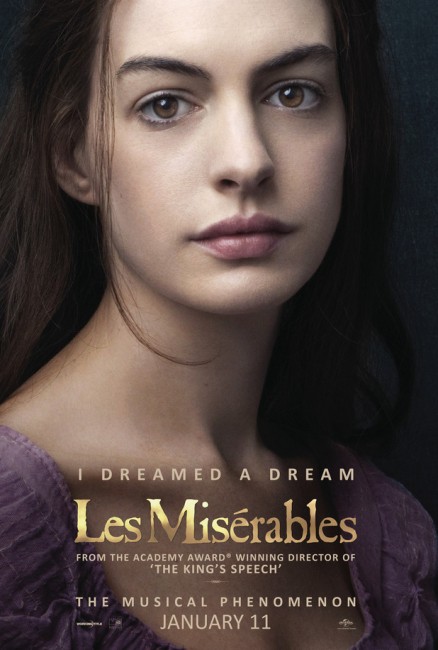
 "Les Misérables," Victor Hugo's classic novel has been filmed numerous times, the first dating back to 1934, but the significance of this latest movie is that it is the first version of hugely popular musical version.
First staged in 1985, "Les Misérables" went on to become a global phenomenon and the second longest-running musical in the world behind "The Fantasticks." That it has taken this long for it to be adapted to the screen is surprising.
"Les Misérables," set in 19th century France, centers on Jean Valjean (Hugh Jackman), a slave prisoner who has survived 19 years for stealing a loaf of bread. As the film begins, he is a free, but marked man unable to rebuild his life. He breaks his parole and sets out to create a new life, but forever lives in fear of the relentless Inspector Javert (Russell Crowe).
In addition to being the first film version of the musical, this "Les Misérables" is noteworthy because all of the actors are singing live on camera. Traditionally, when making a film musical, the cast records their vocals in a studio and then lips syncs on the day of filming. By having the actors sing live, the emotions of the performance are very much present.
As a musical, "Les Misérables" is light on dialogue making it closer in spirit to an opera. Nearly everything is sung, which makes the fact that everyone is singing live all the more astounding.
Purists may complain that the vocals aren't as technically perfect as they would've been pre-recorded, but there's an immediacy and vulnerability to these performances that could only be created in the moment.
The intimacy of the show is increased by director Tom Hooper's choice to shoot most of the film in close ups. This changes the way many of the songs are sung. The actors no longer need to project to the back of the theater. Introspective lines that would have to be belted out to reach the balcony can be whispered and capture an emotional honesty that would be difficult to achieve on stage.
This choice pays off throughout the film, but never more powerfully than during Anne Hathaway's extraordinary version of "I Dreamed a Dream." Hathaway's Fantine has just succumbed to a life of prostitution as a means to support her young daughter Cosette (Isabelle Allen). The song represents her heart and spirit breaking. Hathaway's performance is raw, completely exposed and heart wrenching. It is hard to imagine anyone not being moved by it.
A now wealthy Jean Valjean comes to an ailing Fantine's rescue and vows to take care of Cosette. The story jumps ahead several years as the older Cosette (Amanda Seyfried) falls in love at first sight with Marius (Eddie Redmayne), who is part of a group of students preparing a rebellion. This reluctantly pulls Jean Valjean into their conflict and exposes him to Javert.
Other characters include the Thénardiers (Sacha Baron Cohen and Helena Bonham Carter), con artists who temporarily cared for Cosette before Jean Valjean and who amusingly continue to pop into the story. Cohen and Carter provide the film its much needed comic relief. Their song "Master of the House," is very funny and comes in just when we need it as we've just received some heavy emotional punches.
The other key character is Éponine (Samantha Barks), who secretly loves Marius. She sings "On My Own," a beautiful ballad of unrequited love.
Everyone in the cast, many of which are not known for their singing, are strong and everyone gets their moment to shine. Jackman, who has sung on Broadway, gives an emotionally bare performance that shows the growth of a man from broken and lost to compassionate and selfless. Seyfried reveals an amazing vocal ability, particularly in a song towards the end. Redmayne sings a vulnerable version of "Empty Chairs at Empty Tables," a song for his friends lost in battle.
The weakest singer is Crowe, who, although his voice isn't bad, doesn't seem comfortable singing and appears to be struggling with singing live. Because of this, his performance while singing often suffers. He is strongest when not singing although his final song does have weight and power behind it.
Overall, this is a profoundly moving and sweeping rendition of the musical. Not only does it find a way to distinguish itself from the stage version, but it manages to be a complete and robust filmgoing experience in its own right.

 "Jack Reacher" opens with a shooter making preparations to go on a shooting spree. We are forced to see through the shooter's scope as he picks off five people in a crowd. This would be difficult to see in any context, but given the recent school shooting in Connecticut it is particularly rough to watch.
 Director Peter Jackson returns to J.R.R. Tolkien's Middle Earth for "The Hobbit: An Unexpected Journey," the first of a new trilogy following the adventures of the hobbit Bilbo Baggins, the wizard Gandalf and a merry band of dwarfs.
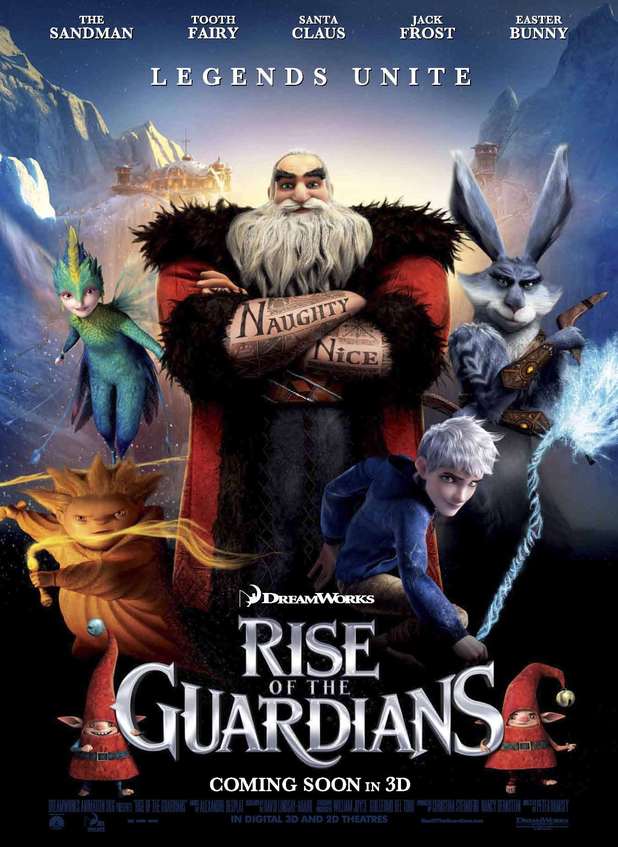 Every holiday season there is at least one new Christmas-themed family movie released into theaters. Lately, these films tend to have a hip or revisionist take on the Santa Claus mythology. This year is no different with "The Rise of Guardians" presenting Santa as a member of an Avengers-esque super group of mythic childhood figures.
 Director Ang Lee's "Life of Pi," based on the popular book by Yann Martel, is an extraordinary visual experience with some of the most beautiful images to appear in a film in this or any other year.
 "James Bond turns 50 with "Skyfall," Daniel Craig's third appearance as the British super spy. It is a smashing 007 adventure with thrills, laughs, pathos and plenty of knowing nods to Bond's past.
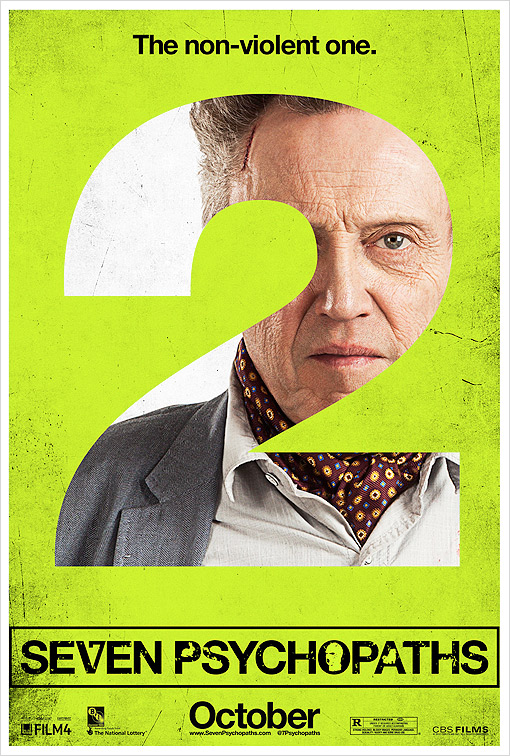 "Seven Psychopaths" is not for everyone. It features some gruesome visuals not for the faint of heart. It is vulgar and violent, but also morbidly funny and philosophical.
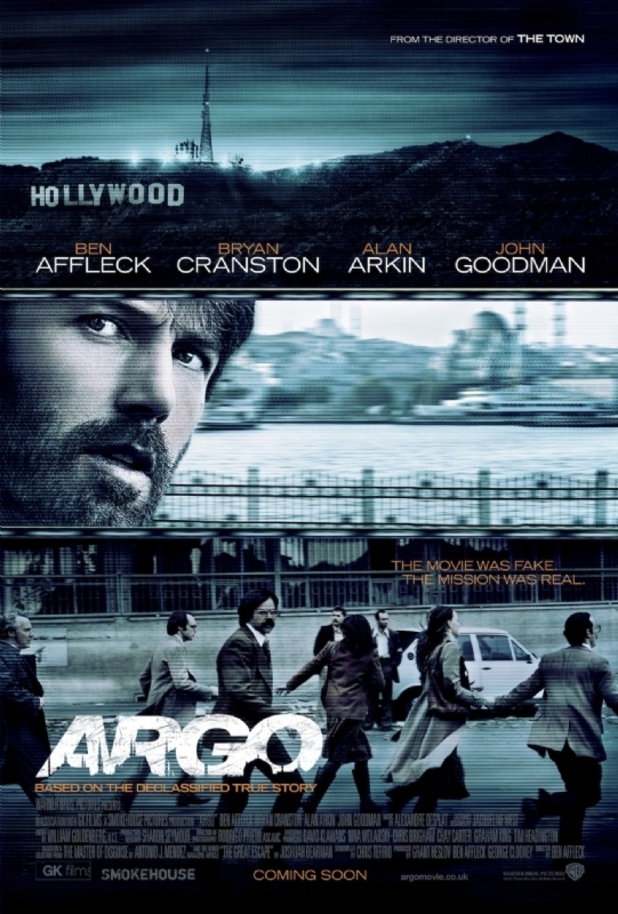 Based on a true story is often a dubious statement. Many films make that claim and take a kernel of truth and expand it to the point of being a mere shadow of reality. In "Argo," Ben Affleck's third film as a director, some liberties are taken in telling an obscure bit of history, but the most absurd elements are the parts that 100 percent true.
 "Arsenic and Old Lace" is one of funniest movies ever made. Directed by Frank Capra from adaptation by Julius J. Epstein and Philip G. Epstein of Joseph Kesselring's play, the film is a perfect pairing of inspired looniness with macabre humor.
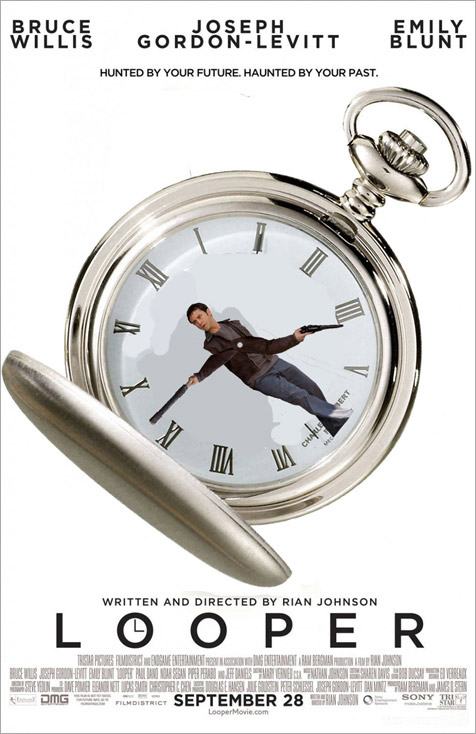 Writer/director Rian Johnson's "Looper" is a tricky film to discuss. It is a densely packed piece of science fiction with intricate layers. Once you understand the film's logic, it is easy to follow. In terms of the characters' objectives, the plot is simple and direct, but to explain it in too great of detail ruins the numerous surprises the film has to offer.