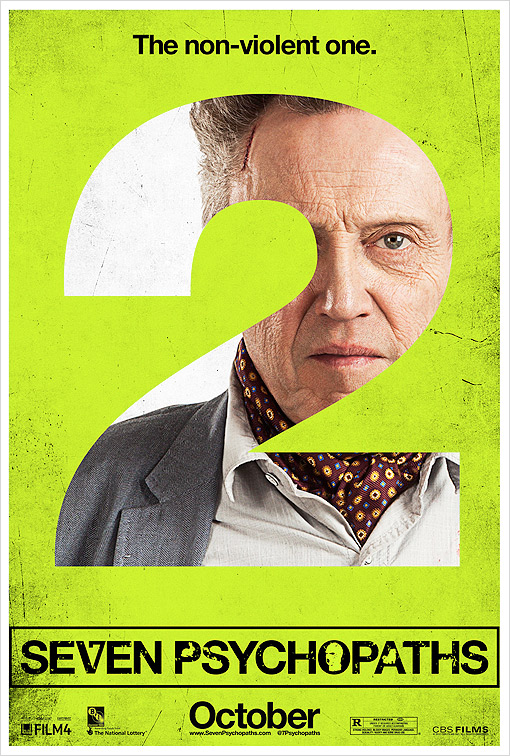
 "Seven Psychopaths" is not for everyone. It features some gruesome visuals not for the faint of heart. It is vulgar and violent, but also morbidly funny and philosophical.
This is playwright Martin McDonagh's follow up to his first film "In Bruges," another darkly comic, yet poignant movie. While "Seven Psychopaths" doesn't have the same emotional weight as its predecessor, it is a compelling exploration of the darker side of the human psyche.
The film has been marketed as a violent, but broadly comic film largely because of the presence of quirky actors like Christopher Walken, Sam Rockwell and Woody Harrelson in the cast. It isn't as goofy as the trailer makes out to be and while it is often a very funny film, it goes to macabre and disturbing places.
Colin Farrell stars as Marty, a screenwriter struggling to write a script called "Seven Psychopaths." All he has is the title and the idea that he doesn't want his film to be about mindless action. He turns to his own life to find the psychos for his script. It turns out he doesn't need to look far.
Marty's best friend Billy (Rockwell) kidnaps dogs with Hans (Walken) and then collects the reward for finding them. Billy takes the beloved Shih Tzu of a gangster (Harrelson) which gives Billy all sorts of fodder for his screenplay. Billy and Hans also turn out to have dark secrets.
Billy, attempting to help out Marty, posts an ad looking for psychopaths who may want to be written about in a movie. Enter Zachariah (Tom Waits), a serial killer that kills other serial killers.
This is a fantastic cast and everyone is on their A-game. Farrell, an underrated actor who is often better than the material he appears in (this summer's remake of "Total Recall" comes to mind).
As with "In Bruges," McDonagh has given him a juicy role. Marty is an alcoholic writer, one of the oldest cliches around, but Farrell does nice work avoiding the pitfalls of playing a drunk. One reading of the film could be that the film is about an alcoholic coming to terms with his disease.
Walken brings the idiosyncratic line readings and unpredictable energy he has become beloved for to the table, but also reminds us that he is a nuanced actor who can do wonders in a quiet, wordless moment.
Rockwell (who appeared with Walken in McDonagh's play "A Behanding in Spokane") brings an amusingly over-the-top manic energy to the film that helps to counterbalance some of the more graphic imagery.
Harrelson and Waits have smaller roles, but don't throw them away. Waits has an mencing oddball aura about him. Harrelson plays a tough guy that goes very soft when it comes to his dog.
In many respects, "Seven Psychopaths" recalls "Adaptation," in which screenwriter Charlie Kaufman is failing to adapt "The Orchid Thief" and writes himself into the script. Marty — a clear stand in for McDonagh — has writer's block and also makes his way into the script he is writing.
We assume that the script Marty is writing is the movie we are watching, but, because the film is about a writer, it is hard to know what is truly happening and what is fabrication. Several characters die in the course of the film, but perhaps they didn't. Writers are notorious for stealing from their life and embellishing. Is that what Marty is doing? Is that what McDonagh is doing?
One certainly hopes McDonagh's life isn't this violent. The film simply could be a metaphor for his struggles as an Irish playwright trying to work within the Hollywood system. There's a push and pull within the film between what McDonagh wants (a meditation on life and death) and what Hollywood wants (generic gunfights and violence).
"Seven Psychopaths" also recalls Quentin Tarantino's "Reservoir Dogs" and "Pulp Fiction," films that presented criminals and gangsters talking and interacting like real people rather than movie cliches. The dialogue in those films was hip and smart. In the years since, numerous filmmakers have attempted to emulate Tarantino's style of writing, but most have failed.
McDonagh is one of the few writers to play in Tarantino's playground and pull it off with the same balance of wit and substance. McDonagh is by no means a Tarantino clone though. He has his own distinct voice and is more philosophical. They are similar in their desire to write characters that are smart and to play against traditional genre expectations. In both cases, it is a relief to have a filmmaker who refuses to dumb down and who is willing to take chances.

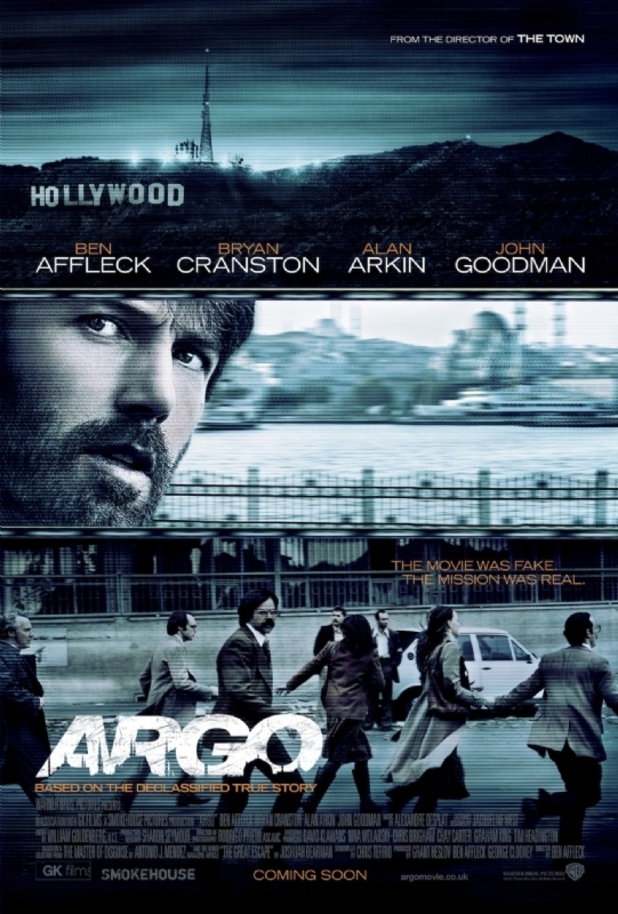 Based on a true story is often a dubious statement. Many films make that claim and take a kernel of truth and expand it to the point of being a mere shadow of reality. In "Argo," Ben Affleck's third film as a director, some liberties are taken in telling an obscure bit of history, but the most absurd elements are the parts that 100 percent true.
 "Arsenic and Old Lace" is one of funniest movies ever made. Directed by Frank Capra from adaptation by Julius J. Epstein and Philip G. Epstein of Joseph Kesselring's play, the film is a perfect pairing of inspired looniness with macabre humor.
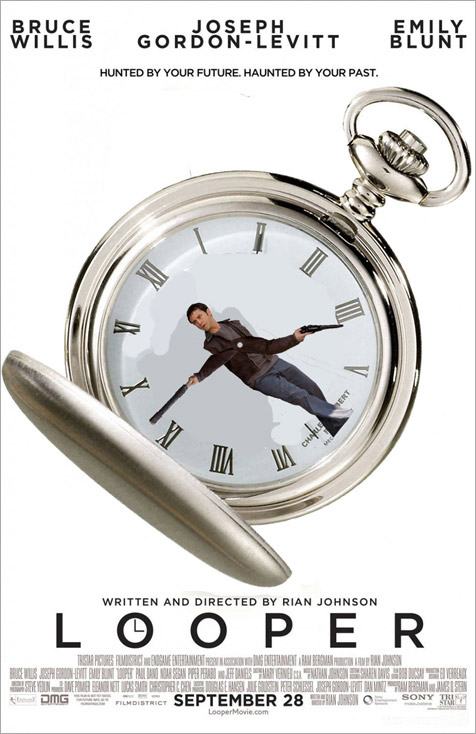 Writer/director Rian Johnson's "Looper" is a tricky film to discuss. It is a densely packed piece of science fiction with intricate layers. Once you understand the film's logic, it is easy to follow. In terms of the characters' objectives, the plot is simple and direct, but to explain it in too great of detail ruins the numerous surprises the film has to offer.
 This past weekend I saw "Resident Evil: Retribution," the fifth film in the series based on the popular mutant-zombie video games. The film is so inconsequential that it doesn't even deserve a full review.
 "Beasts of the Southern Wild" is a wonderfully odd and oddly wonderful film. This is a rare film that captures a child's perspective and their sense of wonder and awe of the world.
 The generically named "Lawless" is an imperfect, but compelling prohibition-era drama about moonshiners, gangsters and a crooked federal agent that is graphically violent and exceptionally well acted.
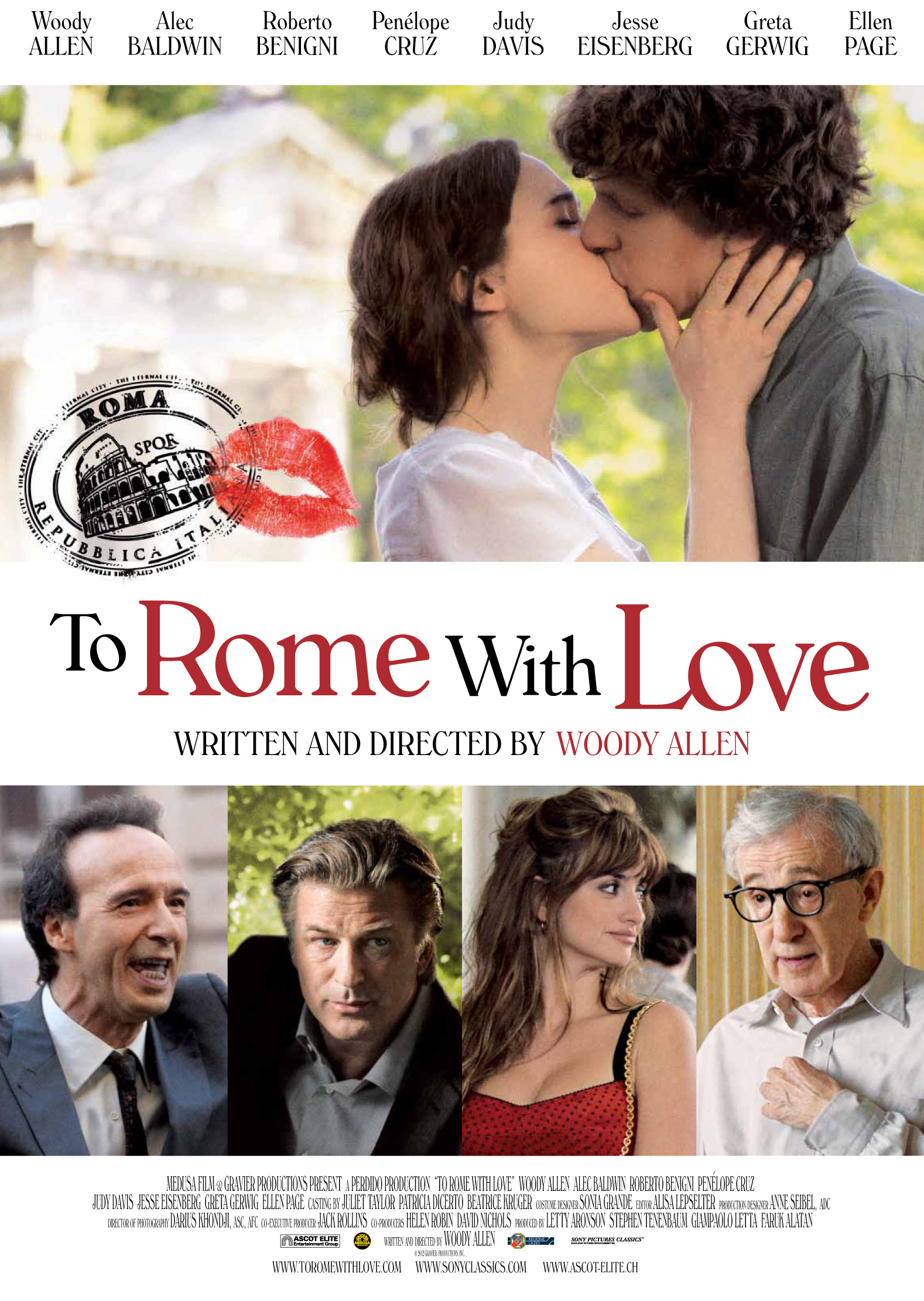 Woody Allen continues his European film tour, which has included stops in London, Barcelona and Paris, with "To Rome With Love," a collection of stories set in Italy's capital that hits more often than it misses.
 "The Odd Life of Timothy Green" is the sort of heartwarming live-action Disney film that used to be the company's mainstay for decades. In recent years, modestly budgeted family comedy/dramas have been replaced with bloated, big-budgeted action extravaganzas. "Timothy Green" is both a throwback to feel-good Disney films of the past and something deeper and richer than the typical Disney fare.
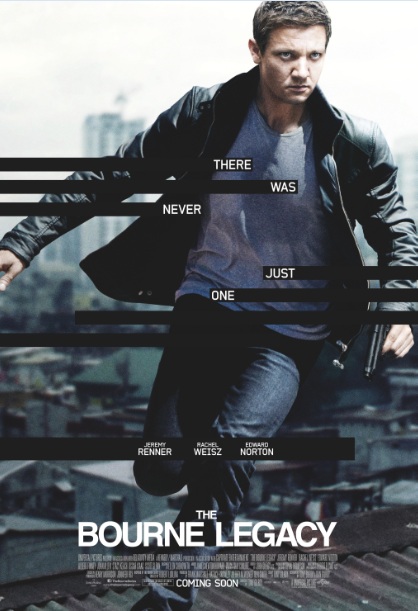 "The Bourne Legacy," the fourth film in the Jason Bourne series, doesn't actually star Matt Damon's Bourne. How does one make a Bourne film without Bourne? You center it on another super spy similar to Bourne and have Bourne's action in the previous films have a direct effect on this new character.
 Director Christopher Nolan completes his dark, reality-based "Batman" trilogy with "The Dark Knight Rises," which makes good on its title. Nolan raises a bleak film into something hopeful and uplifting.