 Writer/director Quentin Tarantino’s “Inglourious Basterds,” a revisionist riff on World War II that plays like the ultimate revenge fantasy against Nazis, is a mishmash of tones, styles and ideas, which is practically the definition of a Tarantino movie. This time his penchant for pastiche slightly gets away from him, but even Tarantino not at his best is still better than most movies.
The advertising focuses, not surprisingly, on the film’s biggest star, Brad Pitt, but this is misleading as this is very much an ensemble piece. Pitt’s Lt. Aldo Raine is the leader of the titular group of (mostly) Jewish-American soldiers. Raine has ordered each of his men to kill and scalp 100 Nazi soldiers.
Although the film bears their group’s name, the Basterds are almost incidental for large parts of the film as if they are supporting players in their own movie. Half of the Basterds don’t even have dialogue. It seems like Tarantino became distracted by other characters and plot lines and this isn’t necessarily a bad thing.
The film opens with a brilliant sequence set in German occupied France. This first segment, the film is broken up into chapters, centers on Col. Hans Landa (Christoph Waltz), a German officer nicknamed the Jew Hunter, interrogating a French dairy farmer (Denis Menochet) about whether he is hiding a Jewish family.
Landa has a deceptively jovial way about him that is unsettling. He is like a cat gleefully pawing at his prey deciding whether and how to go in for the kill. Waltz, who won the Best Actor award at the Cannes Film Festival, is astounding in this scene and throughout the film.
Waltz steals the film with his effortless charm. Some have claimed it is in poor taste to make a Nazi so charismatic, but his allure is lethal. The way Waltz switches from a pleasant grin to a deadly grimace is disturbing. It is an inspired characterization that reminds that sometimes evil comes with a smile.
This opening is largely played straight with Tarantino creating an atmosphere of taut suspense. The next chapter shifts gears and gives a first taste of the flamboyantly gory exploits of the Basterds.
The film switches back and forth between the two tones, and it is jarring. The conclusion morphs into an over-the-top caricature that is in stark contrast to the opening. The film is still hugely entertaining for large sections, but the tonal issues mar it from greatness.
Each of the film’s chapters work as self-contained pieces, but as a whole the film feels disjointed even when the plot threads presented in each segment come together in the final act involving the screening of a German propaganda film at a French cinema run by a vengeful Jew (the luminous Mélanie Laurent).
Tarantino has become increasingly in love with his words and his ideas so much so that he has a hard time sacrificing any of it, and this has become a liability. In “Kill Bill” he had so much material that the film was broken up into two separate volumes, which turned out to be a master stroke.
As one film, “Kill Bill” would have suffered from the same problems in tone that “Inglourious Basterds” does, but Tarantino’s two impulses were split with the most outrageous stuff going into “Vol. 1” while the more dialogue driven material went into “Vol. 2.” The same approach could’ve aided “Inglourious Basterds,” which was originally developed as a mini-series thus explaining the episodic nature of the film.
Even with its faults, when it is works, it works extremely well. Tarantino has an undeniably keen ear for dialogue. No one working today can write quite like he does. There is a gem of scene set in a tavern that is as good as anything in “Pulp Fiction” or “Reservoir Dogs.”
Mike Myers makes a great cameo appearance as a British general, and there’s a good performance from Diane Kruger showing more depth than she was afford the opportunity in the “National Treasure” movies.
Pitt continues to reveal himself as an astute comic character actor, and his Aldo Raine is another vivid and very funny characterization similar to, but completely different from, his work in “Snatch” and “Burn After Reading.” His introductory monologue is classic.
“Inglourious Basterds” is an overly ambitious film, but I’ll take a film with too many ideas over one with none any day. What Tarantino does here is certainly not for everyone, but for people on his same often warped wavelength there is much entertainment to be had.

 “District 9” is about aliens. If you read that sentence and your knee-jerk response was to dismiss the film, please keep reading because “District 9” is so much more than your average action-packed creature feature.
 Last Thursday, filmmaker John Hughes died in New York following a heart attack. Hughes was one of the more prolific filmmakers of the 1980s. From 1983 to 1994, Hughes, on average, wrote two films a year.
 Edge of your seat is a rather tired and overused description for a movie, but if ever a film deserved that description, “The Hurt Locker” is definitely it.
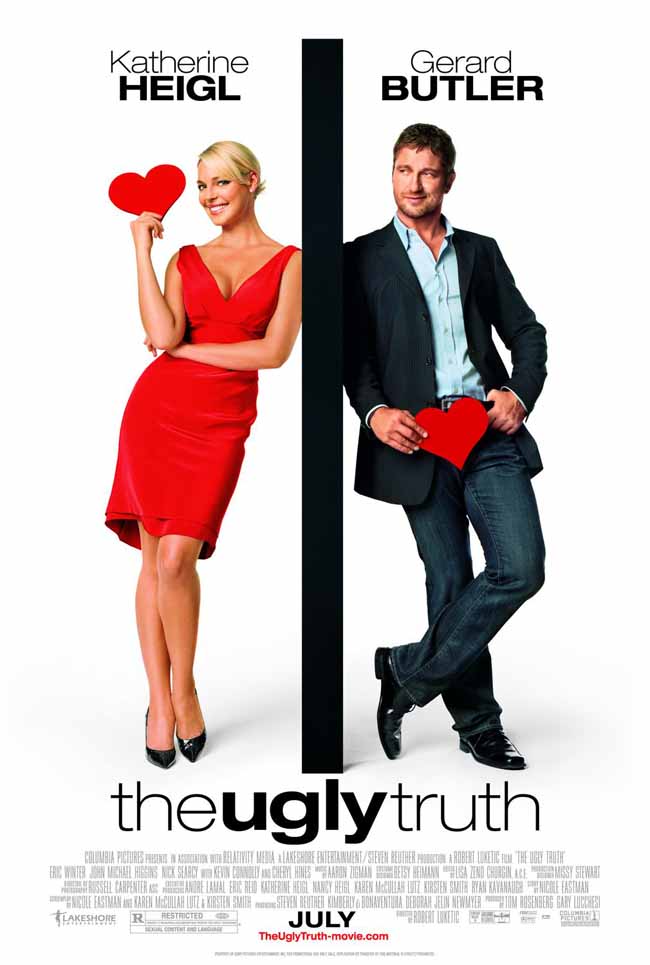 “The Ugly Truth,” the new romantic comedy starring Katherine Heigl and Gerald Butler, is thoroughly average. It isn’t an awful experience and it is pleasant enough, but it certainly doesn’t fill one with the desire to tell people, “Oh, you’ve got to see this one.”
 Last night just as I was about to go to bed, I got pulled into watching a movie on TV, 1938’s “The Adventures of Robin Hood” starring Errol Flynn. I decided reviewing that film would be a far more pleasurable endeavor than what I had originally intended to write about.
 The time has come for another “Harry Potter” film, which is something I say with great joy versus a heavy sigh. “Harry Potter” is not only the most financially successful franchise of all time — it is one of the most consistently entertaining.
 Coming out of “Public Enemies,” the one thing that is abundantly clear is that Johnny Depp is a master at his craft. It is unlikely at this point in his career anyone doubts that, but his talent still astounds.
 If you went to camp as a kid, you might remember a song that went like this: “You can’t ride in my little red wagon, the axle's broken and the wheels are sagging. Second verse, same as the first, a little bit louder and a little bit worse.” That basically sums up the experience of seeing “Transformers: Revenge of the Fallen.” Each scene is a little bit louder and a little bit worse.
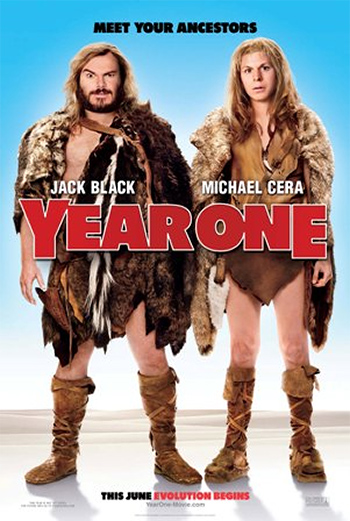 There are few movie going experiences more disappointing than being let down by a film you were anticipating. With “Year One,” in spite of all the negative reviews, I was ready to laugh, but alas I have to join the majority in saying that “Year One” is a dud.
 Some films get better the longer they linger in your mind. The original 1974 version of “The Taking of Pelham 123” starring Walter Matthau and Robert Shaw is one of those films. Other films that went down OK during viewing turn rancid bouncing around your cranium. Unfortunately that is the case for the new version of “The Taking of Pelham 123.”
 Ever since “Animal House” became a huge comedy smash in the summer of 1978, the low-brow gross-out comedy has been a mainstay of the summer movie season. There have been many pale imitators, but some have been riotously funny. Luckily, “The Hangover” falls mostly in the latter category.
 “Up” is the perfect title for Pixar’s 10th feature length film because uplifted is exactly how you feel as the final credits roll. This is one of the most emotionally satisfying, engaging and funny films of this or any other year. “Up” is something truly special.