Friday, September 10, 2010

'Machete' is good bad cinema

Robert Rodriguez is a filmmaker who loves to make intentionally bad films. A lot of movies get branded as “so bad it's good.” In the case of “Machete,” the film is so good at being bad it is good.

“Machete” is an expansion of a fake trailer that was included in the Rodriguez/Quentin Tarantino double feature “Grindhouse.” Veteran character actor Danny Trejo stars as the title character, an ex-Federale, who is hired to kill a senator (Robert DeNiro) but is betrayed. Machete uncovers an elaborate conspiracy and seeks bloody vengeance.

Similar to when a three-minute “Saturday Night Live” skit gets expanded to a feature length, there is some padding going on here and not everything works, but on balance it entertains for those with a high tolerance for gory violence, strong language and gratuitous nudity.

The film is a throwback to the exploitation films of the 1970s and, although it is set in the present day, with the use of computers and cell phones it looks and sounds like a grungy low-budget B-movie from that era.

In “Grindhouse” Rodriguez and Tarantino each contributed a film that was an homage to these grimy, often poorly acted and poorly written movies that in their awfulness had a certain off-kilter charm. Many of Tarantino's films have been riffs on some form of exploitation film, but he attempts to raise the genres he works within to another level of quality. Rodriguez is merely content to replicate.

There's a self-awareness to the proceedings. Lines that would've been unintentionally funny in an actual exploitation film are intentionally meant to get a laugh in their cheesiness. As with “Planet Terror,” Rodriquez' half of “Grindhouse" and “From Dusk Til Dawn,” Rodriquez takes great joy in frolicking around in this low-brow material.

Now while the film doesn't carry the strong characters, plotting or dialogue of a Tarantino film, Rodriquez does slide in some sly, if obvious, political satire in what will surely get the film branded as liberal propaganda by conservatives.

DeNiro's senator is running for re-election in Texas and has built his campaign on having no tolerance for illegal immigrants. He even gladly shoots a Mexican crossing the border. There are a couple very funny fake political ads that only slightly exaggerate right-wing rhetoric.

Rodriquez has populated the cast with current Hollywood starlets like Jessica Alba and Michelle Rodriquez (no relation) and faded stars such as Jeff Fahey, Don Johnson, Steven Seagal and Lindsey Lohan, who in a depressing bit of stunt casting, stars as Fahey's drug-addled daughter. For those interested in this sort of thing, Lohan is nude for a good portion of her role. Rodriquez-regular Cheech Marin also shows up as Machete's foul-mouthed, gun-totting brother, who is also a priest.

Given the film isn't reaching from Oscar caliber performances, the acting is actually pretty good. The cast finds a nice balance of campiness and sincerity. Johnson is clearly having fun hamming it up as a vigilante border patroller and, surprisingly enough, Seagal is decent as a
Mexican drug lord.

DeNiro is slumming it in this movie, but is in on the joke. Fahey is an underrated actor who along with DeNiro brings some acting gravitas to the film. And then there is Trejo as Machete. Trejo has been popping up in action movies for years, most recently in “Predators,” and in his first lead role he brings dry deadpan delivery and an intimidating, but likable screen presence.

As a director, some of Rodriquez' actions scene unfold too quickly and sometimes it is unclear what just happened, but his imagination for the twisted is seemingly endless. Those with the same warped sense of humor will appreciate his quite unexpected use of a human intestine.

“Machete” achieves exactly what it set out to achieve and it works on that level. It is absolutely not for everyone, but for a certain kind of moviegoer it'll be a lot of fun.

Friday, September 03, 2010

Five favorite movie soundtracks

I recently purchased the “Scott Pilgrim vs. the World” soundtrack, and it was love at first
listen. We are planning a spring wedding. The great thing is we don't even need to get a DJ.

What struck me about the “Scott Pilgrim” soundtrack was how well it worked as an actual album. Sadly, movie soundtracks, and I'm referring to the kind that are a collection of songs rather than the film's score, are more often than not, merely marketing tools. Every once in a while, though, the soundtrack released to accompany a film will be conceived with care.

A great soundtrack should be a reflection of its movie whether it be in tone or message. To be truly successful as an album, a soundtrack can take either “The Graduate” method of having a single artist compose all the songs or the mix tape approach. Too often soundtracks seem to have songs arbitrarily chosen, but great ones will play like a mix tape lovingly compiled by a dear friend or lover.

Below is a list of five of my favorite film soundtracks.

“Wayne's World” (1992)
Soundtracks can be a great way to be introduced to new music and artists. This was the case when, at age 9, I got the “Wayne's World” soundtrack. Through the album I was given my first introductions to such giants of rock as Queen and Jimi Hendrix with “Bohemian Rhapsody” and “Foxy Lady” both of which were iconically featured in the movie.

“She's the One” (1996)
This soundtrack is as obscure as the Ed Burns film that inspired it, but with songs entirely written by Tom Petty and the Heartbreakers it is worth seeking out. The film was a darker-than-usual romantic comedy, and Petty's music reflects that with uplifting love songs paired with bitter songs of heartache. Songs like “Angel Dream” show Petty's tender side, while “Hope You Never” shows a nastier view on love.

“Grosse Point Blank” (1997)
The quirky film that this soundtrack comes from was co-written and co-produced by its star John Cusack whose own music tastes infused the film. Much like “High Fidelity” three years later, the album feels as if Cusack sat down and put together the soundtrack as a mix for all his fans. The album offered me my first exposure to such songs as “Rudie Can't Fail,” “Blister in the Sun,” “Mirror in the Bathroom” and “Pressure Drop.”

“Josie and the Pussycats” (2001)
Yes, you read that correctly. I have no shame in my love for this soundtrack to the goofy update of the 1970s cartoon. The songs created for the titular band featured Letters to Cleo's Kay Hanley on lead vocals and lyrics by Fountains of Wayne's Adam Schlesinger, who was nominated for an Academy Award for the title track to Tom Hanks' “That Thing You Do.” These are catchy pop-punk song with hooks that are the real deal. As an added bonus there's a boy band parody called “Backdoor Lover.”

“About a Boy” (2002)
Badly Drawn Boy, an idiosyncratic Brit pop act that freely blends sounds and genres, was the perfect choice to provide score and songs for this Hugh Grant vehicle based on the Nick Hornby book. Clever, heartfelt lyrics paired with well-constructed harmonies and melodies make this a wonderful collection of songs as both a stand-alone album as well as a companion piece to the film.

Friday, August 27, 2010

'Switch' is a better than average rom-com thanks to Bateman and Goldblum

“The Switch,” a straight-forward romantic comedy with a modern twist, isn't a groundbreaking film, but it is one with many small pleasures that add up to an appealing overall experience.

Although Jennifer Aniston gets top-billing as Kassie, a 40ish woman who turns to artificial insemination, this is really Jason Bateman's film. Bateman stars as Wally, Kassie's best friend who secretly yearns for more.

Wally is hurt when Kassie turns to a sperm donor named Roland (Patrick Wilson) rather than to him. He is a neurotic hypochondriac and she doesn't want those traits for her offspring. In a drunken stupor Wally switches his sperm in place of the donor's. Conveniently enough he blacks out and forgets the switcheroo.

Flash forward seven years and Wally meets Kassie's son (Thomas Robinson) and notices more than a few of his traits in him. The rest of the film is Wally getting up the nerve to tell Kassie the truth while at the same time dealing with the fact that she is now dating Roland.

The set-up is needlessly convoluted and the story follows what Roger Ebert calls an “idiot plot” in which everything could be resolved if the characters just talked, but then you wouldn't have a movie. Execution goes a long way to making an idiot plot palatable, and luckily the cast and directors Josh Gordon and Will Speck find ways to over come a sometimes clunky script.

Allan Loeb's screenplay, much like his script for “21,” is pure formula, but individual scenes and lines work and hold things together. The tone of the piece leans more toward comedy drama of something like Billy Wilder's “The Apartment” than the frantic, forced comedy of recent romantic comedies.

Bateman, a fantastic deadpan comedian, shows a more dramatic and sincere side that gives the film a strong center. His scenes with Robinson have unexpected tenderness and sweetness. Robinson's Sebastian collects frames, but keeps the photos that come with the frames. He creates stories for each photo. The scene in which he explains this to Bateman sneaks up on you and is surprisingly affecting.

The film's wildcard is Jeff Goldblum as Bateman's friend and boss. It is a throwaway role of the male lead's confidant, but Goldblum brings such gusto and panache that he nearly hijacks the movie. He has such a unique line delivery that he can even take standard dialogue and make it hilarious. Just watch how he works the not intrinsically funny line “that is ill-advised” for all it is worth.

Juliette Lewis has similar duty as Aniston's eccentric friend, and like Goldblum she was an energy all her own that helps to invigorate every scene she's in. Lewis and Goldblum are reminders of how good supporting actors can help take a movie from average to above average.
Their presence in scenes ups everyone's game.

Aniston is fine and knows know to deliver a barbed line, but she is more of a plot point than a character. The story requires her to have the kid and for Bateman to woo her and that's about it. It is a relief, though, that her character isn't made into a shrill, high-strung twit, an all-too-common portrayal of women in romantic comedies these days.

Wilson has an even more thankless role. His only function is to complicate things for the two leads. It is a tried and true love triangle formula and it is played honestly, but with little substance.

In spite of its familiarity and shortcomings, “The Switch” works, not so much as a romantic comedy, but as father-son film. The scenes between Bateman and Robinson really are charming and special and, along with the excellent support of Goldblum and Lewis, that's enough to make this worth a peek.

Friday, August 20, 2010

Rejoin the age of aquarius with 'Hair'

Even before The Mount Washington Valley Theatre Company's production of “Hair” begins, the cast is on stage and in the aisles dancing, jumping and spinning in the spirit of the 1960s setting of the musical. As the guy sitting next to me noted, “Look at the energy they have.”

When the show does start, the cast isn't confined to the stage and actors often return to the aisles to sing and dance. There's also a fair bit of direct interaction with the audience. During the intermission, the cast still remains in character and mills around interacting with the audience. This makes “Hair” a far more immersive experience than your average night of theater.

In keeping with the immersive nature of the production, the set design by David Dwyer isn't restricted to the stage. Brightly designed signs of protest and the slogans of the hippie movement are spread throughout the theater along with Christmas lights hanging from the rafters.
“Hair” made its Broadway debut in 1968 following a reworking of an off-Broadway production from 1967 and was the first of its kind: a rock musical that caused controversy with its use of profanity, displays of sexuality and portrayal of drug use.

The show is thin on plot and focuses on a “tribe” of hippies led by Berger (Jesse Havea) and Claude (Patrick Roberts). Most scenes don't even attempt to drive the story forward, but simply create an atmosphere and show the lifestyle of the tribe.

This is a meandering, laid-back show, and director Nathaniel Shaw brings an appropriately mellow tone to the proceedings. The central conflict involves Claude getting his draft notice and trying to find a way to dodge, but even this isn't used to springboard to a traditional narrative where the tribe comes together to try to save their friend.

“Hair” opens with a rousing rendition of one its most famous songs, “Aquarius,” with Tunisia Hayward's powerhouse voice leading the rest of the ensemble. In all the numbers, many of which, unlike “Aquarius,” have irreverent and subversive lyrics, the cast sounds fantastic.

The band is on stage behind the cast for this production. This helps to rectify the problem of the band drowning out the singers, an issue that has plagued the company all season. There are a couple moments in which performers don't project enough, but for the most part the issue has been corrected.

Playing drug addled hippies is not an easy task. If it is played too big or cartoonish, the actors just come off as a bunch of Cheech and Chongs. Luckily, that is not the case as the cast finds a nice balance

Havea has a charismatic cockiness as Berger, but also hints at a buried anger that bursts through in several scenes. Robert's Claude is both a part of the tribe and an observer as he attempts to document their lifestyle for a movie.

It is Claude who has to directly face the reality of the Vietnam War and Robert deals with this struggle well. A sequence involving a bad trip that includes zombies that represent Robert's fears of going to war is particularly affecting.

This is a large cast so to spotlight any one performer is not meant as a slight to the rest of the cast. Andrew Lipman, as was true in “Singin' in the Rain” and “The Full Monty,” is a scene-stealer of the highest order. His appearance as Margaret Mead, an older woman curious about the hippie lifestyle, is a show highlight.

Today “Hair” acts like a time capsule of the ideals of free love, the struggle of the civil rights movement and the frustration toward the Vietnam War. The book and lyrics by Jerome Ragni and James Rado touch upon tragic themes, but for the most part this a relatively sugarcoated look at the hippie movement. More radical things were also going on during this time period, but Ragni and Rado chose to capture the energy, spirit and brightness of the moment.

Of course, we have the advantage of having knowing what happened beyond 1968, and Shaw includes a concluding scene which has the cast getting a glimpse of the future through a series of sound clips set to John Lennon's “Imagine.” It is a powerful moment that leads to a spine-tingling performance of “Let the Sun Shine In.”

Those only familiar with the 1979 film version should know that it drastically rewrites a couple key characters and that several plot elements are altered. So, if you think you don't need to see this because you've seen the movie, you'd be wrong. They are two completely different experiences.

Tickets are $32 and may be reserved at the box office at 356-5776, which is open daily from 11 a.m., or online at www.mwvtheatre.org.

'Scott Pilgrim' is geek heaven

“Scott Pilgrim vs. the World” is a hybrid movie. It is part comic book, part video game, part anime, part romantic comedy, part rock musical and whole enjoyable.

The set-up for the story is pretty basic: boy meets girl, boy falls for girl, boy must fight for girl's love. In this case, our hero Scott Pilgrim (Michael Cera) quite literally fights off Ramona Flowers' (Mary Elizabeth Winstead) seven evil exes in order to win her love.

Although literally is perhaps the wrong word. The characters in the film live in a heightened reality that follows the logic of 16-bit video games of 1980s and 1990s. Everyone in the film accepts this reality, but essentially, the film is a giant allegory for the trials and tribulations of dating.

The film, based on a series of graphic novels by Bryan Lee O'Malley, is a rather shrewd look at the early stages of dating and the awkwardness of running into a significant other's ex. We all dream about what we'd like to do in these situations. “Scott Pilgrim” simply puts us squarely within the protagonist's video game and comic book fueled fantasies.

This marks English filmmaker Edgar Wright's first American production (although it is set in Toronto). In his previous films “Shaun of the Dead and “Hot Fuzz,” Wright showed a knack for deadpan humor, strong visuals and blending genres. Here, though, he attains another level.

Wright uses the old “Batman” series approach of having words like “pow” pop up on screen, but takes it a step further and has the words “ding dong” appear when a doorbell is pressed or “ring” when a telephone rings. It is done in a way that is both clever and refreshes an old idea.

The fights are staged like fighting games such as “Street Fighter” or “Mortal Kombat,” albeit entirely bloodless. These are brightly visualized and this is probably the first film to approach the look, feel and fun of a video game.

Wright really is a perfect match for the material and in many ways this a big budget, more stylized version of “Spaced,” the TV series he created with Simon Pegg and Jessica Hynes. Both “Scott Pilgrim” and “Spaced” are about arty pop-cultured obsessed 20-somethings trying to sort out life and love. That could describe any number of films and TV shows, but those familiar with the series will see a similar tone and style in the dynamic of the characters.

The film is basically a series of fights, but there's also a surprisingly amount of character development. We care about Scott and Ramona. Before meeting Ramona, Scott was dating the fabulous named Knives Chau (Ellen Wong), a 17-year-old high school girl, and an odd love triangle forms. Knives isn't merely a throwaway character, and, while Scott is fighting not only for love but self-respect, she is going on her own parallel journey.

Winstead's Ramona isn't a flatly written love interest. She is struggling with leaving her past behind, finding out who she is and learning to trust. On occasion she steps up to fight for Scott, so it isn't a one-sided battle. Winstead has a vibrant screen presence, but isn't merely a pretty face. She has some excellent comic timing and delivery.

The film is also populated by great supporting characters. Kieran Culkin is a scene-stealing deadpan delight as Scott's gay roommate. His dry deliver is impeccably spot-on as is Alison Pill as the drummer of the band Scott is in.

Then there are the exes themselves, who include future Captain America Chris Evans and former Superman Brandon Routh. Evans as an action star does a great job parodying arrogant actors and Routh amuses as a dimwit with psychic abilities he gains from being a vegan. Jason Schwartzman shows up as the final ex and clearly relishes playing a cocky, cynical, sleazy villain.

Cera gets a lot of flak for giving the same performance in every film, which really isn't fair. He has a persona he plays, but he does have range within that persona. It isn't like Cera is the first actor to get famous doing variations on the same act, and he's very good at what he does. He has a fast-paced line delivery that really works, but he also knows where to pause and let a line breathe. Here he gets to show a slightly tougher edge alongside his usual awkward nice guy routine, and he pulls it off nicely.

“Scott Pilgrim” won't be for everyone, but it will have a very loyal following. This is a movie for geeks, and they will embrace it wholeheartedly. This geek certainly did.

Friday, August 13, 2010

A cut above 'other' parodies

With “The Other Guys,” Will Ferrell and frequent collaborator director Adam McKay take on the buddy cop film. This is a genre that seems like far too easy a target, but as with “Anchorman” and “Talladega Nights,” Ferrell and McKay's weird comic sensibilities find new laughs in familiar territory.

“The Other Guys” stars Will Ferrell and Mark Wahlberg stars as a couple desk jockey New York cops living in the shadow of a pair of super cops (played with gloriously over-the-top bravado by Samuel L. Jackson and Dwayne Johnson). After the hot shots die in an unexpectedly hilarious manner, it is time for “the other guys” to step up.

Following the formula of the genre, Ferrell's button-upped character is perfectly content to stay at his desk, while the hot-headed Wahlberg is hungry to hit the streets. The plot, which involves Ferrell and Wahlberg taking down a white collar criminal (the always funny Steve Coogan) is negligible. It is merely there to string the jokes along and allow for some jabs at the current state of our country.

Following on the heels of Kevin Smith's critically maligned “Cop Out,” this is the second film this year to parody the buddy cop genre (third if you count parts of “MacGruber”). “Cop Out” was more homage than outright satire and played like a decent entry in the genre. It was no “Beverly Hills Cop,” but it was on the level of “Fletch.”

The buddy cop genre has long been in the realm of self-parody, but “The Other Guys” works as a parody by looking and sounding like the real thing, but adding completely absurdist elements. The only way to truly satirize this genre is to go out on a limb for big, strange laughs.

McKay and co-writer Chris Henchy also know that to make those laughs really work they need to take the time to develop a strong central dynamic between Ferrell and Wahlberg. Having that at the core allows for the comedy to work. Edgar Wright's “Hot Fuzz” took a similar approach. That film also went for absurdist laughs, but the characters made the material stick.

As with all buddy cop films, the two leads banter back and forth, but here the barbs take on a stranger dynamic. The best and oddest moment in the film involves Ferrell's comeback to an insult involving a tuna and a lion.

Wahlberg who has played his share of cops in movies, most memorably in “The Departed,” has a lot of fun playing with his tough guy persona. He is constantly on the verge of explosion. As he did in “Date Night,” Wahlberg shows assured comic timing that reveals a possible new direction for his career.

Ferrell on the other hand dials down for a lot of the film. For those who find his comedic persona grating this may be a nice change of pace. Wahlberg's needling eventually unleashes the Ferrell we know, but it is fun watching the slow build to that eruption.

Eva Mendes has a funny role as Ferrell's impossibly beautiful wife that Wahlberg can't believe is actually Ferrell's wife. Michael Keaton makes a more than welcomed return to mainstream comedy as the chief who has to work at Bed, Bath and Beyond to make ends meet. Between this and his work in “Toy Story 3,” Keaton seems to be back in a big way and it is nice to have him back.

Most parodies today simply redo scenes from other movies with a slight change and hope that it passes for comedy. It is nice to see a parody with a bit more ambition than that. “The Other Guys” doesn't always work, but when it does the results are hugely funny.

Thursday, August 12, 2010

M&D presents powerful production of 'All My Sons'

In the wake of a season that has featured “One Flew Over the Cuckoo's Nest” and “A Streetcar Named Desire,” M&D Productions takes on another heavyweight of American theater with Arthur Miller's post-World War II domestic drama “All My Sons,” which opens Friday, Aug. 13, at Your Theatre at Willow Common in North Conway, N.H. and is running through Aug. 28.

“All My Sons,” much like Miller's most infamous works “The Crucible” and “Death of a Salesman,” is an incisive indictment of the worst side of America. Joe Keller (Richard Russo), main character of “All My Sons,” represents the dark side of capitalism and the pursuit of the American Dream at any cost.

During World War II, Joe's company manufactured parts for planes going into combat. Something went wrong with one of the orders with tragic results. The action of the play is set three years later with events setting into motion a discussion of whether Joe set his partner up to be a patsy for a mistake he knowingly made simply to make a buck.

The play opens with Joe sitting out in his yard talking with his neighbors (Eric Jordan, Andrew Brosnan, Elaine Kondrat and Janette Kondrat) and his son Chris (Scott Katrycz). The scene is like a Norman Rockwell painting come to life: the perfect picture of America.

These early scenes almost play out like a sitcom. They are low key and charming, but soon the cracks within the surface start to show. Joe's wife Kate (Deborah Lyons) is desperately clinging to the idea that Larry, her other son, who remains MIA since the end of the war, is still alive. She goes into hysterics if anyone suggests otherwise.

Kate becomes further unraveled when Ann, (Kate Gustafson) Larry's former sweetheart, Chris' soon-to-be fiancée and the daughter of Joe's partner, comes to town. Things escalate even further when George (Ken Martin), the son of Joe's partner, also shows up.

Director Dennis O'Neil gets extraordinary work out of his cast. Everyone gives naturalistic, unforced performances that flow with the material rather than against it. There's no showboating, scene chewing or overly stagey acting.

It is the material, which reminds why Miller is regarded as one of the great American playwrights, that allows for this realistic approach. The dialogue has an understanding that life isn't as black and white as much of our entertainment makes it out to be.

Even life's darkest moments have moments of lightness and humor and Miller weaves in zingers and moments of whimsy that help both ease and increase the tension at the same time. We get to laugh or smile for a moment, but know that things will ratchet up again quickly.

O'Neil and his cast delicately perform this material and dig deep into themes of morality and responsibility not only to your self, but to humanity as a whole. The play stirs up a lot of raw emotions that the actors are not afraid to take on with unflinching conviction.

This cast is so uniformly strong from the lead roles to the support characters that to spotlight any one or two people would be unfair to whole. This is a true example of a cast working together seamlessly as an ensemble.

The remarkable thing about this play is how fresh, relevant and how perceptive it is. Written only two years after the end of World War II, it is written with insights that seem like they came decades after the war. Miller doesn't use the war in a shameless or exploitive manner, but in a way that accentuates and adds weight to his critique of the American Dream.

M&D's production is a strong piece that builds and builds as the show gets heavier and darker with each new act until it reach a conclusion, that even if you are familiar with, will hit you hard.

For more information and tickets call 662-7591.

Thursday, August 05, 2010

Arts in Motion mounts ambitious production of 'Rent'

CONWAY — No one can say Arts in Motion doesn't have ambition.

The theater company opens its production of Jonathan Larson's “Rent” at Kennett High School's Loynd Auditorium in North Conway, N.H tonight, Thursday, Aug. 5. It seemed like a fool's task to take on a show of this size, weight and musical complexity with a cast of mostly high school age performers, and yet, against the odds, the production has come together surprisingly well.

“Rent” is based on Giacomo Puccini's opera “La bohème” and centers on a group of starving artists attempting to create and survive in New York's Lower East Side. The impoverished artists of “La bohème” were plagued by tuberculous. In “Rent” it is HIV and AIDS that the characters battle against.

There's a large cast with several key players. Mark (Matt Stoker) and Roger (Paul Allen) are a struggling filmmaker and songwriter, respectfully. Mimi (Taylor Hill) is a exotic dancer with a drug problem who Roger falls for. Maureen (Hanna Paven) is Mark's ex-girlfriend and a performance artist currently dating Joanne (Morgaine Andrews). Tom Collins (Chris Madura) is a philosophy professor that falls for the drag queen Angel (Ezra Alves). Benny (Ged Owen) was Mark, Roger and Maureen's roommate, but sold out and is now their landlord.

“Rent” is a rock opera and although there are minimal scenes of dialogue this show — like a true opera — nearly everything is sung with a total of 42 songs. This is no easy feat for a seasoned cast of professionals, let alone a group of young amateurs. Director Mary Bastoni-Rebmann has worked with the cast for months getting their singing to a very high level of quality.

Disclaimer: I saw the final dress rehearsal and that night there were technical difficulties with the sound and for large portions of the show the live band on the stage drowned out the actors. This was frustrating because when I could hear the actors I was impressed with how good they sounded. I was assured by Bastoni-Rebmann that the sound issue would be worked out by opening, so this shouldn't be an issue.

The set designed by Tom Rebmann is an impressive recreation of a New York street that includes fire escapes and scaffolding. The costumes by Shelly Paven also bring a level on authenticity to the production. This doesn't look like a cheap knock off of “Rent.”

“Rent” represents the ethnically and sexually diverse mosaic that is New York. Arts in Motion's doesn't achieve that, but its production, for the most part, is well cast. The show deals with some heavy subject matters, and, while some of the actors struggle with the material, they bravely tackle it. Big ensemble numbers like “Rent” and “La Vie Bohème” are admirably mounted and performed.

Allen's Roger is a highlight. He has a powerhouse voice and broods well. His scenes with Hill's Mimi have a genuine tenderness and emotional rawness. They share several duets including “Light My Candle” and “I Should Tell You” that work quite well.

Paven's Maureen gets to perform the fantastically bizarre and funny “Over the Moon” and it is an excellent showcase for her. Throughout the show, Stoker's Mark is our narrator and he makes a good guide. His best song is “Tango: Maureen” with Andrews' Joanne.

Alves is miscast as Angel. He seems silly instead of sensual in numbers like “Today 4 U,” but does create some sweet scenes with Madura. When things turn dark for this character, Alves rises to the occasion and creates genuine pathos.

The show's second act is marked by heavy emotions that this production does reach. A scene involving the memoriam of a dead character is deeply affecting. The strongest song in the production is the heartbreaking “Goodbye Love” in which several of the key relationship end at the same time.

This isn't a flawless production of “Rent,” but to attempt a community production of this show and do it justice at all is an achievement in itself. I know that seems like faint praise, but any fan of “Rent” knows it isn't.

“Rent” runs Thursday through Sunday until Aug. 15. All seats are $15 and can be purchase at www.artsinmotiontheater.com or at the door.

The mix tape: Old is new again

The Internet can make wonderful things happen. On April 21, 2009, I posted a video on YouTube entitled “The Joys of the Mix CD and Mix Tape.” Like most of my videos it wasn't seen by many people. Nearly a year and half later it only has about 60 views. But sometimes you only need to be seen by one person.

Three weeks ago I received a message on Facebook from a woman named Alek O. She is putting together an art exhibit in London dedicated to mix tapes in October. Based upon my video she thought I might want to contribute. I answered with an unequivocal yes.

My love of making mix CDs is notorious among my friends. The process borders on obsessive compulsive. Compiling one 80-minute mix CD takes me hours, and once I start I can't stop until it is finished. I've been up until 5 a.m. perfecting a mix.
The transitions need to be as smooth and as seamless as possible. There needs to be a flow and mood. Within mixes there can be different themed sections: a rockabilly section could give way to a hip hop section. But no matter how varied or diverse a mix is, it should never be jarring unless of course that's your intention. Everything should seem like it belongs. That is the sign of a great mix.

I tie my interest in mixes back to making radio shows with a boom box that had a single cassette player and a built-in microphone. I'd record theme songs from my favorite TV shows or songs from movies and introduce them with all the wit a 7-year-old could muster. I vividly remember dedicating Peggy Lee's “He's a Tramp” from “Lady and the Tramp” to my mom.

It wasn't until the release of 2000's “High Fidelity” with its mix tape making hero Rob Gordon that I became completely hooked. Many hours were spent sitting on my bedroom floor surrounded by CDs and tapes trying to create the ideal tape for personal use or for a specific friend. Hearing about Alek's project brought all these memories back.

Alek is from Italy, but living in New York through September. She has put this exhibit on once before in Berlin. That would be the real Berlin, not the one in our lovely state of New Hampshire. The exhibit is an example of found art with Alek collecting mix tapes and playing them from an old boom box. The mix tapes are accompanied by a track list and a history of the mix including when it was made and who it was made for. A mix becomes a time capsule not only of the music on it, but of the impetus behind its creation and the emotions attach to it.

I am contributing a mix entitled “The UK Mix.” I made it prior to a trip to England in either 2000 or 2002. The idea was to include all bands from the United Kingdom. I botched it in one case: Jimi Hendrix. In my defense he did gain his fame in England and has English band members. I remember listening to this tape in the car with my parents on the way to the airport.

This contribution didn't seem enough, so I took it one step further, one that Alek wasn't expecting or even requesting. Monday evening I got a hold of a boom box and a two-hour blank tape and once again — like the teenage version of me — sat on my floor surrounded by CDs creating a brand new mix tape. Alek was thrilled to have such an addition to her a exhibit. A newly minted mix taped is a rare entity in 2010.

It was fascinating reconnecting with this old technology. The old techniques came back as I got flashbacks from a decade earlier. Each song had to be put on individually and I had to make note of the time to make sure I didn't go over.

In the era of MP3 players and streaming music the cassette tape seems quaint. And yet there was something very exciting and more personal about making a mix this old way. The process was not nearly as obsessive as the modern day equivalent and was much more based on impulse. It felt more organic and immediate as I grabbed songs at will while still being concerned about the flow of the mix.

Through new technology and social networking I reconnected with an old technology. There's something poetic about that. The title for my new mix tape sums it all up: “Old is New Again.”

Friday, July 30, 2010

'The Full Monty' returns to the Eastern Slope Inn Playhouse

It was only four years ago that the musical adaptation of the 1997 British comedy “The Full Monty” graced the stage of the Eastern Slope Inn Playhouse in Conway, N.H. but now it is back through Aug. 14 for all those who missed it the first time.

The stage version moves the action from Sheffield, England to Buffalo, N.Y., but the switch is merely cosmetic and the story is faithful to the film. When the local steel plant closes, six unemployed guys decide to take a cue for some Chippendales that came to town and do a strip show. They intend to compensate for not being the fittest, most talented bunch by going all the way — aka, the full monty.

Like the film, the stage version is very funny, but has a dramatic underbelly. Jerry (Nathaniel Shaw), the ring leader of the enterprise, needs the money for child support or he'll lose the rights to see his son Nathan (Liam Van Rossum). Dave (Andrew Lipman) is insecure about his weight and has become distant from his wife. Harold (Grant Golson) is afraid to tell his wife he has been laid off as she continues to live well beyond their means. There are serious things at stake, which makes the final strip have weight and significance.

The show is well cast from top to bottom. Shaw develops a believable and tender father-son relationship with Rossum. Lipman has some great one-liners and facial expressions to the antics around him, but also gets across his character's pain about his weight. Patrick Roberts as the most intellectually challenged of the group is funny as he repeatedly attempts to run up a wall like Donald O'Connor did in “Singin' in the Rain.”

Speaking of “Singin' in the Rain,” as was true with her work in the Mount Washington Valley Theatre Company's recent production of that show, Tara Tagliaferro is a scene stealer as Jeanette, a showbiz relic who decides to help the boys. Tagliaferro has some of the show's best lines, and she delivers them just right.

The show has an original score, so those expecting to hear some of the songs that appeared in the film like “Hot Stuff,” “You Sexy Thing” and “You Can Leave Your Hat On” will be disappointed. The score is passable with a couple bright numbers and a lot of unmemorable filler.

The show starts strongly with “Scrap,” a number set at a union meeting that captures the anger and frustration of being laid off with a dark sense of humor. The best song in the show is “Big Ass Rock,” a parody of Broadway ballads in which Jerry and Dave sing about how they'd gladly help Malcolm (Joe Byrne) commit suicide because they are such good friends.

The other major highlight is “Big Black Man” in which, despite his age, an older man name nicknamed Horse (Evan Smith) showcases his amazing dance moves during an audition. Smith's energy during this number is impressive.

“Scrap” and “Big Ass Rock” represent the tone the show should've taken. Both songs are knowing of Broadway formula and take a slightly satiric approach. They have a cynical bite. Unfortunately, too many of the songs are straightforward ballads. The problem with these ballads is that the dramatic scenes work on their own. All the ballads do is tell us how we are already feeling.

The second act gets weighed down with these cliché-laden songs. These songs are delivered sincerely, though, with a lot of emotion that compensates a lot for the lyrical flatness. Byrne is particularly affecting on “You Walk With Me.”

The show ends, naturally, with the big strip show and the song “Let it Go.” And, yes, although the audience only sees some bare bottoms, the men do take it all off. This final number is a lot of fun and is a worthy payoff to the rest of the show.

Tickets are $32 and may be reserved at the box office at 356-5776, which is open daily from 11 a.m., or online at www.mwvtheatre.org.

'Salt' is an unapologetically old school thriller

With all this talk of Russian spies in the media it is somewhat fitting that the unapologetically old school action film “Salt” centers around whether a CIA agent is a possible Russian spy. Of course it is mere coincidence that our old Cold War rival is making headlines again, but the cynic in me thinks, “Wow, look at all the free promotion 'Salt' is getting.”
“Salt” yearns for the world of the 1980s and early 1990s where it was clear who the bad guys were: Russia. Although the film takes itself seriously, this is not a serious film. It is an efficient one, though, and in the green era that has to count for something.

The film opens where a lot of films would end with Angelina Jolie's Evelyn Salt being tortured in North Korea only to be rescued in a prisoner exchange thanks to the efforts of her future husband (August Diehl).

Jump ahead a couple years and Salt is called into interrogate a Russian defector (Daniel Olbrychski). In a lengthy bit of exposition, the defector explains a program in which Russia trained children to be spies that they then planted in the United States to wait for the arrival of Day X in which Russia would rise to power again. Salt is then informed she was part of this program and will kill the Russian president.

The rest of the of film is an extended chase where we discover that Salt has abilities that would put Jason Bourne and James Bond to shame. Like Matt Damon in the “Bourne” movies, once Jolie enters action mode she becomes a woman of few words.

When she goes on the run her colleagues are left to question her allegiances. Her friend and fellow CIA agent Liev Schreiber defends her to FBI man Chiwetel Ejiofor. Then Salt's actions even make Schreiber turn on her.

The screenplay by Kurt Wimmer does a good job of making it unclear whose side she is on. For a good part of the running time we aren't even sure what Salt is up to and the film doesn't tell us. Wimmer and director Phillip Noyce respect the audience's intelligence enough to let us figure it out on our own.

Back in the 1990s, Noyce directed two of the film versions of Tom Clancy's Jack Ryan novels, “Patriot Games” and “Clear and Present Danger,” so as a filmmaker he is on familiar territory. Noyce chooses practical effects and real stunt work over computer generated and enhanced effects. It is nice to see car chases with actual cars and people. A particularly thrilling chase involves Jolie jumping along the tops of trucks along a busy highway.

Jolie continues to prove herself to be an apt and believable action hero. Her career has been balancing big budget action films with films that show off her serious acting chops. She always seems most comfortable on camera in films like “Salt” perhaps because it is clear she has so much fun playing with guns and kicking butt.

Schreiber and Ejiofor are hardly household names, but will be recognized by audience. They are actor that fall into the oh-that-guy category. Both are two of the most reliable actors working today. Their presence in the film helps immensely in grounding the film in reality even when plot developments border on absurd.

This isn't a great film, but it is an enjoyable one while it is on the screen. My only problem is that the end is just a shameless plug for the inevitable sequel. I understand Hollywood is constantly looking for the next franchise, but “Salt” doesn't even try to disguise the fact that that's what it is doing.

Friday, July 23, 2010

A summer blockbuster with a brain? No you aren't dreaming

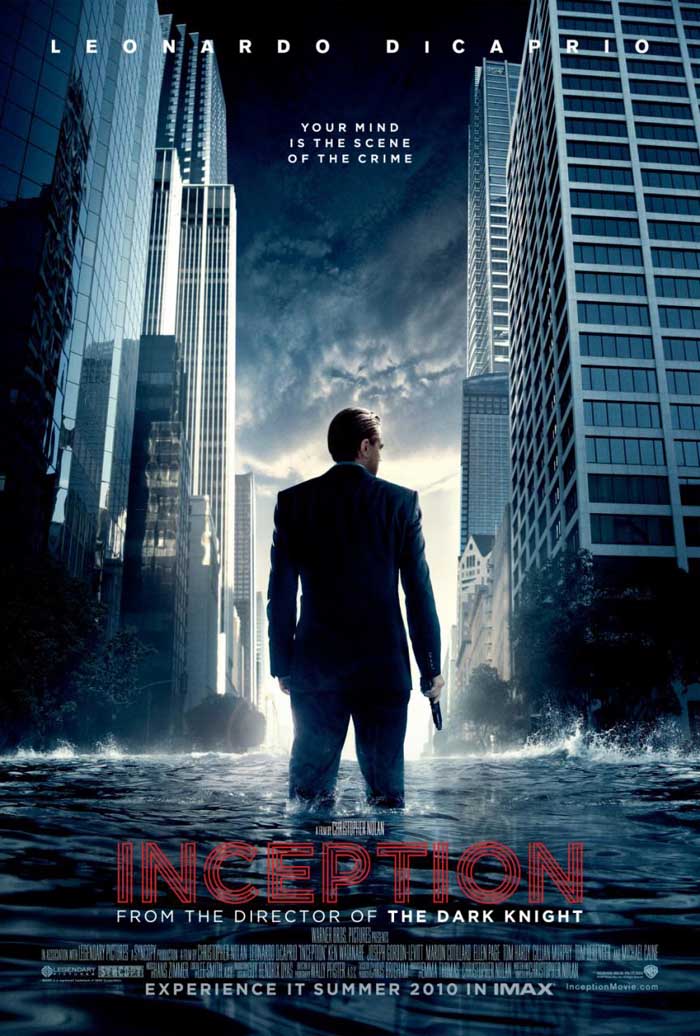
In a season of remakes, sequels and adaptations, “Inception,” writer/director Christopher Nolan's mind-bending new film, is a rare thing: a big-budget summer film not based on a previous source material. The film made $73 million in its first four days, proving audiences are hungry for original, smart films.

In “Inception,” "The Dark Knight" director continues to explore the ideas of memory that he touched upon in “Memento.” In that film, a man with short-term memory loss was stuck with only memories of his past which he worked and reworked until it was unclear what was real. Now Nolan mixes memories with dreams and further blurs what constitutes reality.

The premise is that a group of people have the ability to enter people's dreams. This concept isn't new and has been used in such films as “Dreamscape” and “The Cell,” but what is original is where Nolan goes with it.

Leonard DiCaprio stars as Cobb, the leader of a team that not only enters other people's dreams but creates them and then uses these dream worlds to steal ideas. DiCaprio's team is hired by a business tycoon (Ken Watanabe) to take it a step further and plant an idea into the mind of a competitor's son (Cillian Murphy) that would clear the playing fielding. The problem is the idea will only stick if the person believes he originated it.

This is essentially a heist film and follows a lot of the same formula of caper movies like “The Sting,” “The Italian Job” or “Ocean's 11.” Early scenes focus on gathering and recruiting the team together. Then there is the planning of the job and ultimately the execution of the plan.

Things are complicated by Mol (Marion Cotillard), Cobb's deceased wife who he desperately keeps alive in memories and dream. She won't stay put often encroaching like a reoccurring nightmare on the various dreamscapes DiCaprio and his team have created.

Cotillard and DiCaprio's backstory and how it feeds into the main plot provide the emotional base for a film that would otherwise be all artifice. For some, the film will still be about nothing more than its spectacle and the execution of its clever ideas. The film is an exceptionally well made machine and if it works on you than you'll be engrossed, but if it doesn't you'll just see and admire the mechanism.

As is often the case with heist films, it is really only the lead character, in this case, DiCaprio's Cobb, who is fully fleshed out and given a more complete character. The rest of cast, with the exception of Cotillard, are merely part of the team and serve their purposes in getting the job done.

Each character is given a trait or two to play and that is it in terms of development. The team is comprised of solid actors including Joesph Gordon Levitt, Ellen Page, Tom Hardy and Dileep Rao. These actors brings personality and flavor to their characters even if they only represent different archetypes.

This description is not just of this film, but of the genre as a whole and isn't meant as a criticism per se. Nolan seems aware of the fact that he is working within a template, but he merely uses that as a foundation on which to build upon.

For example, there are different levels of dreams which are achieved by creating dreams within dreams. Each level represents a different passage of dream time to real time. This is working on the idea that when we dream it can feel like hours, but it is really only minutes. On the deepest level, dream time can last for decades.

The dream worlds aren't flights of fancy, but rather based in reality because while dreams can be surreal and abstract, more often than not they are usually set within variations of our existence. Details will be taken for different aspects of our life, but within the dream it feels real.

During a training sequence for Page's newbie dream builder, Nolan explores how in a dream world anything is possible. In the film's most astonishing and likely to become iconic visual, a Paris street literally folds over itself. A later sequence involves a dream with zero gravity.

I was enthralled by the way the story unfolded and by the concluding sequence which has action happening simultaneously on four different dream levels with each level affecting the next. This all probably sounds rather confusing, but when you are watching it, everything makes sense. The film establish its rules and within those guidelines the film is completely plausible.

To see what Nolan is really up to here it is perhaps best to look at his film “The Prestige.” That film was about rival magicians trying to find the ultimate magic trick. Nolan is a filmmaker who likes to play and manipulate his audience. He wants to wow us with the next trick and keep us guessing how he did it.

Friday, July 16, 2010

'Despicable' surprisingly heartwarming

“Despicable Me” is a film with too much going on and that under utilizes a voice cast of some of the brightest, sharpest comic actors currently working. That isn't exactly a ringing endorsement, but in spite of a busy, formulaic plot, the film turns out to be immensely charming.

The despicable one of the title is Gru (Steve Carell, with an accent he describes as a cross between Ricardo Montalban and Bela Lugosi), a super villain who has no desire to rule the world, but rather to simply hold the title of the world's greatest villain. He drives around in the least eco-friendly vehicle imaginable, uses a freeze ray to cut the line at Starbucks and will make a kid a balloon animal just to pop it the next minute.

Gru is indeed pretty despicable, but since he's also the lead character he isn't an unlikable monster. Gru has mama issues. His mother (Julie Andrews) sees him as a complete failure and, as we see in flashbacks, has never been impressed with any of his interests or endeavors.

He is also dealing with Vector (Jason Segal, in need of stronger material), a new rival villain, who is the buzz of the world after stealing a pyramid. Vector hides it, in a great gag, by painting it to look like the sky.

Vector has a shrink ray that Gru needs in a theft to top all thefts. He adopts three cookie-selling orphan girls to get into Vector's well-protected lair and steal the ray.

It goes without saying that these kids will warm Gru's heart. One of the girls notes “I thought that when we were adopted by a bald guy it would be more like 'Annie.'” In actuality, that's exactly what “Despicable Me” turns out to most closely resemble, although in this case Daddy Warbucks has an army of yellow pill-shaped minions.

Oh yes, one can't forget the minions. They speak their own chirpy, gibberish language and are essentially a bunch of loyal goofballs that worship Gru like a rock star. Their antics are silly slapstick, but also very funny. In one particularly amusing sequence, three of the diminutive minions pose as a family to go toy shopping.

In early scenes, the film has fun with the rivalry between Gru and Vector. A sequence involving Gru attempting to break into Vector's lair relies on absurdist Looney Tune-style visuals and silent film comic timing. It delivers large laughs.

The film could've continued mining laughs in this “Spy Vs. Spy” manner and could've become darker and stranger, but the heartwarming road that is chosen instead turns out to be surprisingly sweet and undeniably cute.

This is the first film from a new animation company called Illumination Entertainment that, with the introduction of the three girls, is clearly attempting to blend humor and heart the same way Pixar does. The approach here is more obvious and less sophisticated than the high caliber work Pixar puts out, but it is effective. The closing scenes with the girls and the no-longer-grinchy Gru earn their emotional pay offs.

Carell gives a great vocal performance using his Boris Badenov-esque accent to butcher catch phrases like “That's what I am talking about.” He also brings some real emotion to the more
tender moments.

The rest of the voice work is solid, but somewhat disappointing given that talented comic performers like Kristen Wiig (“Saturday Night Live”), Jack McBrayer (“30 Rock”) and Will Arnet (“Arrested Development”) are in throwaway roles. Russell Brand (“Get Him to the Greek”) scores some laughs playing against his wild man persona as Gru's elderly inventor cohort.

Although there are some missed opportunities, the film works. The animation is bright, colorful and lively. The humor is broad, but intelligent. Ultimately, it is the warmth that comes late in the film that makes this a success.

Thursday, July 15, 2010

'Rain' shines

Mount Washington Valley Theatre Company's 'Singin' in the Rain' runs through July 24

It was raining both outside and on the stage during Tuesday's opening night of the Mount Washington Valley Theatre Company's production of “Singin' in the Rain,” which is running through July 24 at the Eastern Slope Inn Playhouse in North Conway, N.H.

“Singin' in the Rain” is one of the most iconic movie musicals in film history, in fact it topped the American Film Institute's list of the 100 greatest musicals and placed at No. 5 on their list of the greatest films of all time. Those are some lofty shoes to fill on the limitations of a small stage.

Set during the early days of film, “Singin' in the Rain” — in addition to being a great musical — is a shrewd satire of the transition from silent films to talkies.

Grant Golson, just seen in “The Music Man,” stars as Don Lockwood, a Douglas Fairbanks-esque movie star. When talkies become all the rage he must learn to speak on screen. He's up to the challenge, but his shrill, squeaky voiced leading lady, Lina Lamont (Tara Tagliferro) is not.

Lockwood and his loyal sidekick Cosmo Brown (Chris J. Handley) cook up a scheme to use the speaking and singing voice of the sassy Kathy Seldan (Liz Clark Golson) to save the movie.

Those going in expecting to see the level of precision and difficulty portrayed on the screen by Gene Kelly and Donald O'Connor will be let down, but those are admittedly perhaps unrealistic expectations.

The dancing on display is good and impressively synchronized, but is somewhat lacking. The title song should be the show's big set piece, but in spite of making it rain on stage — a truly fantastic visual — the number feels flat and short on energy.

The timing on “Make 'Em Laugh” is also ever so slightly off, but is carried through by Handley, a fine comedic actor who was so excellent in last year's production of “The Producers.” His work with a dummy is very funny and he nails the punchline of the scene.

Given that the show was put up in just nine days, it is hard to quibble too much. First-time director LoriAnn Freda and choreographers Bonnie Kelly and Eddie Schnecker deserve credit for managing to put anything together in that time. What is presented is certainly not bad. These are solidly put together dance numbers.

The singing is top notch throughout. All of the most famous songs from the movie, “Singin' in the Rain,” “Make 'Em Laugh,” “You Are My Lucky Star,” “You Were Meant for Me” and “Good Morning” are delivered with gusto.

Tagliaferro steals the whole show though with her truly hilarious rendition of “What's Wrong With Me?” Her comic timing, intentionally bad singing and facial expressions all come together to provide the highlight of the production.

Surprisingly, as good as the singing is, what works best are the non song and dance scenes. Scenes involving the filming of the movie have some very big laughs. Andrew Lipman as the director Roscoe Dexter is a riot as his frustration with the ever clueless Lina grows. A scene involving a diction couch (Dov Rubenstein) also amuses and morphs into the most enjoyable song “Moses.”

The production also integrates filmed parodies of silent films and early talkies. Golson and Tagliferro perfectly capture the essence of the screen acting style of the time.

This is a fun production marked by some strong performance from the hard working cast that easily overcome any shortcomings the show may have. You'll definitely leave the show humming a tune or two and that's a glorious feeling.

Tickets are $32 and may be reserved at the box office at 356-5776, which is open daily from 11 a.m., or online at www.mwvtheatre.org.

Friday, July 09, 2010

More of the (dramatic pause) same with 'Eclipse'

It was only last November that we got the previous installment of the “Twilight Saga.” In the time since the first film came out in 2008, “Twilight” has become a bona fide worldwide phenomenon that polarizes people in a big way. People love or hate these books and movies with a passion that smolders brighter than any of the actual characters in the story.
In “Eclipse” we get more of the love triangle of human Bella (Kristen Stewart), vampire Edward (Robert Pattinson) and werewolf Jacob (Taylor Lautner). There is also the vengeful Victoria (Bryce Dallas Howard) who wants to kill Edward and Bella for killing her beau in the first film.

To complete her mission, Victoria builds an army of newborn vampires who in the early stages of vampire-hood are stronger and faster then older vampires. The book acted like it was a mystery that Victoria was behind the army. The film smartly does not.

So, what exactly is the appeal of this series? The elements of the story are not in themselves bad. The love triangle is one of the most time-honored story traditions and can be a great source of both drama and comedy. It is easy to see why young female readers and viewers would want to project themselves onto Bella since she is desired, even coveted, by not one, but two hunky supernatural men.

The execution of this romantic conundrum is all wrong though. It is all about brooding glares, pregnant pauses and drawn out proclamations. Only one scene of quiet confrontation between Jacob and Edward in a tent during a blizzard feels authentic. The dialogue for once has some wit and substance. It is immediately undermined by the following scene which features an eye-rollingly overwrought plot development.

The three main characters speak in grandiose absolutes about their feelings. This does capture what it is to be a teen since at that age everything seems so definite and permanent. But anyone who has spent any time with a pouty teenager knows it is no picnic. With “Eclipse” you get to spend two hours with three particularly whiny teens, one of whom is supposedly a 100-year-old vampire, who really should know better by now.

It is hard to see why either Edward or Jacob would fall for Bella. She has no discernible personality of her own. Her whole existence is defined by the two men in her life. Edward isn't any better on the personality front though. In “New Moon,” at least Jacob had some playfulness, but once he wolfed out he became just as bland as the other two.

It is a bad sign when the secondary characters are more interesting than the main ones. The movie, as with the book, shows the back stories of Jacob's wolf tribe and a couple of Edward's family members. This is far more compelling than anything in the main plot line. A whole movie should be dedicated to the character of Jasper (Jackson Rathbone), who we learn was a Civil War general who was turned into a vampire and trained other young vampires for a turf war.

Billy Burke continues to provide much needed comic relief as Bella's father. Anna Kendrick, as one of Bella's friends, gives a valedictorian speech that has more energy than any of the three overly intense leads display. You want to know more about her. Instead you are stuck with Bella having to decide between Edward and Jacob and whether to stay human or vamp out.

The “Twilight” series has always been an allegory for abstinence, with Edward resisting the temptation to bite Bella even though she wants it bad. “Eclipse” takes it one step further, with Edward refusing to turn Bella until they get married. If you miss the subtext, they literalize it for you: They can't have sex until they are married either.

Which leads to one of Bella's more ludicrous hang ups. Bella doesn't want to get married because she is afraid of what people will think. Really? This character is willing to give up her humanity, but when it comes to marriage that's the sticking point?

What's good about this film? The book was written from Bella's point of view, but screenwriter Melissa Rosenberg wisely allows us to see things from outside her perspective, which allows us to get glimpses of the building of the vampire army. There are some truly exciting action scenes sprinkled throughout the film building to a vampire versus werewolf battle that is admittedly pretty cool.

Director David Slade directs the battle scenes well, but there just isn't enough of them, certainly not enough to warrant the price of admission.

Thursday, July 08, 2010

M&D offers a 'suite' night of theater

In this sweltering heat it is appropriate that M&D Productions latest show is Neil Simon's “California Suite,” a play broken up into four individual segments, which opened Thursday, July 8, at Your Theatre in North Conway, N.H. and is running through July 24.

“California Suite,” which first opened in 1976 and spawned a 1978 film adaptation, is set in Suite 203-04 of the Beverly Hill Hotel, with each of the four pieces of the play representing different visitors to the suite.

Playwright Simon has a way with both verbal comedy with an underpinning of pathos as well as broad slapstick. In “California Suite” he distills his two sides by alternating from a more dramatic, but still funny, piece to a more silly subject.

M&D's production gets off to a rough start with the first segment “Visitor from New York,” which focuses on Hannah (Tracy Marcotte-Ludwig), a workaholic who comes to Los Angeles to visit her ex-husband Billy (Andrew Brosnan) to discuss who gets to keep their 17-year-old daughter for the next year.

There is an interesting dynamic between these two characters as Billy has adopted a healthier so-called California lifestyle which Hannah finds disdainful. The zingers Hannah keeps throwing at Billy are meant to mask her insecurities and fears that she may be losing her daughter.

Unfortunately, the scene doesn't really work because Marcotte-Ludwig's line delivery is so flat and even monotone. Brosnan is better, but it is Marcotte-Ludwig's Hannah who is suppose to set the pace and it is not nearly fast enough for this sort of bickering banter. To her credit, she does get the last line, and the emotional payoff of the piece, right.

Stick with it, though, because director Dan Tetreault's production finds its footing with “Visitor from Philadelphia,” a situational piece involving a husband (Rob Clark) who wakes up to find a prostitute passed out in his hotel bed just as his wife (Heather LeTarte) arrives at the hotel.

Clark is very funny as he anxiously comes up with a steady stream of barely plausible lies to prevent LeTarte from entering the bedroom. Here the pacing is right and the verbal by-play delivers. LeTarte is particularly amusing after the reveal of the prostitute in the bed. She gets a big laugh with the punchline after she forgives her husband.

“Visitors from London” is the best written of the four segments, and actors Clare Long and Ken Martin rise to the occasion. Long is an English actress in town for the Academy Awards because she is nominated for Best Actress, and Martin is her gay husband.

The dialogue is this piece is barbed and often venomous, but there's an undercurrent of genuine affection that Martin and Long bring across beautifully. Although this is a marriage of convenience, there is love between these two characters even as they toss acidic one-liners at each other. Martin and Long have inconsistent English accents, but that's better than the alternative of over-the-top accents that draw attention and distract.

Ironic side note: Maggie Smith won an Oscar for playing an actress who lost one in the film version of "California Suite."

The final piece, “Visitors from Chicago,” is the most slapstick and physical of the four. Two couples (Eric Jordan and Mary Moody and Rafe Matregrano and Kate Gustafson) on vacation have reached a boiling point, and by the end of the scene are quite literally at each others' throats. It is not subtle and the dialogue is more coarse with its put-downs, but this last piece is perhaps the funniest.

Everything is played at a high-strung fever pitch as verbal insults give way to punches. Jordan and Matregrano have a fight that looks impressively authentic. It appears as if they really are kicking the crap out of each other, but the tone is kept appropriately comedic. Gustafson has a laugh-out-loud moment after hitting her head, and Moody amuses as she hobbles around with a potentially broken foot.

For those keeping score, that's three out of four that hit their marks, which most definitely earns a recommendation.

For more information and tickets call 662-7591.

Thursday, July 01, 2010

'Music Man' provides quality family entertainment

The Mount Washington Valley Theatre Company kicks off its 40th season with an enjoyable production of Meredith Willson's familiar family-friendly classic, “The Music Man,” which opened Wednesday at the Eastern Slope Inn Playhouse in North Conway, N.H. and is running through July 10.

“Music Man” first opened on Broadway in 1957 and has gone on to become one of the touchstones of American musical theater spawning several revivals on Broadway, the 1962 film version starring Robert Preston and a TV movie starring Matthew Broderick in 2003.

The music man of the title is Harold Hill (Grant Golson), a con artist, who arrives in River City, Iowa, to perform his usual con: selling musical instruments, instruction books and uniforms to the parents of the local children and promising to form and lead a youth band. Here's the rub: Harold has no musically talent and plans to skip town right after he is paid.

It is four weeks before everything arrives, which gives Harold plenty of time to court Marian (Megan Buzzard), the local librarian and music teacher. What Harold doesn't expect is too actually do good for the community and fall in love with Marian.

The plot is basic stuff with that timeless theme of love being able to get a crooked guy on the right path. It is nothing groundbreaking, but it doesn't have to be. The story is merely a clothesline to string the songs and jokes together. This is light, fluffy, feel good entertainment and director Clayton Phillips' production captures that sense of colorful fun.

Golson as Harold Hill carries the show quite nicely. This is his third season with the company and regular patrons of the theater will recognize him from such shows as “Cabaret,” “Fiddler on the Roof” and “The Producers.” Here he is ideally cast as the hustling huckster. He is charming with a big smile and convincingly puts the town under his spell.

Golson is particularly good on “Ya Got Trouble” where he excites the community to believing they have a rebellious youth in need of the structure of a band and in the rousing “76 Trombones,” which along with “Shipoopi” features some lively choreography by Bryan Knowlton.

One of the best things about show is a barbershop quartet that Harold amusingly cons four feuding locals into forming. Low and behold, the quartet is actually quite good and is easily coerced into singing at any moment. Andrew Lipman, Dov Rubenstein, Evan Smith and Jesse Havea sound great together and are always a welcome presence on stage.

Buzzard as Marian makes for an appealing love interest. She effectively plays being cold and reserved and slowly melting under Golson's charisma. She has a naturalistic stage presence and a powerful singing voice.

Although the Mount Washington Valley Theatre Company is a professional company, regulars of local theater will spot some familiar faces from the community.

Kevin O'Neil is very funny as the mayor who is constantly telling people to “watch your phraseology” even though he quite often gets things backwards himself. Caroline Nesbitt amuses as the mayor's wife, who is tricked into heading up a dance group with disastrous results. It is also nice to see Kyle Mulcahy, last seen in “Bare,” as one of the townspeople.

Although this is a well-mounted production, it is hard to avoid that on a couple occasions the music drowned out the singing and on the reprise of “Pick-a-Little, Talk-a-Little” the overlapping and contrasting lyrics canceled each other making it difficult to make any sense of what was being sung. This was opening night and perhaps this issue will be worked out as the run progresses. These moments are isolated and don't undermine the overall quality and enjoyability of the show.

Tickets are $32 and may be reserved at the box office at 356-5776, which is open daily from 11 a.m., or online at www.mwvtheatre.org.

Monday, June 28, 2010

Film lovers and guides: A case for the film critic


In the July 2010 issue of Vanity Fair Jeff Wolcott wrote a piece entitled “Cinema Purgatorio” about the nationwide trend of film critics being fired or as the article's subtitle puts it: “A threatened species, film critics have been bemoaning lost jobs and vanishing outlets. Andrew O'Hehir's Salon smackdown of his colleagues fuels a debate over whether professional movie reviewing should exist at all.”

Small papers across the country have been letting go of their film writers, but even the veterans at some of the nation's heavy hitters are no longer safe. Andrew Sarris of The New York Observer, Todd McCarthy of Variety, David Ansen at Newsweek and Mike Clark of USA Today have all been — as the English would say — made redundant. On TV, “At the Movies,” the industry changing program created by Gene Siskel and Roger Ebert, will be canceled as of Aug. 14.

So, are film critics no longer wanted or needed? Or is it just a sign of the recession? In a bid to trim budgets, are newspapers and magazines, much like schools, cutting the arts first?

Toby Young wrote in “How to Lose Friends and Alienate People,” his memoir about his disastrous tenure at Vanity Fair, that it is glossy magazines like Vanity Fair that say what's in and what's out. It isn't so much that they set the trends, but by spotlighting things they make them events. As Young puts it: “If Keith Richards falls over in a pub and there are no journalists around to witness it, did it really happen?”

Young was writing about the power of Vanity Fair in the economically booming mid-1990s, now is a very a different time and the journalism world is taking just as much of a hit by the recession as other industries.

But if Young's theory that "the New York glossy posse are the Sybils everyone listens to,” still remains true then the fact that Vanity Fair is addressing this trend is a big deal. The journalist did in fact see Keith Richards fall off his stool.

Here though we have an interesting case of journalists covering other journalists. The critics have turned onto each other. Wolcott's piece is heavy on quotes from other critics, who are in turn often commenting on other writers. So, now I'm going to add to this on-going cycle of commentary. After all, that's what the world of criticism should be: an on-going discourse. When I or anyone else writes a review it isn't the be-all-end-all but one more voice in the greater discussion. There is a give and take not just with the art itself, but with other critics and the readership as well.

Which is what is so distressing about the reaction of many of the critics cited in Wolcott's article, particularly Salon's O'Hehir who bluntly told his colleagues to “shut up” and stop whining about the loss of their jobs. He may have a point, but there's a kinder way to tell people to pull themselves up and move on.

Time magazine's Richard Schickel outdoes O'Henir in terms of spewing bile. On a panel discussing Boston Phoenix columnist Gerald Peary’s documentary, “For the Love of Movies,” which looks at the craft of film criticism, Schickel said: “Watching all these kind of earnest people discussing the art or whatever the hell it is of criticism, all that, it just made me so sad. You mean they have nothing else to do? I don’t know honestly the function of reviewing anything.” Harsh words coming from someone who is paid to give his opinion about movies.

The reason so many people choose to write about film, or any art for that matter, is right in the title of Peary's film: it is out of love. When someone becomes a critic, for the right reasons, it is not about tearing down other people's art, but rather sharing the joy of discovering a piece of good or great art. If their criticisms of work they deem unworthy are at times harsh it is because they are let down that the piece didn't meet its potential. Writers like A.O. Scott, of the New York Times, and Michael Philips, of the Chicago Tribune, have this mentality. In their writing and as the hosts of “At the Movies” for its remaining months you can see their genuine passion and love for cinema.

Of course, there's always that on-going debate that critics are out of touch with the tastes of the general audience. The accusation is that critics always heap high praise on films with a narrow audience and slam films with broad appeal. While critics do often champion high brow films, they also praise quality mainstream films. Their standards just tend to be a bit higher, simply from having seen so many more films than the average filmgoer.

At the end of the day, this is all opinion. A critic's opinion is no better or worse than the average viewer's, it is merely a more educated one. The more you read a particular critic the more weight you give their opinion. You may not necessarily agree with them all the time, but if you're a loyal reader than you'll know where your tastes differ, which goes back to the idea of criticism being a discussion. A critic is just a guide trying to point you to good films and away from bad films, especially since some people rarely make a trip to a movie theater. When you do go, a good critic wants to make sure you have a good time. That's their ultimate function.

As someone striving to be a film critic, I hope this isn't the death knell of a profession I adore. Twitter, blogging, YouTube, Facebook and other forms of social networking have given everyone a platform in which to share their opinion. Thanks to Twitter those opinions are instant and 140 characters long. Is this film criticism's Achilles' heel? A whole generation is growing up wanting everything short and instantaneous. It is a time of transition. The worlds of print, broadcast and online are mingling and combining and at this junction it is unclear what will come out in the end. Does the long form review have a place in this new world? I think so. I hope so.

Friday, June 25, 2010

'Toy Story 3' is full of laughs, thrills and heart

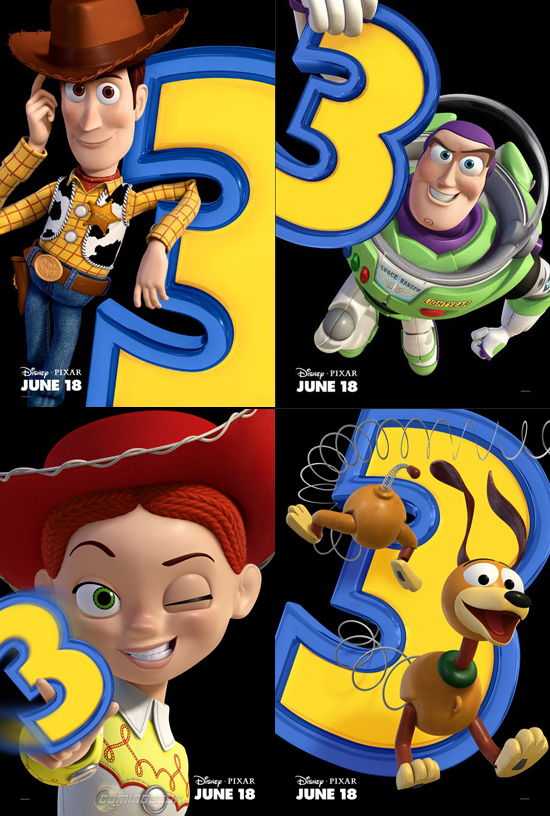
Each summer we get a barrage of new big budget entertainments, some are good, even great, and some are just plain awful. Throughout it all though, one name remains a consistent source of quality entertainment: Pixar. It started 15 years ago with “Toy Story” and now all our favorite characters are back for a third adventure together.

A lot of sequels — let's face it, most sequels — are cheap cash-ins that hope to bring up more wealth before the well goes dry. Make no mistake about it, “Toy Story 3” will make buckets of money, and already has with a $109 million opening weekend take, but this is a film that equals its wonderful predecessors with an ideal blend of laughs, thrills and pathos.

The original “Toy Story” asked a simple question: What would our toys be like if they came to life when we weren't looking? The second film deepened the theme by asking: How do our toys feel when they are no longer needed or wanted? This new film further explores that theme when the toys' beloved owner Andy packs up to go off to college, leaving behind all his childish playthings.

In spite of the protests of leader Woody the cowboy (Tom Hanks), Andy's toys think they have the solution to their abandonment issues: get donated to the Sunnyside Daycare Center where there will be a never-ending supply of children to play with them.

Things aren't so sunny, though, at the daycare which is run by a deceptively cheery strawberry-scented bear named Lotso (Ned Beatty). Lotso sends Andy's toys to the toddler room where kids play rough and it becomes all too clear to the gang that their new home is a prison.

The latter half of the film becomes a parody of prison break movies that is rather ingenious and inventive, especially the way Mr. Potato is utilized. This escape sequence is thrilling, funny and even a little frightening as the toys are put into genuine peril. It is no spoiler to say they make it out, but there's a moment where it is unclear how.

All the major characters have returned including Woody, Buzz Lightyear (Tim Allen), Jessie the cowgirl (Joan Cusack), Mr. and Mrs. Potato Head (Don Rickles and Estelle Harris), Slinky Dog (Blake Clark replacing the late Jim Varney), Rex (Wallace Shawn), Hamm the piggie bank (John Ratzenberger) and Barbie (Jodi Benson).

There are also lots of new characters often with too little screen time. Several big-name actors like Whoopi Goldberg and Bonnie Hunt provide only a few lines of dialogue to their characters. This is somewhat disappointing, but on the other hand if too much time was given over to introducing all these new characters in greater detail the film would've become overly bloated and unwieldy.

Beatty's Lotso is an effectively bitter villain, although his character follows similar beats to Stinky Pete from “Toy Story 2.” Of the new characters, it is Michael Keaton as Ken that really steals the show. His courtship with Barbie and his protests that he isn't a “girl toy” are some of the movie's biggest laughs. Timothy Dalton also scores as a hedgehog stuffed animal with serious acting aspirations.

For the first half or so, the film is merely an extremely well-crafted comedic adventure with a collection of old friends, but that is just the set up. Towards the end things become darker, richer and more interesting. The script by Michael Arndt keeps finding unexpected ideas, jokes and emotions. A development with Buzz is too juicy to reveal, but it is absolutely hilarious. As with
Arndt's “Little Miss Sunshine,” he manages to work within a formula and against it at the same time.

The conclusion, which unites the toys with Andy, finds the perfect way to wrap this story up. In quiet pauses and in the way Andy talks about his toys with great affection, there's a exploration of the relationship we have with our things that is done with a lot of grace. Sure, the things we buy are just inanimate objects, but we attach meaning to them and project emotions and memories onto them.

For a generation that grew up watching these films, the end will make their hearts swell. The final scenes are so sweet, so tender and carry a surprising emotional weight. You will leave the theater with a completely satisfied grin.

Friday, June 18, 2010

New 'Karate Kid' surprisingly worthy

In 1984, “The Karate Kid” was about a New Jersey kid moving to California and being beset by bullies until a kindly Japanese man trained him in karate. In the 2010 version we have a Detroit kid sent off to China, but bullying is clearly an international language. All jokes aside about how everything today is made in China, this is a surprisingly worthy remake.

In actuality this is “The Kung Fu Kid,” which was the original working title, but then that defeats the purpose of the film's existence in the first place: name association. Right now, Hollywood is all about the idea of pre-awareness. “The Karate Kid” is a fondly remembered film with a built-in audience. If today's kids haven't seen the original, their parents certainly have.

The other raison d'être for this film is to be a vehicle for Jaden Smith, son of Will Smith and Jada Pinkett Smith, who are both producers on the film. His casting is a blatant example of nepotism and the film was tailor made for him.

With the cynical rant out of the way, it can be said that the film is engaging in spite of or perhaps because of its well-worn formula. There are qualifiers to this recommendation, though.

Smith is slightly above adequate as the lead. He isn't bad, but he isn't great either. He has a definite screen presence, and the physical abilities he achieves are quite impressive. The martial arts on display in this film are far more advanced than anything in the original.

There is a chemistry between Smith and Jackie Chan as his mentor and Smith has some cute romantic scenes with Wenwen Han. He is best when he relaxes and has someone to play off of, but too often he plays everything with a dead-pan seriousness.
In early scenes he comes off as too whiny and not particularly likeable, which was also true of his work in the remake of “The Day Earth Stood Still.” He is improving as an actor, though, and doesn't sink the film by any means.

With a running time of two hours and 20 minutes, the film is a bit too long. Most of the padding comes for showcasing China,
which brings us to the third reason the film exists: to be a PR piece for modern China. But the Chinese setting is also one of the film's saving graces. It helps justify remaking the original by giving the film a new flavor. Plus the locations are beautiful shot by cinematographer Roger Pratt.

What ultimately makes this film work is the fantastic performance by Chan as Mr. Han. Pat Morita's Mr. Miyagi was the heart of the original film and he brought a real sense of wisdom, humor and warmth to a character that could have been merely caricature. Chan also provides these qualities to the new film.

This is Chan's best performance in an English language film. In the start of his career he played things broad and comedic and created a style of film fighting all his own. Now in his 50s, Chan has had to mellow slightly, and here he shows a more serious side. This is perhaps his most nuanced and even soulful work on film. He may even make you cry during the drunken scene where, like with Mr. Miyagi in the original, we learn why he pulled away from society.

Taraji P. Henson, so wonderful as the mother in “The Curious Case of Benjamin Button,” once again takes on the role of mom, but here the job is much more thankless. It is to Henson's credit as an actor that she brings at least some substance and wit to an underwritten role.

The film inevitably ends with a kung-fu tournament, in which Smith's Dre fights his tormentors and seeks respect and balance in life. Although the conclusion is foregone and follows the same rhymes of it predecessor, right down to the final fight, the tournament sequence still excites.

When a formula is done well, you almost can't help but get sucked in. As much as you may try resist it, this new “Karate Kid” will get its hooks in you.

Tuesday, June 15, 2010

Devo returns with 'Something for Everybody'

The other day, by means I cannot disclose, I got a hold of Devo's first new album in 20 years, “Something for Everybody,” two days early. I shared my enthusiasm with an acquaintance via instant messaging and got: "Who is Devo?" Inevitably, two words clued this person in: “Whip It.” This is fine, I realize to the general public Devo is just a one-hit wonder. So, while I can excuse not knowing Devo, I cannot forgive the next exchange. When I said Devo was an acquired taste, I was informed that it was one acquired by “awkward teens in the 1980s and 1990s.” I took great offense to this. After all, I acquired my taste for Devo in my 20s.

To the casual listener, Devo seems like nothing more than a novelty act interchangeable with a dozen other New Wavers. Devo actually sprung out of the art rock and punk scene of the mid-late 1970s. Thanks to the advocacy of David Bowie and Iggy Pop they were able to score a record deal. Their pioneering use of synthesizers and digital noise and sound effects helped pave the way for New Wave, techno and electronica.

Devo's impact can be heard throughout pop songs currently on the airwaves from Gorillaz to Lady Gaga. The 1980s sound that Devo helped create has been making a resurgence for several years that seems to be cresting. If there was a time for Devo to make a comeback album than this is it.

There is nothing really new on “Something For Everybody” and, yet, the album isn't stale. Too often when a band produces a new album for the first time in decades it seems like nothing more than a shameless cash grab or the material just isn't up to snuff. That is not the case here. Devo's original spark and magic is still very much present.

The lead off single “Fresh” is aptly named and is quintessential Devo. With an instantly infectious lead guitar part provided by Bob Mothersbaugh, driving drums, the band's signature use of synth and Mark Mothersbaugh's idiosyncratic vocals it deserves to stand along side Devo's best.

Some are likely to complain that a lot of the beats, riffs and digital effects have been heard on previous albums and that the band is merely reshuffling and repackaging their catalogue. On some songs this feels more apparent. The opening to “Sumthin'” sounds awfully similar to “Whip It” even down to the whip sound effects. Yet, the songs still remain so catchy, ear-worming their way into your mind, that it is hard to complain.

Devo seem to be aware of this possible complaint and directly address it on “What We Do” which features the cheeky lyric: “What we do/Is what we do/It's all the same/It's nothing new.” The lyric also doubles as a satirical commentary in the tradition of the de-evolution themes that spawned their name. Later in the song, the lyrics address a never-ending cycle of consumerism: “Being breathing pumping gas/Cheese burger cheese burger/Do it again.”

I've always found that at least some of Devo's songs are partially influenced by 1950s pop, girl groups and rockabilly, particularly the songs from “Freedom of Choice.” That tradition of echoing the 1950s, albeit filtered through Devo's electronic formula, is continued here on “Please Baby Please” which even including some “whoa-os.”

“Mind Games” is a typically bitter, cynical take on love that features such biting lyrics as “If you think black is black
/And white is white/ Open up your eyes /And get it right.” Naturally, the lyrics are effectively put into direct juxtaposition with catchy, upbeat music.

“No Place Like Home,” with its use of piano and string arrangements, is perhaps the most surprising moment on the album. Fear not, Devo hasn't entered the realm of sappy ballads. The piano and strings are seamless integrated with Devo's familiar guitar and synth template and add an emotional weight to the song's lyrics which address our impact on the planet.

Throughout the album, the band sounds tight and vocally Mark Mothersbaugh, Bob Mothersbaugh and Gerald Casale don't sound like they've aged a bit. The guitars, which became less prominent and eventually disappeared as the band got deeper into the 1980s, are back in a big way. This a good union between the synth heavy side of Devo and the punkier sound of early Devo. The songs may no longer be groundbreaking, but they remain solidly entertaining. Basically, Devo is back.

Friday, June 11, 2010

'Greek' is a very funny, character driven comedy

On paper, “Get Him to the Greek” sounds like a calculating money grab. The film takes a supporting character from the moderate hit “Forgetting Sarah Marshall” and spins him off into his own film. Hollywood loves a sequel, even just a sort of sequel, and name association matters more than quality, but low and behold the return of Aldous Snow is a hilariously worthy one.

Although “Forgetting Sarah Marshall” has a following, for many this will be the first introduction to British comedian-turned-actor Russell Brand's Aldous Snow. This is fine as this new film is completely self-contained.

Aldous is a bundle of hard-partying and hard-drinking rock 'n' roll cliches. In a bid to stir up revenue in a struggling music industry, a record label head (Sean “Diddy” Combs) sends one of his flunkies (Jonah Hill, who, in an odd decision, is playing a different character than the one he played in “Forgetting Sarah Marshall”) to bring Aldous from London to Los Angeles for a 10th anniversary concert at The Greek venue.

For Hill's Aaron, this is a big break and it seems like an easy enough gig, but Aldous draws Aaron into his rock-star lifestyle leading to a long line of delays that nearly causes them to miss the big concert date. That's pretty much it in terms of the plot, but the film is more than what it seems.

The trailer makes it look like nothing more than a string of wild party scenes, but half the gags in the trailer aren't even in the film. There are plenty of wild, crude and outrageous comedic situations, but there's also a surprising amount of character development.

“Get Him to the Greek” is the latest film to come from the Judd Apatow stable. Whether as a writer, producer or director, his name has been associated with some of the biggest comedies of the last five years or so including “Knocked Up” and “Superbad.” The formula is simple: raunchy, low-brow humor paired with heart. What is so unexpected is the amount of sweetness that is found in this rock 'n' roll tale.

Apatow is in the producer role this time with Nicholas Stoller (who also directed “Forgetting Sarah Marshall”) writing and directing. Stoller, like so many of the actors and writers that Apatow surrounds himself with, has a keen sense of warped, anything-goes sense of humor paired with an ability to create genuine, human characters.

That combination is most evident in a detour to Las Vegas to see Aldous' father (Colm Meaney), a back-up musician for a Rat Pack cover band. There's father-son bonding mixed with an uneasy tension that is both comedic and that oddly carries a certain amount of dramatic truth. The film never gets too weighed down in heavy emotions, and this sequence takes a glorious turn for the weird when Combs' Sergio shows up to get Aldous and Aaron back on track.

Brand and Hill have a real comic chemistry together and they make this material work. There's also a clear sense of the two bonding and becoming friends. That connection is what grounds the film and makes it more than just another dumb comedy.

Although he is essentially playing a variation of his real-life persona, Brand is actually quite good. He can act, sure, thus far, he can only play one thing, but few people can even do that. He has a distinct screen presence and not only can deliver a comedic line, but when required, he can handle emotional moments well. Brand is set to star in a remake of the Dudley Moore movie “Arthur,” and, based on his work here, that seems like a good fit.

Hill, who in films like “Superbad” had a more maniac persona, dials down his broader comedic tendencies to give a more low-key and amicable performance. He makes an ideal foil for Brand. Combs, who does actually own a record label in real life, has fun lampooning the music industry and his own persona. The man has comic timing and steals several scenes.

The music in film is lyrically very amusing, but musically not bad and Brand is believable as a rock star. There are some authentic-looking parodies of music that are also on target — particularly those featuring Rose Byrne as Aldous' pop star ex-girlfriend Jackie Q.

“Get Him to the Greek” is raunchy to be sure, but stick with it because it is also truly funny and features characters worth getting to know.

Thursday, June 10, 2010

Fryeburg Academy graduate Rebecca Howland hits the big screen in 'Witch Way'

Rebecca Howland, a 2002 graduate of Fryeburg Academy, is a sunny, outgoing person — not that you'd know this from her latest acting job in the film “Witch Way,” which is having its premiere Sunday, June 13, at 2 p.m. at the Red River Theater in Concord, N.H.

“I would describe her [my character] as awkward and anti-social,” Howland said. “I've always had friends, and she is a character who never had any.”

In “Witch Way” a group of college students have their minds set on solving the 100-year-old mystery of the Clifton witch and of the supposed curse she left behind. Howland's Danielle has access to the haunted estate in question.

“Everyone on the set believed she was like her character because she stayed in the character the whole making of the film,” said Mary Wicca, the director of the film.
“She really got into the method acting, which really gave her some amazing creep out scenes.”

Of course this level of commitment did have its downside too.

“She isolated and she felt bad,” said Wicca. “She got her feelings hurt because they didn't include her in some things because they thought that's how she really was.”

Howland, who currently lives in Concord, admits that at times it was a depressing process, but ultimately she enjoys playing different types of characters and exploring different emotions.

“I always describe acting as therapy,” Howland said. “We've all had times where we feel lonely and I just played that up and it forced me to deal with those emotions.”

The movie is officially opening in October and will be shown at the Flagship Theater cinema chain as well as at some affiliated theaters. This distribution deal was established before the film was even made and was the impetus behind the making of the film.

“The film was inspired by a friend of mine who owns a chain of theaters who was telling me about a screenplay he was writing and I was in the middle of writing a book,” Wicca said. “I put my book on hold because I asked him, 'If I make a film will you play it your theaters?' And he said, 'Absolutely.' So, I got cracking on it.”

Wicca based the film on true events surrounding a haunted house she grew up in. She visited a nearby graveyard and did research on who was doing the haunting.

“I kind of took the story of the two people that haunted the place and fictionalized and blew it up with exaggeration and made a really interesting story,” Wicca said.

Wicca structured the script in such way that there was not much scripted dialogue. Throughout the production there were secrets she gave to the actors to deploy at certain times to get naturalistic reactions from her cast.

“They had a basic script, a basic storyline,” Wicca said. “I didn't want anyone memorizing lines or force acting, so what I did was I gave them a lot of freedom to do a lot of improv.”

For Howland, this chance to improvise within a character was an exciting opportunity.

“I thought it was actually pretty cool,” Howland said. “Because I really like certain TV shows like 'Curb Your Enthusiasm' and 'It Is Always Sunny in Philadelphia' and stuff like that where it is not really scripted, so it was kind of exciting for me because you just get into your character and just go with it.”

Although Howland has always enjoyed acting, she did the so-called right thing and studied something more practical in college.

“My parents don't have a lot of money so I thought I would be responsible and go to school for something that I may have had better luck getting a job in,” Howland said.
“But I got out of college and, I hate to sound negative, but I saw people who literally had their GED getting jobs over me and getting paid more, so I though what the hell, you only live once. So I started auditioning for things.”

“Witch Way” is the fifth project and the fourth feature-length film Howland has been involved with, but in terms of the size of the film's red carpet premiere, the press coverage and the film's distribution this is the biggest project she's been involved with to date.

Howland became involved in the film the same way most of the cast did, through a listing on the classifieds Website Craigslist. The cast that came together formed lasting bonds and friendships.

“We all connect really well and we've all kept in touch,” Jeff Gabbard, one of the actors and the unofficial spokesperson for the film, said. I actually just worked on a FX pilot with [cast mates] Sarah Newcomb, Heidi Nicole and Ashley Caron.”

Gabbard, of Wakefield, N.H., and a former employee of the Black Bear Cafe in Ossipee, actual suggested that Newcomb join the cast of “Witch Way” after working with her previously on a short film.

“It is really nice in the small acting community in New England; a lot of us help each other out and tell each other when a good audition is coming up or a cool project and we try all to get on it together,” Newcomb, of Wolfeboro, N.H., said. “It is nice little community like that.”

“Witch Way” is the first film in a proposed trilogy, with Wicca and the cast all returning in the fall to begin work on the second film. Everyone involved hopes the first film will grab the attention of potential investors.

“We're really hoping with this movie people will be able to look at it and say, 'Well, this is what they could do with absolutely no budget,'” Howland said. “Because it came out pretty well for that fact that we pretty much had no budget and there wasn't very much experience in terms of everyone involved in it.”

For more information visit www.witchwaymovie.com.