 Much like the recent adaptation of “Where the Wild Things Are,” director Wes Anderson's take on Roald Dahl's “Fantastic Mr. Fox” is marked by a sophistication and an unwillingness to pander that is lacking for most kid-friendly entertainment.
 As with the Pixar films, this is an animated feature with substance.
“Fantastic Mr. Fox” is the latest film to utilize stop-motion animation, a technique dating back to the original 1933 “King Kong,” in which models are slowly moved one painstaking shot at a time.
This isn't the first time Dahl has been given the stop-motion treatment. That honor goes to 1996's “James and the Giant,” which was directed by Henry Salick, who also directed Tim Burton's “Nightmare Before Christmas,” one of the most popular and memorable stop-motion animated films. Salick, who provided stop-motion animated creatures for Anderson's “The Life Aquatic with Steve Zissou,” was set to collaborate with Anderson again for “Fantastic Mr. Fox,” but made “Coraline” instead.
Anderson is a rare modern director who is a true auteur. He has developed a distinct style, tone and themes that he continues to utilize. His films are marked by a dry, deadpan sense of humor and walk the line between comedy and pathos. Throughout his films, which include “Rushmore” and “The Royal Tenenbaums,” he explores how dysfunctional families manage to function in spite of deceit, distance and other dubious behavior.
Dahl's children's novels, which include such popular book-to-film adaptations as “Willy Wonka and the Chocolate Factory,” “The Witches,” and “Matilda,” always featured sinister undertones. Things would always work out, but as an author he had no problem sending his young protagonists into dark territory. Oddly enough the mash up of Dahl and Anderson's sensibilities works creating a film with a fresh voice.
The plot centers on Mr. Fox (voiced by George Clooney), a retired chicken thief turned journalist, who comes out of retirement for one last heist, or rather three: the local farmers Bean, Boggis and Bunce. The farmers don't take kindly to the pilfering and wag war against Mr. Fox and his family. Mr. Fox and the other animals in the valley are forced to literally go underground.
Anderson utilizes this framework to explore his usual themes. Anderson has transformed the titular Mr. Fox into his familiar flawed patriarch and added a rivalry between Mr. Fox's son (Jason Schwartzman) and his nephew (Eric Anderson). Lessons are learned and there's a familiar moral that we should embrace our differences. This can be an eye-rolling message when in the wrong hands, but Anderson delivers it in a way that feels honest.
Adults have a tendency to dismiss animated movies as just for kids, but this a film that will probably appeal more to parents than kids. The dialogue is very much pitched at adults. Anderson uses an amusing gimmick of substituting the word cuss in the place of all profanities. My personal favorite: cluster-cuss.
There's still plenty of bright, colorful and imaginative action and slapstick antics to keep kids in the audience appeased. The complicated game whackbat, the use of tranquilizer-laced blueberries to dispose of attack dogs and the way in which the animals ravenously eat their food should tickle the funny bone of kids and adults alike.
The voice acting, which also includes Meryl Streep as Mrs. Fox, Michael Gambon as Bean, Bill Murray, Willem Dafoe, and Owen Wilson, is splendid. Traditionally, voice-over actors are kept separated in their own little booths, but Anderson had his actors recorded together. Does this make a drastic difference in the vocal performances? It isn't hugely noticeable, but the caliber of the performances is excellent, so perhaps it did make an impact.
As for the animation, the style seems to be a throwback to stop-motion of the 1960s, similar to the kind used for such beloved holiday specials as “Rudolph the Red Nose Reindeer.” The animation here is vastly more refined and intricate with astounding detail on the puppets but at the same time is not as polished as Salick's “Coraline.” It works, though, as it gives the film a more of a homemade feel that really is delightful.

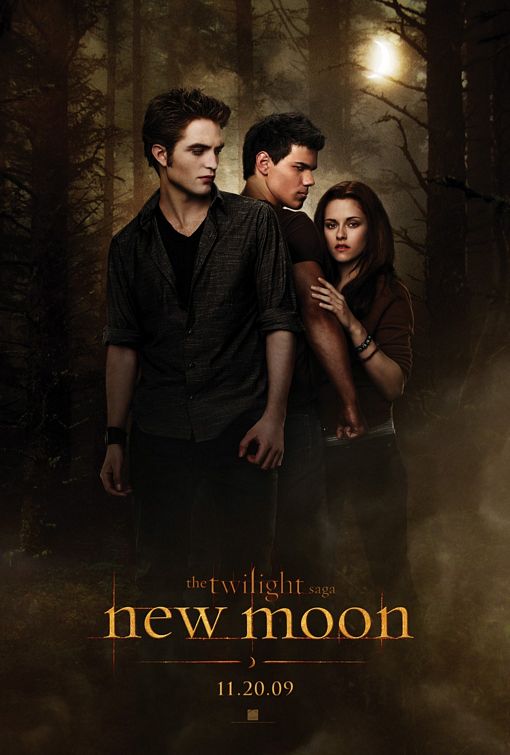 The first “Twilight” movie was a massive box office hit, making nearly $385 million worldwide. That's chump change to what its sequel, “The Twilight Saga: New Moon,” is likely to make. In just three days, “New Moon” earned $285 million worldwide. We've got a monster on our hands.
 Director Robert Zemeckis brings his obsession with motion capture animation technology to Charles Dickens' beloved holiday classic “A Christmas Carol,” a story that strikes such a resonate cord that even if you've heard it a 100 times it still as the power to move.
 With an attention grabbing name like “The Men Who Stare at Goats,” the latest George Clooney-produced film has an advantage over the competition: Your interest is piqued, you want to know more. Thankfully, the film, an offbeat military comedy, earns the interest its name garners.
 Over the last decade, Michael Jackson was more known for his bizarre, headline-making behavior than his talent as a performer. Thankful, the documentary “This Is It” is a powerful and immensely entertaining reminder of how extraordinarily talented Michael Jackson truly was.
 Incendiary documentary filmmaker Michael Moore has become so polarizing that there almost isn’t much of a point in even reviewing his films. No matter what I say about his latest film, “Capitalism: A Love Story,” I will not sway anyone's opinion on him.
 Director Spike Jonze’s adaptation of Maurice Sendak's classic children’s book “Where the Wild Things Are” is a small miracle. It is a big budget Hollywood film that feels intimate and personal and an adaptation that remains faithful to its source material even as it expands upon it.
 “Zombieland” is so much better than any expectations you might have for a movie called “Zombieland.” Oh, it is by no means high art, but it is a rollicking good time with some of the heartiest laughs in a movie this year.
 The latest film to come up out of Hollywood’s more-productive-than-ever remake mill is “Fame,” a partially regurgitated reincarnation of the 1980 film of the same name about the New York High School of Performing Arts, a school known for being as difficult to get into as an Ivy league college.
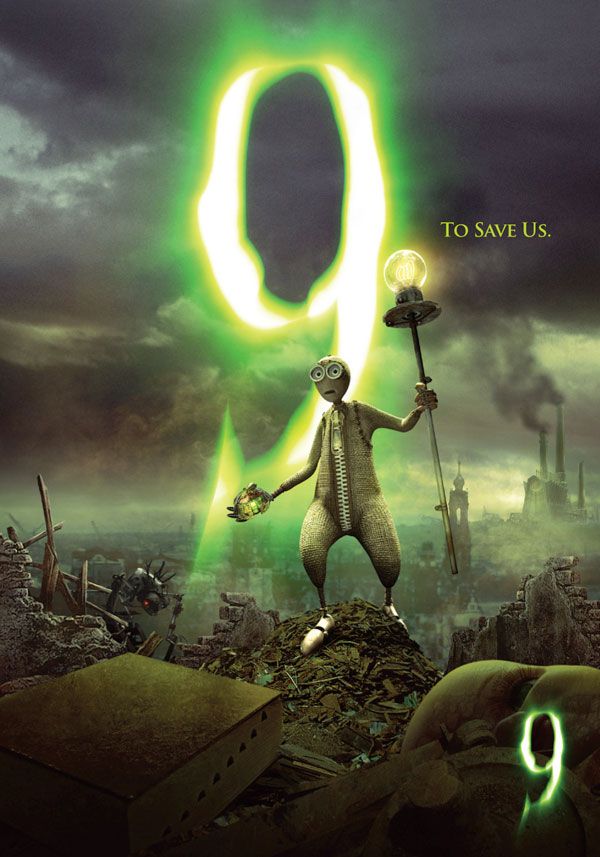 “9” is an extraordinary piece of animation that is simply outstanding to behold. There are certainly things to nitpick, but when seemingly every week there is another remake or sequel, it is a relief to see something unique.
 “Extract” — “Beavis and Butthead” and “King of the Hill” creator Mike Judge’s latest film — is a box office dud, but given his track recorded that is almost an audience seal of approval.
 If “(500) Days of Summer” had to be given a label it would be romantic comedy, but that doesn’t really fit and implies all sorts of things that the film is not. Romantic comedies have a clear formula and expectations, but as the film’s narrator notes early on: “This is a story of boy meets girl. But you should know up front, this is not a love story.”
 Writer/director Quentin Tarantino’s “Inglourious Basterds,” a revisionist riff on World War II that plays like the ultimate revenge fantasy against Nazis, is a mishmash of tones, styles and ideas, which is practically the definition of a Tarantino movie. This time his penchant for pastiche slightly gets away from him, but even Tarantino not at his best is still better than most movies.
 “District 9” is about aliens. If you read that sentence and your knee-jerk response was to dismiss the film, please keep reading because “District 9” is so much more than your average action-packed creature feature.
 Last Thursday, filmmaker John Hughes died in New York following a heart attack. Hughes was one of the more prolific filmmakers of the 1980s. From 1983 to 1994, Hughes, on average, wrote two films a year.