 Incendiary documentary filmmaker Michael Moore has become so polarizing that there almost isn’t much of a point in even reviewing his films. No matter what I say about his latest film, “Capitalism: A Love Story,” I will not sway anyone's opinion on him.
Throughout his career, Moore has been accused of being one-sided, but following “Fahrenheit 9/11,” his most controversial and slanted film, he is unable to get the opposite side of the conversation simply because they won’t talk to him. People know exactly what he stands for and what he represents.
This was not always the case. In Moore’s earlier films like “Roger and Me,” “The Big One” and even “Bowling for Columbine,” he was able to get people on camera that represented his opposing view. Unfortunately, Moore has become his own worst enemy, and his reputation precedes him.
Moore has been accused of not being a true documentary filmmaker because he doesn’t take an objective view on his subjects. There is a misconception that a documentary is a representation of life as it truly is, but all documentaries have a point of view on their subjects. Moore is just more blatant about his perspective. His films are the equivalent of an opinion page editorial.
“Capitalism,” his eighth film in 20 years, is in many ways the first true sequel to his first film, “Roger and Me,” in which he desperately tried to talk to GM CEO
Roger Smith about the harm he did to his hometown of Flint, Mich.
Many of the themes explored in that film resurface in “Capitalism,” which attempt to reveal the dangers of unchecked capitalism in the United States. Moore even quotes himself by showing footage from the earlier film.
The new film presents plenty of examples of capitalism run amok that are certainly disturbing and feel less manipulated than in his previous films. Doing your own outside research wouldn’t be a bad thing, though. Moore would probably applaud that initiative. The goals of his films are to raise issues and get people talking.
Most of the final half of the film focuses on the economic crisis that came seemingly out of nowhere this time last year. Moore offers an explanation of why it happened that is perhaps an over-simplification, but that will be helpful to those who are still confused by the whole debacle.
In getting his message across, Moore is up to a lot of his old tricks including the ironically-placed music on the soundtrack, the color commentary and stagey antics — like going to all the banks that received bailout money asking for the taxpayers’ money back.
This time around the glibness and bitterness that turned many people off in “Fahrenheit 9/11” is downplayed and the film is closer in spirit to his first films. There are plenty of cheap shots and gimmicky laughs, but it feels less mean-spirited.
It is too bad that Moore almost can’t help himself from demonizing George W. Bush and lionizing Barack Obama, as it undermines his case. Moore does a good job showing that the capitalist system in America is terribly flawed, and few would refute that, but his treatment of the former and current presidents may cause some people to dismiss him as a liberal crackpot.
No matter what your political leanings are, “Capitalism” is worth a look, if only for the discussions and debates the film will stir.

 Director Spike Jonze’s adaptation of Maurice Sendak's classic children’s book “Where the Wild Things Are” is a small miracle. It is a big budget Hollywood film that feels intimate and personal and an adaptation that remains faithful to its source material even as it expands upon it.
 “Zombieland” is so much better than any expectations you might have for a movie called “Zombieland.” Oh, it is by no means high art, but it is a rollicking good time with some of the heartiest laughs in a movie this year.
 The latest film to come up out of Hollywood’s more-productive-than-ever remake mill is “Fame,” a partially regurgitated reincarnation of the 1980 film of the same name about the New York High School of Performing Arts, a school known for being as difficult to get into as an Ivy league college.
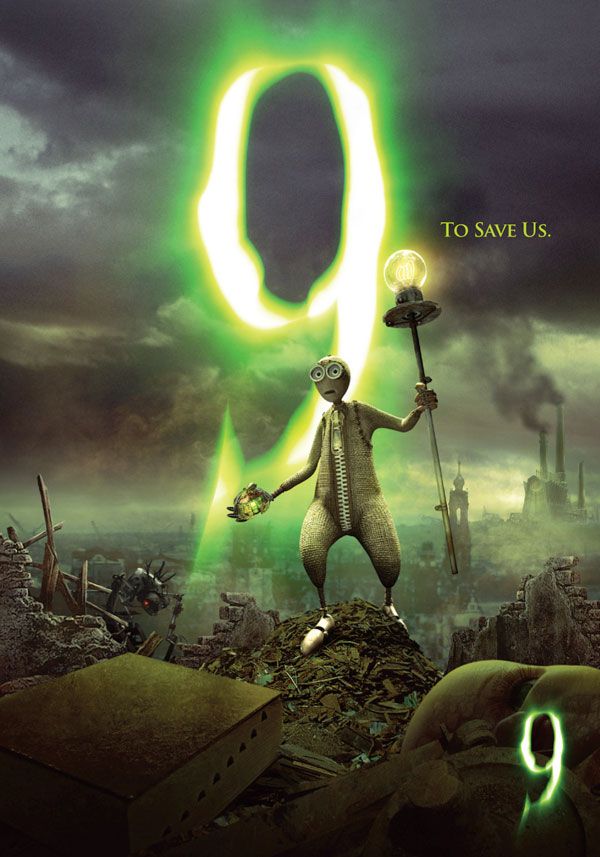 “9” is an extraordinary piece of animation that is simply outstanding to behold. There are certainly things to nitpick, but when seemingly every week there is another remake or sequel, it is a relief to see something unique.
 “Extract” — “Beavis and Butthead” and “King of the Hill” creator Mike Judge’s latest film — is a box office dud, but given his track recorded that is almost an audience seal of approval.
 If “(500) Days of Summer” had to be given a label it would be romantic comedy, but that doesn’t really fit and implies all sorts of things that the film is not. Romantic comedies have a clear formula and expectations, but as the film’s narrator notes early on: “This is a story of boy meets girl. But you should know up front, this is not a love story.”
 Writer/director Quentin Tarantino’s “Inglourious Basterds,” a revisionist riff on World War II that plays like the ultimate revenge fantasy against Nazis, is a mishmash of tones, styles and ideas, which is practically the definition of a Tarantino movie. This time his penchant for pastiche slightly gets away from him, but even Tarantino not at his best is still better than most movies.
 “District 9” is about aliens. If you read that sentence and your knee-jerk response was to dismiss the film, please keep reading because “District 9” is so much more than your average action-packed creature feature.
 Last Thursday, filmmaker John Hughes died in New York following a heart attack. Hughes was one of the more prolific filmmakers of the 1980s. From 1983 to 1994, Hughes, on average, wrote two films a year.
 Edge of your seat is a rather tired and overused description for a movie, but if ever a film deserved that description, “The Hurt Locker” is definitely it.
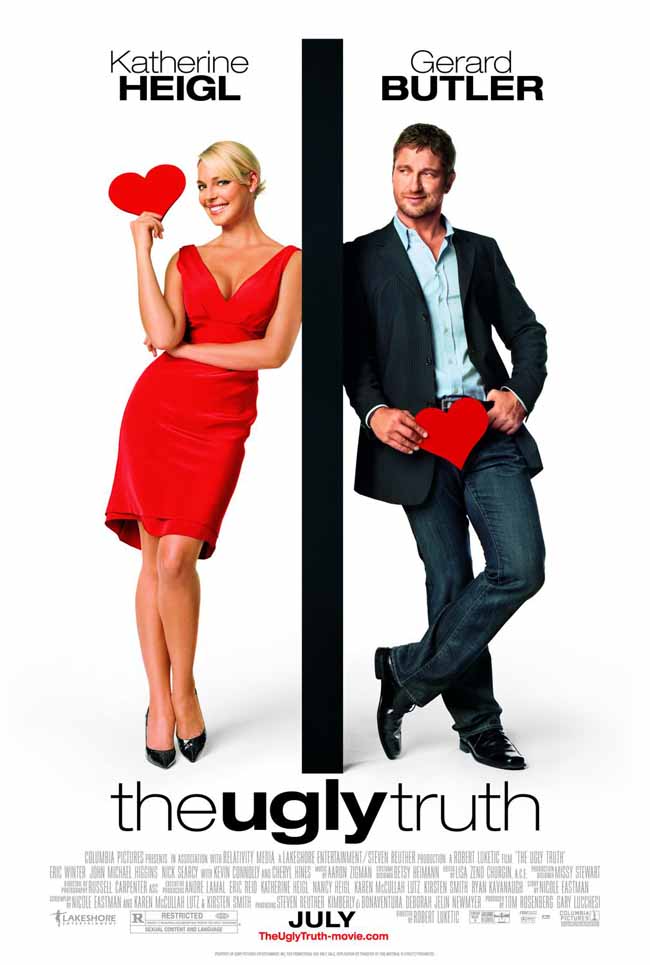 “The Ugly Truth,” the new romantic comedy starring Katherine Heigl and Gerald Butler, is thoroughly average. It isn’t an awful experience and it is pleasant enough, but it certainly doesn’t fill one with the desire to tell people, “Oh, you’ve got to see this one.”
 Last night just as I was about to go to bed, I got pulled into watching a movie on TV, 1938’s “The Adventures of Robin Hood” starring Errol Flynn. I decided reviewing that film would be a far more pleasurable endeavor than what I had originally intended to write about.
 The time has come for another “Harry Potter” film, which is something I say with great joy versus a heavy sigh. “Harry Potter” is not only the most financially successful franchise of all time — it is one of the most consistently entertaining.
