 Coming out of “Public Enemies,” the one thing that is abundantly clear is that Johnny Depp is a master at his craft. It is unlikely at this point in his career anyone doubts that, but his talent still astounds.
Depp stars as depression-era bank robber John Dillinger in director Michael Mann’s account of the gangster’s final year. Though the title implies that the film is about all the numerous high-profile gangsters of the era, this is very much Dillinger’s story. Other familiar names such as Pretty Boy Floyd and Baby Face Nelson make what feel like guest appearances.
Mann as a director has been fascinated by criminals and cops in films such as “Manhunter,” “Heat” and “Collateral.” He has also shown a keen eye for period detail in “Last of the Mohicans.” Both of these qualities come together nicely in making an engaging gangster movie.
Instead of focusing on Dillinger’s glory days, Mann focuses on his final days leading up to his death outside a movie. Although more of a drama than an action flick, Mann stages some exciting gun battles that should keep action fans pleased.
Dillinger is being actively pursued by the fledging FBI led by J. Edgar Hoover (well portrayed by Billy Crudup) with agent Melvin Purvis (Christian Bale) heading up the investigation.
“Public Enemies” was based on a book of the same name subtitled “America's Greatest Crime Wave and the Birth of the FBI, 1933-34.” Mann’s films shows some of the early behind-the-scenes activities of what would become the FBI, but again this film is most interested in Dillinger. He is the foreground — everything else is merely the background.
In many respects, “Public Enemies” is a love story between Dillinger and Billie Frechette (Marion Cotillard), the coat-check girl he instantly falls for.
Cotillard is not a household name in spite of the fact that she won an Oscar for Best Actress in 2008. Having missed her award-winning performance as Edith Piaf in “La vie en rose” this was my first time seeing her and she is nothing short of amazing. It is hard to take your eyes off of her.
The world is full of beautiful actresses, but most, such as “Transformers” babe Megan Fox, are all surface. Cotillard’s beauty runs deeper. She has that allusive movie star quality. Even though her role is standard love interest stuff, she is able to give the role vibrant life and give the film its heart.
Depp plays such quirky and offbeat characters that it is easy to forget the sheer wattage of his star power, but here there is no question of that. He is magnetically charismatic as Dillinger.
Depp makes it easy to see how Dillinger was able to become a Robin Hood-like figure to the pubic. Dillinger was savvy about how the public perceived him because he knew he had to live amongst them and if they liked him they’d be less likely to rat on him.
The rest of the film is populated by familiar faces all giving solid performances, but rarely being given enough time to develop them. Keep an eye out for Lili Taylor, Stephen Dorff, Giovanni Ribisi, Leelee Sobieski, Rory Cochrane and others.
Bale does good work, but isn’t developed into a full character. Depp and Bale share one scene of confrontation. It is short, but effective.
Some critics have complained that the film offers no insight into Dillinger. The great gangster movies of the 1930s and 1940s didn’t feel the need to get into their gangsters heads, so why is it necessary now?
I don’t need some dime-store psychology involving a flashback of Dillinger getting beaten by his father, and chances are that’s the sort of thing we’d get. Would the film be richer and better for having gotten into Dillinger’s head? Perhaps, but it isn’t a bad film because it doesn’t.
Others have ragged on Mann’s choice to shoot the movie on hand-held high-definition digital video and state that the shaky camera work could make people queasy. Ty Burr of The Boston Globe went as far as to claim that the film looks as if it were shot like an episode of “Cops” or a bar mitzvah video. It is a clever line, but hardly accurate.
There are plenty of films shot on hand-held camera — the “Bourne” movies come to mind — that could make some nauseous, but “Public Enemies” is definitely not one of them. The digital video is only noticeable in low-light night scenes. This very much looks like a full-fledged, well-shot film, not the amateur hour Burr’s comment implies.

 If you went to camp as a kid, you might remember a song that went like this: “You can’t ride in my little red wagon, the axle's broken and the wheels are sagging. Second verse, same as the first, a little bit louder and a little bit worse.” That basically sums up the experience of seeing “Transformers: Revenge of the Fallen.” Each scene is a little bit louder and a little bit worse.
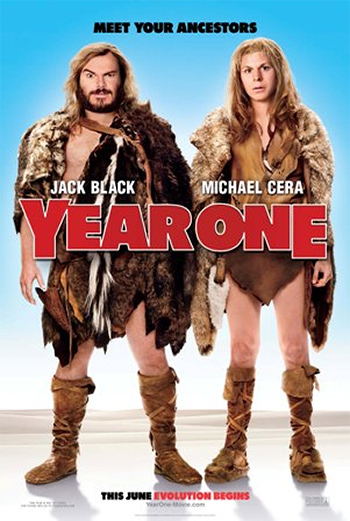 There are few movie going experiences more disappointing than being let down by a film you were anticipating. With “Year One,” in spite of all the negative reviews, I was ready to laugh, but alas I have to join the majority in saying that “Year One” is a dud.
 Some films get better the longer they linger in your mind. The original 1974 version of “The Taking of Pelham 123” starring Walter Matthau and Robert Shaw is one of those films. Other films that went down OK during viewing turn rancid bouncing around your cranium. Unfortunately that is the case for the new version of “The Taking of Pelham 123.”
 Ever since “Animal House” became a huge comedy smash in the summer of 1978, the low-brow gross-out comedy has been a mainstay of the summer movie season. There have been many pale imitators, but some have been riotously funny. Luckily, “The Hangover” falls mostly in the latter category.
 “Up” is the perfect title for Pixar’s 10th feature length film because uplifted is exactly how you feel as the final credits roll. This is one of the most emotionally satisfying, engaging and funny films of this or any other year. “Up” is something truly special.
 Another week, another sequel, prequel or reboot. The cynic in me wants to dismiss “Terminator Salvation” — the fourth film in the “Terminator” franchise — but damned if the film isn’t actually pretty good.
 For a movie about attempting to prevent the murder of four cardinals and the destruction of Vatican City, "Angels and Demons," the sequel to 2006's "The Da Vinci Code," is, dare I say, boring.
 I am by no means a Trekkie, or a Trekker — the preferred term these days — but I have no qualms saying I loved the new “Star Trek” film. This is exactly what a summer movie should be: smart, fast and fun.
 “X-Men Origins: Wolverine” is a tough one to review. It isn’t a mind-blowing movie-going experience, but isn’t an unmitigated disaster either. There are large stretches that are entertaining, but it is too unfocused to be fully satisfying.
 If you want a laugh, check out “Obsessed,” not that the film is a comedy. You’ll be laughing, but at the film, not with it.
 “State of Play,” a political thriller centered on the murder of a congressman’s aid, is a top-notch piece of intelligent filmmaking made for adults. This is a film that respects its viewer’s intelligence instead of spoon feeding them mindless swill.
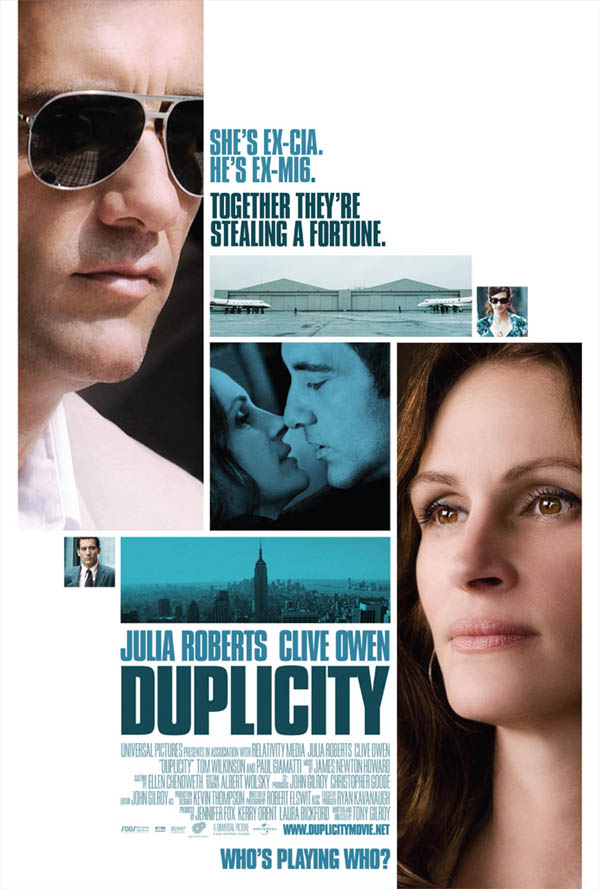 Julia Roberts and Clive Owen bring their considerable star power and charm to writer/director Tony Gilroy’s light-as-a-feather but largely satisfying comic thriller “Duplicity.”
 “Fast & Furious,” the fourth installment in the street-racing franchise, isn’t an awful movie, but it is so inconsequential that it is hard to even be bothered to write anything about it. But I have already wasted 90 minutes watching it, so I guess I’ll waste more time.
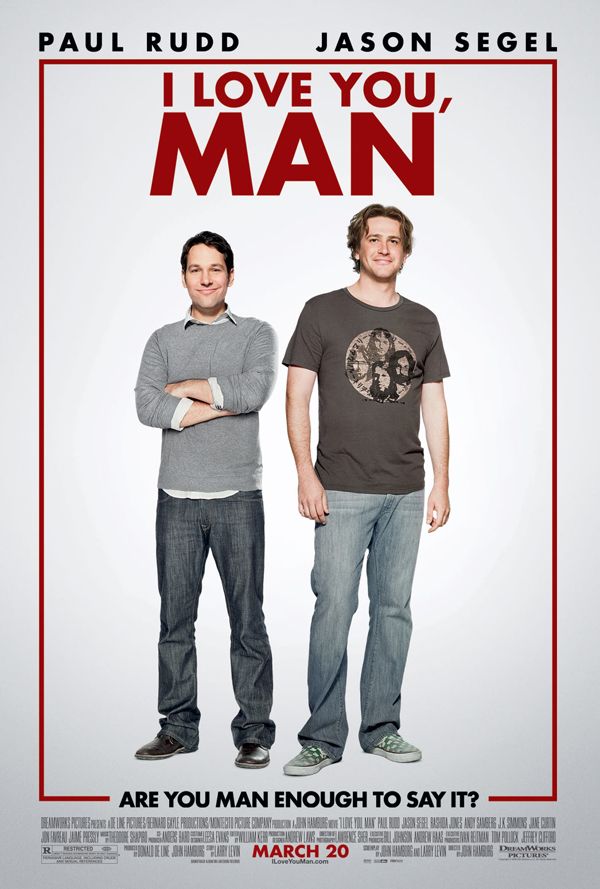 Paul Rudd, a reliable supporting comedic actor for more than a decade, continues his transition to leading man in the very funny “I Love You, Man.”
 Mickey Rourke may not have won the Oscar for Best Actor for his astounding performance in “The Wrestler” but he won nearly every other major film award including the BAFTA, the Golden Globe and the Independent Spirit Award and deservedly so. Don’t miss this performance.
 After years of claims of being un-filmable, director Zack Synder (“300”) has found a way to bring Alan Moore’s acclaimed graphic novel “Watchmen” to the screen and retain most of the scope, humor and message.
 “Frost/Nixon” is a fascinating look at the infamous multi-day televised interview between British talk show host David Frost and former President Richard Nixon, but the film is more about the lead up to the interview than the event itself.
