'Fiddler on the Roof' comes to North Conway, N.H.'s Eastern Slope Playhouse
Following on the heals of the provocative “Cabaret,” the Mount Washington Valley Theatre Company’s production of “Fiddler on the Roof,” which is running nightly at 8 p.m. — except Monday — through Aug. 16 at the Eastern Slope Playhouse in North Conway, may seem like much tamer fare. While this is true, the two shows have more in common than at first glance.
“Fiddler on the Roof” is the Mount Washington Valley Theatre Company’s second show in a row to deal with persecution of Jews. “Cabaret” and “Fiddler” follow a similar structure, with the first act of each show being light, frothy and fun, but with an underlining danger that becomes overt as act one transitions into act two.
“Fiddler’s” ending is not nearly as dark as “Cabaret’s,” but both effectively use the musical-theater tradition to showcase serious themes in a way that still entertains and doesn’t trivialize the issues at hand.
Set in the small Russian town of Anatevka in 1905, the show focuses on the milkman Tevye (George Piehl) and his daughters. Tevye is part of a resilient Jewish community that quietly and happily co-exists with the gentiles in town, at least at the start of the play. That conflict is really secondary to a struggle between tradition and change.
Three of Tevye’s five daughters will marry by the show’s end, and each marriage represents a bigger challenge to the longstanding traditions of the Jewish community. Tevye is willing to bend to see his daughters happy, but even he has a limit. The show presents an intriguing debate over the importance and dangers that come with both tradition and change.
This production, directed and choreographed by Andrew Giant Linden, features strong performances and lively song and dance numbers throughout. In terms of the production’s design, the only disappointment is a rather lackluster set design by Brad Archer, but this is a minor fault that is largely rectified by the lighting design by Sara Houston.
This is Piehl’s show. He ably steps into the role originated by Zero Mostel on Broadway and Topel in the 1971 film version. Piehl makes it all seem so easy in what
appears to be an effortlessly charming performance. His one-sided conversations with God are delivered close to perfection, as are Tevye’s internal monologues. Piehl’s is also effective in the interactions with Tevye’s daughters. There is an especially affecting scene with Tevye saying goodbye to his daughter Hodel (Liz Clark Golson) at a bus stop.
The rest of cast is also solid. Rachel Brown, Clark Golson and Amanda Philips as Tevye’s three daughters with marriage on the mind strike just the right notes. Each actress shows chemistry with their respective matches and possesses charming and sweet stage presences.
Craig Holden as Lazar Wolf, the butcher, Shannon Connelly as Yente, the matchmaker, and Brendon Stimson as the Rabbi and other characters are also standouts. Holden and Connelly in particular provide some good laughs.
The weakest link in the cast is Grant Golson, and that only becomes apparent if you saw his performance in “Cabaret.” Golson, who once again is romantically paired with his real life wife Clark Golson, gives the same performance he did in “Cabaret” and reveals a limited range as an actor. His inflection, tone and delivery are nearly identical. Clark Golson, on the other hand, is just as charming as she was in “Cabaret” and doesn’t repeat herself.
The show is populated with great songs and there are several highlights. The classic “Matchmaker, Matchmaker” is sung and danced with gusto and humor by Brown, Clark Golson and Philips. “If I Were a Rich Man,” another song that has slipped into our cultural lexicon, is sung with vigor by Piehl, although the staging could have been a bit more dynamic.
“The Dream” is both a musical and comedic high point of the show, with Tevye desperately trying to cook up a way out of a tight spot with his wife (Megan Thomas). “Do You Love Me?” features Tevye asking that question to his wife 25 years into their arranged marriage. The song is awfully sweet without giving the audience a toothache.
“To Life,” “Bottle Dance” and “Wedding Dances” feature some astonishing dancing that is truly impressive and full of infectious, joyous energy.
“Fiddler on the Roof” isn’t a flawless production, but, oy vey, what is? A little imperfection never hurt anybody, and at the end of the night this production will leave the audience entertained. What more can you ask for? Tickets are $27 and are available at the box office or by calling 356-5776.

 Will Ferrell is a love-him or hate-him comedic performer. If you love him, you may give “Step Brothers” a pass, but if you hate him you are really going to hate his third film with director and co-writer Adam McKay.
 “The Dark Knight,” the highly anticipated new “Batman” film that broke opening weekend box office records, is so much more than just a superhero movie. This is a dark, sweeping, epic movie powered by the late Heath Ledger’s brilliant portrayal of The Joker.
 In a market saturated with comic book adaptation, don’t count out “Hellboy II: The Golden Army” out. It is a film that is more in of a robust fantasy adventure than a slam-bam superhero movie.
 “WALL-E,” a robot love story with a social conscience, may be an animated feature, but adults would be wrong to dismiss it as merely kid fare. Like last year's “Ratatouille,” the Pixar Animation studio is working on another level and telling a simple story with a sophistication and eloquence that is so often lacking in both animated and live action films alike.
 “The Day the Earth Stood Still” (1951)
 “My Left Foot” (1989)
 “Orlando” (1992)
 “Remember the Titans” (2000)
 “Hedwig and the Angry Inch” (2001)
 When Hollywood is bereft of ideas, one of the wells it lowers its bucket into is classic TV. Everything from “The Beverly Hillbillies” to “The Mod Squad” to “I Spy” to “Bewitched” have been given the big-budget, big-stars treatment. The results are usually dire. So it is with a sigh of relief that I can say the great 1960s spy spoof “Get Smart” will not be tossed into the same rubbish bin.
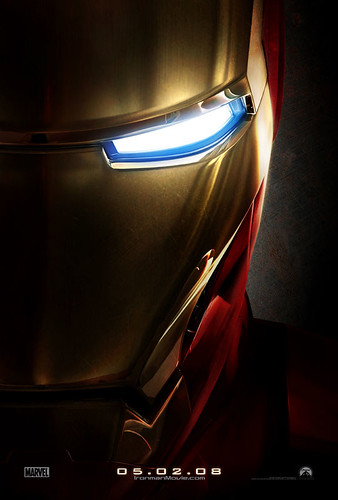
 The newly minted Marvel Studio is on a roll. After years of selling the rights to their titles to other production companies, Marvel comics made the bold move to produce its own films, and thus far the company is no joke. Following on the heels of their wildly entertaining “Iron Man,” Marvel delivers another surprisingly good film in “The Incredible Hulk.”
 “The Visitor” may sound like the title for the latest big-budget alien-invasion film or psychological thriller, but it is neither of those things. Instead it is a powerful human drama that, in its own small way, is an important film.
 It can never be said that musician Ben Hammond isn’t loyal to where he grew up. No matter what adventures his life takes him on, the 2001 Fryeburg Academy graduate from Hiram, Maine always comes home to share his new life experiences.
 “We decided to put it up front almost like the way an emcee would introduce a show,” said Hammond. “[Kweku] is introducing a lot of the lyrical themes that happen on the album. I think it worked out really well in that way, and I think it gives a different texture.”
 Hammond is hoping to run through the whole album at the Stone Mountain show following a solo acoustic set of older material. He also promises a few unexpected musical surprises.
 "Jaws" (1975)
 "Star Wars" (1977)
 "Animal House" (1978)
 "Ghostbusters" (1984)
 "Batman" (1989)
 "Terminator 2: Judgment Day" (1991)
 "Sixth Sense" (1999)
 "Shrek" (2001)
 "My Big Fat Greek Wedding" (2002)
 "Pirates of Caribbean: The Curse of the Black Pearl" (2003)
 Who is afraid of the big bad Starbucks? Not the coffee shops of the North Conway and Conway villages.
 “We have no employees, we just work really hard and it is a small shop so the rent is not too high and we get by,” said Betsy Schurmas, the manager of the Teeny Bean. “We make enough in the summer to get through the winter.”
 “I’ve gone into Starbucks before, but I don’t go in there because I enjoy going in there, I go in there because I need a cup of coffee,” said Mello. “People come here because they want to sit, they want to talk to our employees. They’ve gotten to know our employees. We know what they like to drink. It is like ‘Cheers,’ everyone knows your name.”
 I wish I could say that “Indiana Jones and the Kingdom of the Crystal Skull” was a excellent film-going experience, but I can’t do that in good conscience. I am recommending it, but with qualifiers.
 In the three years since the last “Chronicles of Narnia” film there have been a lot of fantasy films of varying quality to fill the void including “Stardust,” “Eragon,” “The Golden Compass,” “The Seeker” and “The Spiderwick Chronicles.” Luckily, “Prince Caspian,” though not as good as its predecessor, is still a cut above the rest of the genre.
 “Redbelt” is the kind of movie that in description doesn’t sound nearly as good as it really is. To say it is about jiujitsu teaching and fighting places the film into a box in which it doesn’t fit. This isn’t “The Karate Kid” or “Rocky.” But to elaborate much further would ruin the pleasures of a film that does something few films do: offer genuinely surprising moments that grow from the story and characters rather than a cheap gimmick.
 The live action adaptation of the 1960s anime cult classic “Speed Racer” quite literally gave me a headache. Not only that, the throbbing migraine still lingered the next morning. Seriously.
 In 1983 Gene Siskel and Roger Ebert did a TV show on what made “Star Wars” special. They concluded one of the key factors was quality control. “Star Wars” was the first film to do a space adventure with first rate writing, directing, acting, special effects, sound, score and so on. It proved that even a seemingly silly or standard story could be raised to greatness if given the proper treatment.
